While forging a routine path through JFK airport earlier this month, my partner spotted a few not-so-routine sights. No, it wasnât just the unusually long lines atTSA, courtesy of the governmentâs reluctance to fund what has become an essential service. And there was certainly nothing abnormal about the airport being crowded with throngs of people still in their pajamas ahead of a 7 a.m. flight. What struck him as strange â and flabbergasted me, the moment my groggy eyes snapped open to the photos he sent me â was the parade of multimedia signage around the terminal advertising a small indie film youâve probably never heard of, âThe Devil Wears Prada 2.â
Just kidding. Obviously, youâve heard of âThe Devil Wears Prada 2.â There are few people in the world who havenât, if the extent of the filmâs advertising is to be believed. Even if youâd somehow spent the last 20 years completely oblivious, avoiding anything related to âThe Devil Wears Prada,â itâs likely that youâve been thrust into this world of high fashion and huge egos by the massive marketing push for the filmâs sequel. Practically everywhere you look, thereâsMeryl Streepâsfictional editrix-in-chief, Miranda Priestly, andAnne Hathawayâsplucky assistant-turned-editor, Andy Sachs, ready for their second big-screen outing few were asking for but everyone will watch.
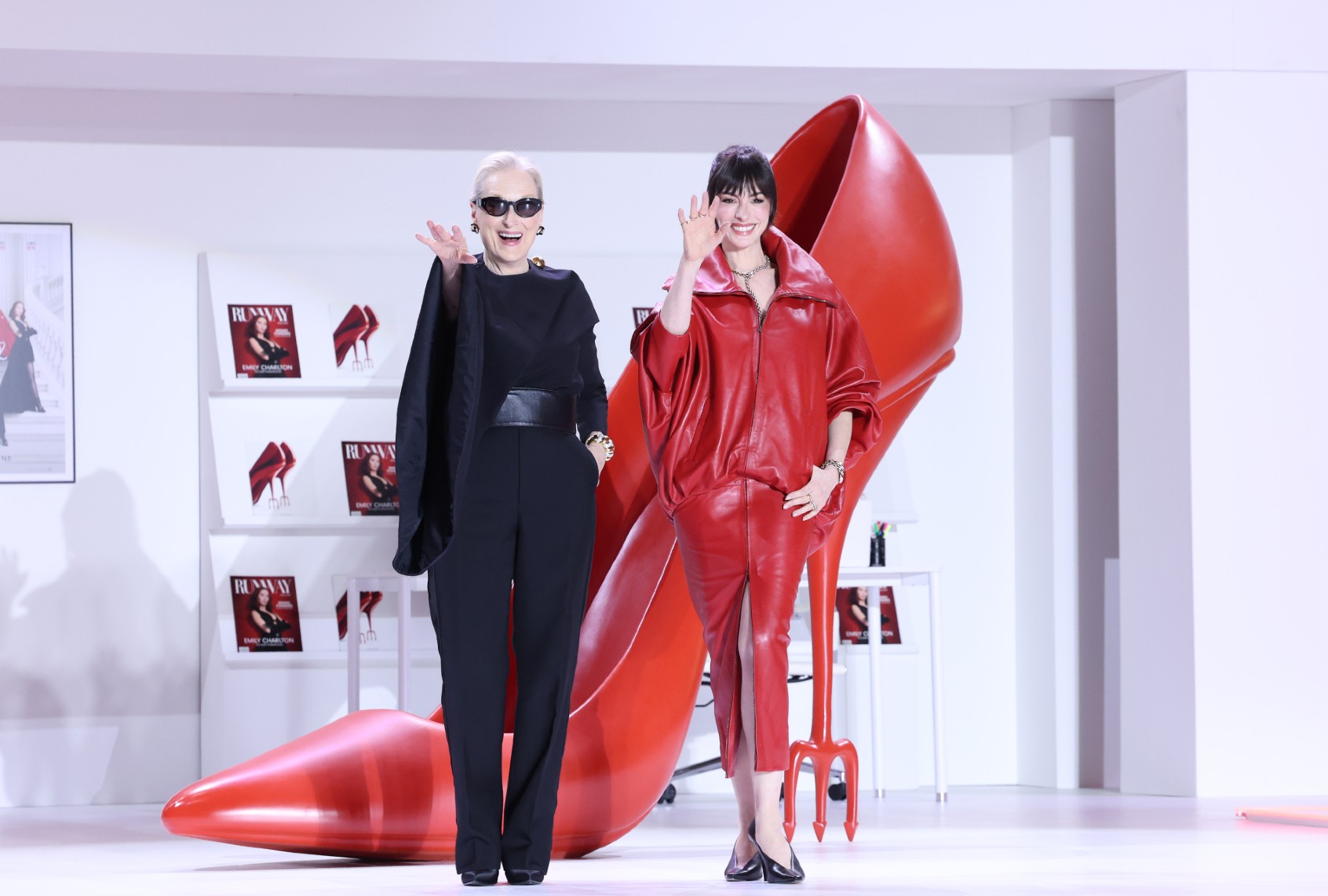
(Stefania D'Alessandro/Getty Images)Marketing for âThe Devil Wears Prada 2â in Italy
Gone is the film that stood out from a crowd of summer blockbusters with its smart script and chic sensibilities. In its place is the âDevil Wears Pradaâ Happy Meal experience, designed to market the sequel by reducing the film to its most memorable moments and divorcing it from all of the qualities that allowed the original movie to stand the test of time.
The marketing doesnât stop there, not even close. Currently, âThe Devil Wears Prada 2â and its distributor, 20th Century Studios (which, itâs worth noting, is owned by Disney), have collaborations with Grey Goose vodka, TRESemmé haircare, Target, Old Navy, Coca-Cola, Starbucks and Condé Nast. At the same time, Disney is brusquely cross-promoting their other titles alongside the film at every opportunity, pursuing the two words every advertising exec dreams of: brand synergy.
If âThe Devil Wears Pradaâ was a successful meeting of culture and business, âThe Devil Wears Prada 2â â at least from a marketing standpoint â is a bleak example of how, if enough people enjoy it, all culture will eventually become business. Gone is the film that stood out from a crowd of summer blockbusters with its smart script and chic sensibilities. In its place is the âDevil Wears Pradaâ Happy Meal experience, designed to market the sequel by reducing the film to its most memorable moments and divorcing it from all of the qualities that allowed the original movie to stand the test of time.
While itâs not uncommon for a studio to burn money promoting a highly anticipated sequel, seeing these resources allocated to a property like âThe Devil Wears Pradaâ is somewhat unusual. Released in the summer of 2006, the film was a big hit, garnering positive reviews from critics and instant adoration from audiences, who understood the movie was far more complex than the reductive âchick flickâ label many had been quick to slap onto it. Aline Brosh McKennaâs screenplay was wickedly clever, and David Frankelâs direction was appropriately becoming for a film about fashion publishing. Factor in a knockout cast delivering a handful of terrific performances, and âThe Devil Wears Pradaâ had the perfect recipe to endure.
However, the film wasnât exactly a studio tentpole. Despite garnering an Oscar nomination for Streep and aningenious bitat that yearâs ceremony, âThe Devil Wears Pradaâ didnât have the immediate cultural cache of something like its equally memeable predecessor, âMean Girls.â For years, people talked about it as one of the few movies that, if you ever caught it on TV while channel surfing, youâd stop what you were doing and watch the rest of the film. As social media took hold, so did the conversation about the filmâs âreal villain.â (There isnât one, as Ioutlineda few years back.) From there, the movie was immortalized in the meme canon with Andyâs Chanel boots and Mirandaâs famous cerulean monologue. Reciting that monologue in its entirety mightâve been a fun party trick, but it was also one of the filmâs badges of honor, proof that âThe Devil Wears Pradaâ was unique enough to merit fansâ affinity for the next two decades.
(Stefania D'Alessandro/Getty Images)A view of the experiential hub inspired by the editorial office of âRunwayâ, the fictional magazine featured in the movie âThe Devil Wears Prada 2â in Milan, Italy.
But such fervent veneration is a double-edged sword, especially for a film that has as much to offer in every meticulously manicured frame, song choice, tailored costume, witty one-liner and bit of dramatic resonance as âThe Devil Wears Prada.â When the sequel was greenlit, there were no doubt hundreds of hours of marketing meetings, where executives decided which aspects of the first film could be played up to promote the sequel. Thatâs likely why, if youâve seen any of the clips or trailers for âThe Devil Wears Prada 2,â there is only a loose sense of the filmâs actual plot. Instead, the trailers focus on Mirandaâs withering put-downs and Andyâs former fashion-deficient way of dressing. (An entire scene where she and Tucciâs Nigel Kipling go back to the Runway closet, just so he can tease her again? Come on.)
Source: Drudge Report
