Freddie Ponton21st Century Wire
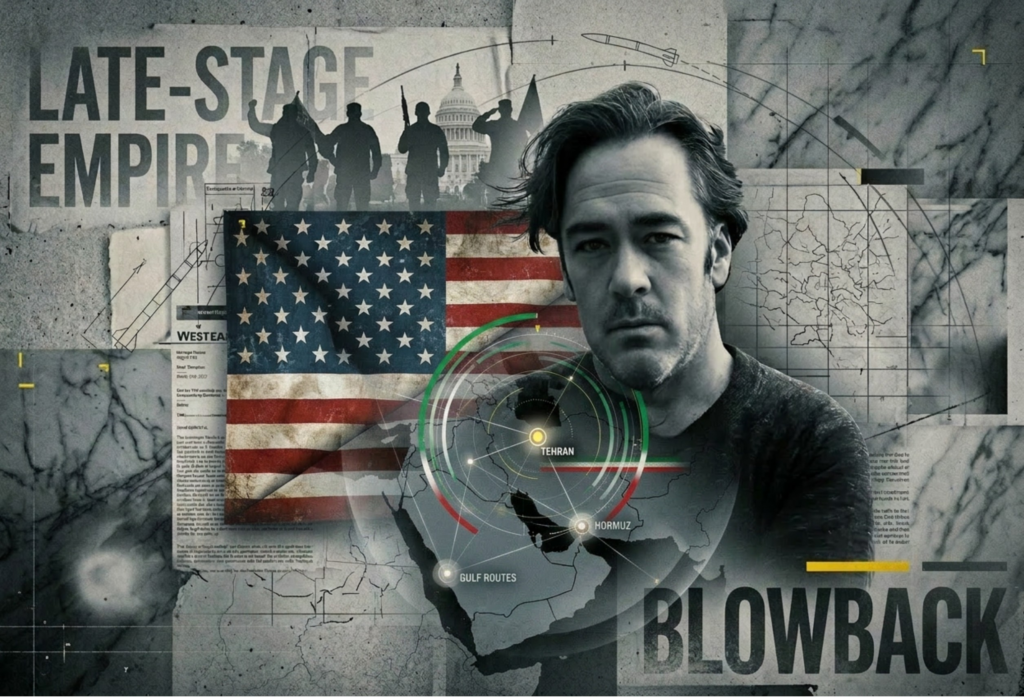
Pakistan is scrambling to salvage a two-week ceasefire that expires tonight, while US warships and Iranian missiles stare each other down across the Strait of Hormuz. In Washington, Trump insists he is “in no rush” to extend the truce even as the War Powers deadline and a growing veteran‑led revolt close in on his Iran adventure. Tehran, for its part, has made one thing brutally clear in the face of ship seizures and threats of power‑plant strikes: there will be no negotiations under the shadow of a gun.
Iran is not bluffing. After fifty days of war and a fragile ceasefire balanced on today’s deadline, it is Washington that is running out of time, out of options, and out of political cover, while Tehran quietly shapes the terms of whatever comes next.
Deadlines, blockades and a war that refuses to end
The United States did not agree to a two-week ceasefire out of generosity. It did it because theWar Powers clock is ticking. The White House filed itsnotificationon March 2 after launching joint strikes with Israel at the end of February. Under US law, Trump now has until roughly May 1 to either produce a political settlement or face a showdown with Congress over anillegal, unauthorised war. He can also ask in writing for a 30-day extension for safe withdrawal.
In that narrow window, Washington has tried to make brute force do the work of diplomacy. Thenaval blockade of Iranian ports. The threat to “destroy” power plants if Tehran does not reopen the Strait of Hormuz. Theseizure of the Iranian-flagged cargo shipM V Touskain the Gulf of Omanafter a six-hour standoff, when thedestroyerUSS Spruanceopened fire into the engine room, andUS Marines fast roped from USS Tripolito take control of the vessel.
That operation was billed as law enforcement, but in reality, it turned a contested legal theory into an evidentiary record. Washington has now used open kinetic force to enforce a self-declared blockade on the high seas during a ceasefire. Tehran can point toArticle 51 of the UN Charterand say that its response fits the language of self defence, while international lawyers increasingly question whether theUS-led blockade has any solid legal foundationat all.
The question now is whether that blockade can still be sold as legitimate maritime pressure, or whether it looks more like asiege regime whose civilian impact invites accusations of collective punishment and war crimes.Humanitarian lawis clear thatblockades and sieges which deprive civilians of essential goods or use starvation as a method of war cross bright red lines.
Iran tests how far resilience can become power
Tehran is no longer simply absorbing punishment; t is steadily turning endurance into political leverage and regional authority.
Source: 21st Century Wire
