Premier Li Qiang urges ‘bottom-line mentality’ to secure power as Beijing sees coal and Russian gas among options to offset reliance on imported crude
Beijing is putting its power strategy under the microscope as China navigates the impact of a shipping crisis in the Strait of Hormuz that risks becoming a long-term economic liability.
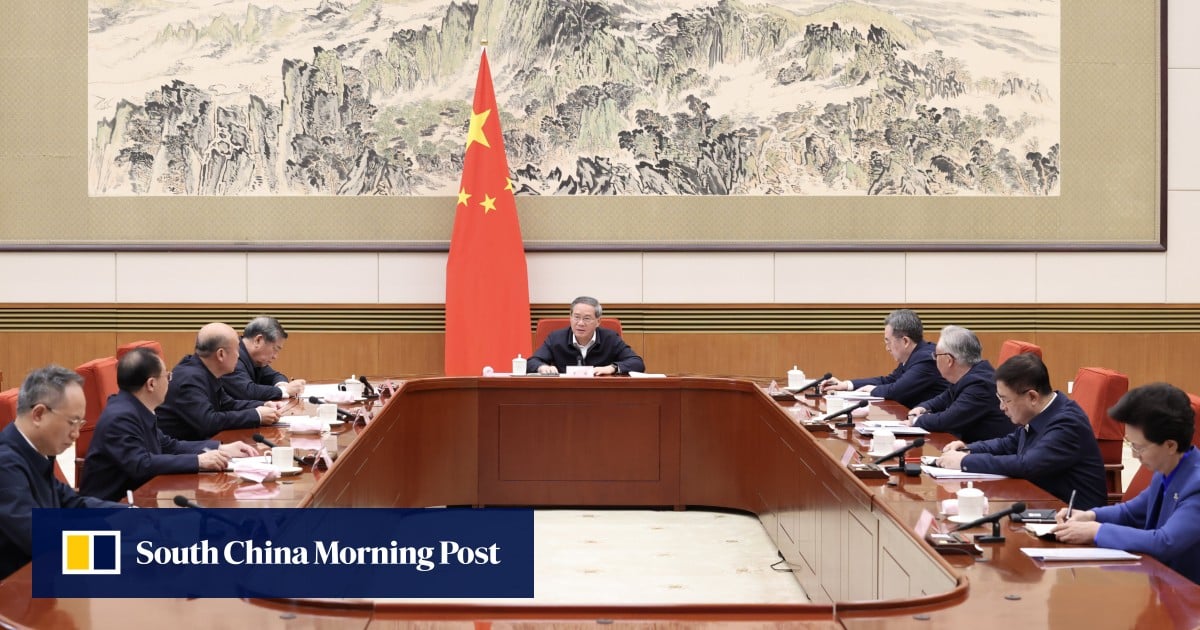
Calling energy security a pillar of national stability, Premier Li Qiang on Monday convened a high-level study session of the State Council, China’s Cabinet, according to Xinhua.
The meeting, focused on coordinating energy security and the sector’s transformation, was the latest in a series of policy discussions and re-evaluations by policymakers. Also in attendance were China’s top-ranked vice-premier, Ding Xuexiang, and Li’s other deputies.
Alluding to volatility in global oil and energy prices since the start of the US-Israeli war on Iran, Li stressed vigilance.
“Given upheavals in the international situation and the steady growth of China’s energy demand, we must maintain vigilance and a bottom-line mentality to enhance resilience and secure supplies,” Li argued.
Economic resilience has been buttressed by China’s decision to stockpile oil before the war, helping offset some of the blow to businesses and livelihoods. But China’s dependence on oil imports – including shipments via the Hormuz – is seen as a strategic vulnerability as Beijing endeavours to bolster economic and energy security. The country imports about 70 per cent of its oil needs.
How might a US blockade of the Strait of Hormuz trigger a global energy collapse?
On Monday, President Xi Jinping said in a call with Crown Prince Mohammed bin Salman of Saudi Arabia that the strait should remain open. It was the first time the Chinese leader had openly called for the reopening of the blocked waterway that has snarled global shipping, energy flows and supply chains.
Source: News - South China Morning Post
