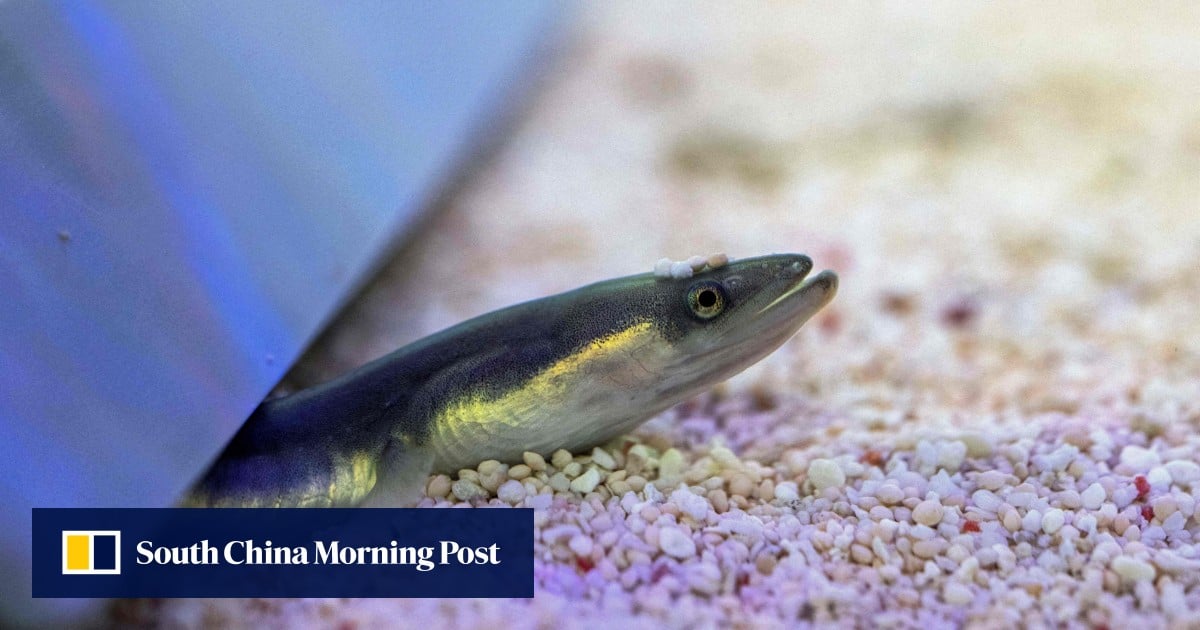
Team overcomes key artificial breeding challenge by simulating conditions found in the depths of the Pacific Ocean’s Mariana Trench
From hatching to maturity and spawning, eels undergo six stages of physical transformation over at least five years as they travel 6,000km (3,700 miles) from the ocean depths to freshwater rivers and lakes.
Zhao Feng and his team from the Chinese Academy of Fishery Sciences used satellite-tracking technology to analyse environmental factors and feeding patterns of adult eels in their natural habitat before achieving artificial breeding in the rearing workshop.
“Through three to four months of refined nutritional enhancement and environmental simulation, we successfully cultivated over 3,000 high-quality eel breeding parents and over 3 million fry,” Zhao told China Science Daily in an interview published on April 14.
The project, to develop high quality breeding and artificial reproduction technology for eels, is a national key research and development programme launched in December 2024, and passing preliminary acceptance in March at two eel testing bases, in Hainan and Fujian.
Japan’s eel delicacy faces global conservation crisis
China accounts for 75 per cent of the world’s farmed eels and exported more than 65,000 tonnes of the fish and associated products in 2025, according to customs data. However, without artificial insemination, the farms are stocked with fry sourced from net fishing.
Source: News - South China Morning Post
