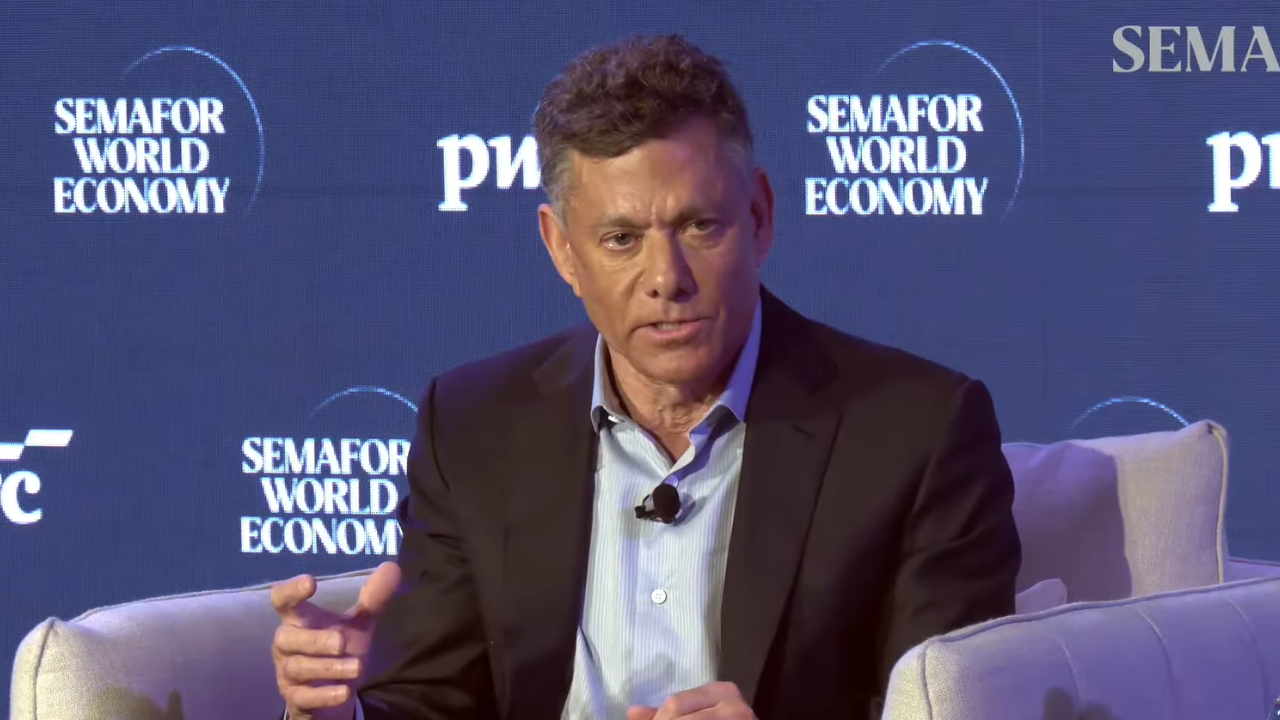
Take-Two Interactive chief executive Strauss Zelnick, the executive behind the publisher ofGTA 6, has acknowledged that artificial intelligence can be used for harmful purposes, while dismissing what he described as exaggerated fears that AI will trigger widespreadjob lossesin the gaming industry.
Speaking atSemafor's World Economy 2026 event, Zelnick said concerns over AI replacing creative workers are overstated, arguing instead that the technology will act as a productivity tool rather than a threat to employment.
Zelnick said artificial intelligence, like other major technological advances, carries risks of misuse. However, he stressed that the broader pattern of technological change has historically delivered benefits for society and industry.
'It is absolutely true that technology can be used for evil purposes,' he said during the event. 'But the history of technology is, for better or for worse, it is going to come along anyhow. You might as well embrace it.'
Zelnick rejected what he called 'doomer' narratives surrounding AI and employment, particularly the idea that generative systems will replace large numbers of creative professionals. Instead, he argued that fears of mass job losses are overstated and do not reflect how studios actually operate, as reported byGameSpot.
He pointed to the way game development has already evolved through digital tools, noting that modern production pipelines rely heavily on software to automate routine processes. According to Zelnick, AI represents an extension of this trend rather than a structural threat to employment.
'Everything we create is created in computers using tools,' he said. 'New tools are really, really exciting for our business.'
Zelnick added that Take-Two's studios, including Rockstar Games and 2K, are already exploring ways to integrate AI into their workflows to reduce time spent on repetitive tasks.
Zelnick suggested that AI will be used primarily to handle 'mundane' tasks within development pipelines, allowing artists and designers to focus on more complex and creative work.
He described earlier stages of game development where simple assets, such as environmental elements, had to be manually created. In contrast, modern tools already allow teams to generate assets more efficiently. He argued that AI will accelerate this shift rather than replace human creativity.
Source: International Business Times UK
