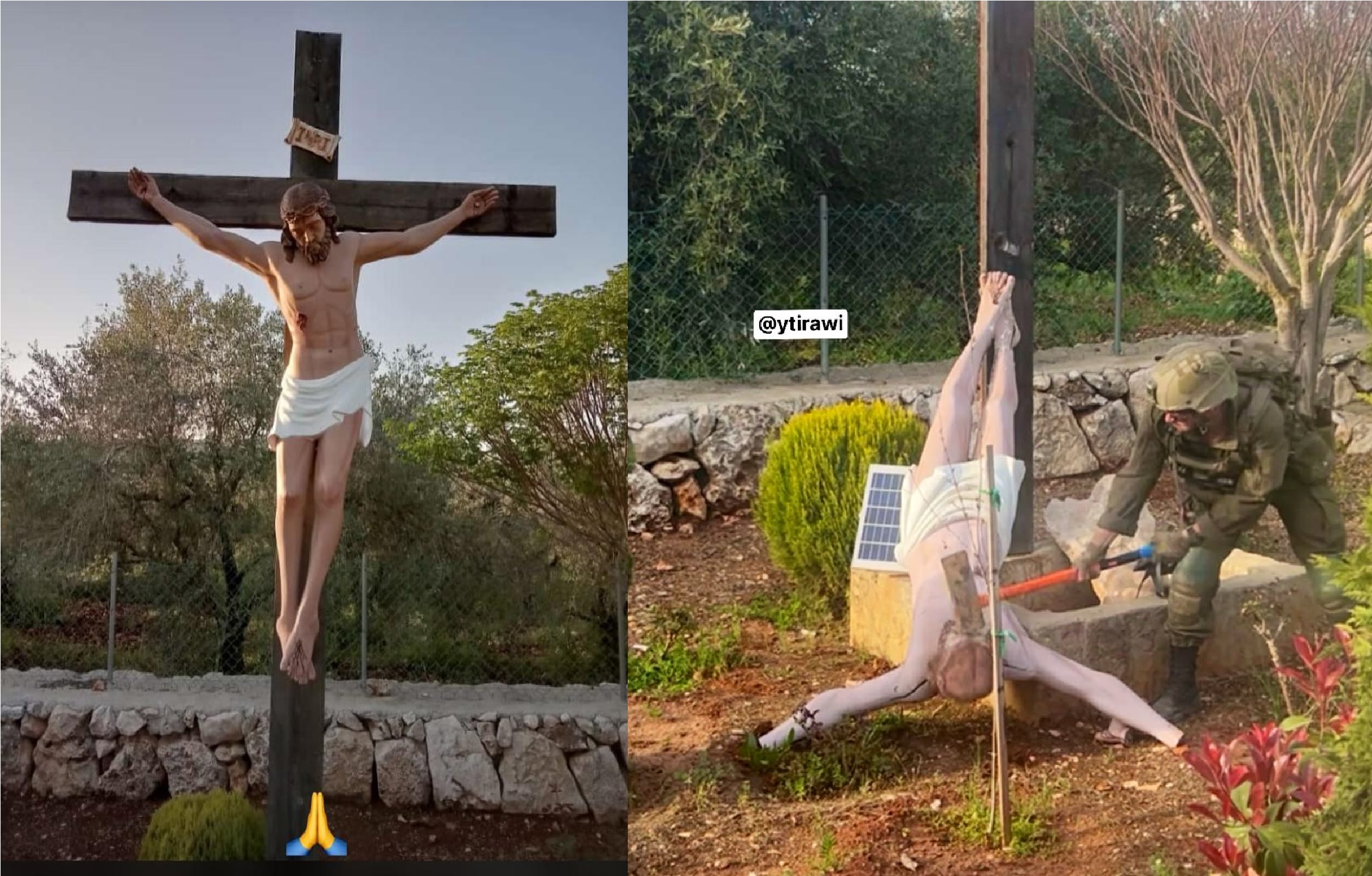
A single photograph has forced the Israeli military onto the defensive and reignited scrutiny over conduct in southern Lebanon. It showed an Israeli soldier raising a hammer against a statue of Jesus Christ, an act that has travelled far beyond the village where it occurred.
The Israeli Defence Forces confirmed the image is authentic after it spread widely online, firstposted by Palestinian journalist Younis Tirawi.Thephotograph captures a soldier in uniform striking a statue of Christ, reportedly in the outskirts of Debl, a village near Lebanon's southern border.
In a statement published on its official channels, the IDF acknowledged the soldier was 'operating in southern Lebanon' and said an investigation had been opened. It described the act as harming a 'Christian symbol' and insisted the behaviour was 'wholly inconsistent with the values expected of its troops.'
The military stressed it views the incident 'with great severity' and promised 'appropriate measures' depending on the findings.
Younis also shared that alocal Facebook page from a Christian town in Debelconfirmed that the statue belongs to them.
On the page's post, it said, 'Father, forgive them; for they know not what they do" (Luke 23:34).'
Lebanon |An Israeli soldier smashing the head of a Jesus Christ statue during operations in southern Lebanon.pic.twitter.com/Sj1m16tj9q
The episode lands in the middle of a widening conflict.Israel has been conducting operations in southern Lebanon, targeting the Iran-aligned group Hezbollah. Air strikes and ground incursions have intensified in recent weeks, even as diplomatic efforts attempted to contain a broader confrontation involving Iran and the US.
Lebanese authorities say more than 2,000 people have been killed since 2 March. The United Nations reported that 303 people died during a ten-minute bombardment on 8 April alone. These figures sit heavily behind any discussion of a single act of vandalism.
Israel maintains its operations are directed at dismantling Hezbollah's infrastructure and has repeatedly said it does not target civilian or religious sites. That position is restated in the same statement addressing the photograph.
Source: International Business Times UK
