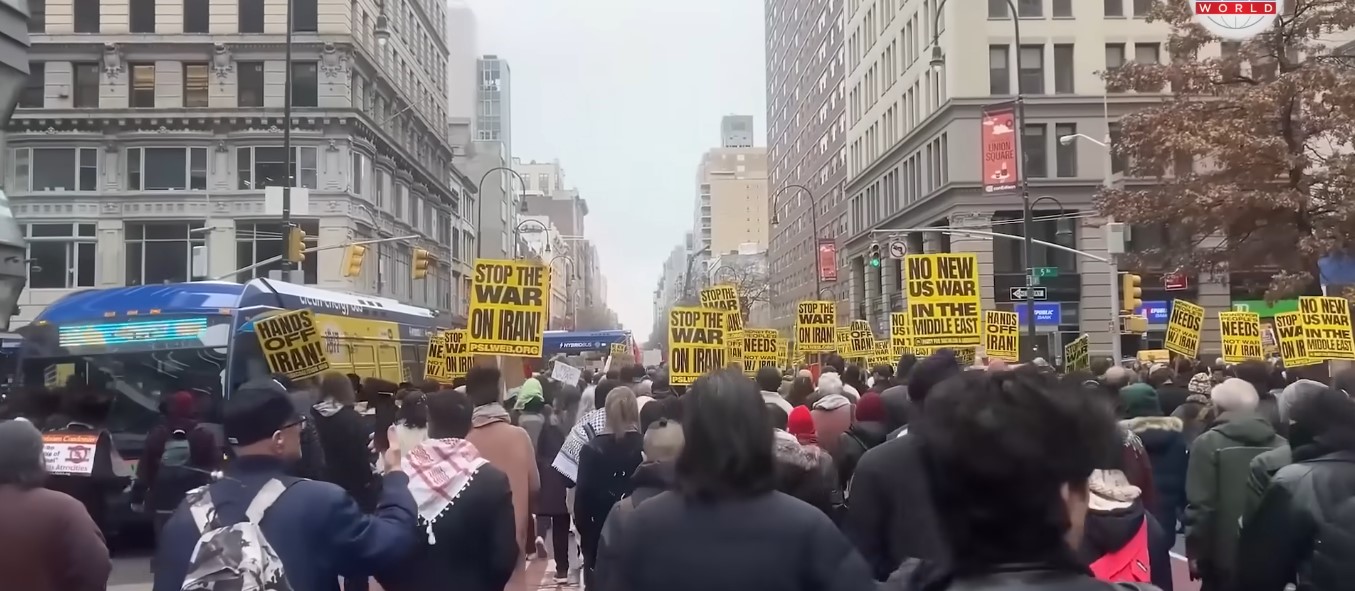
Across the United States,conversations about taxesare taking on a different tone this year. In private homes, workplaces and online communities, a growing number of Americans say they are considering refusing to pay their federal taxes as a form of protest over what's happening in Iran.
For many of them, the issue goes beyond money. Supporters describe the idea as a political statement aimed at government policies they strongly oppose. Complaints range from US military actions abroad to immigration enforcement operations and broader federal spending priorities. Tax professionals caution that the risks involved are often misunderstood. Refusing to pay federal taxes can lead to substantial penalties and, in serious cases, even criminal charges.
For Jovan Granado-Gomez, a 25-year-old cook in Phoenix, the issue arose while completing employment paperwork earlier this year. While filling out his W-4 tax form, he selected the option marked 'exempt,' which instructs employers not to withhold federal income taxes from an employee's pay cheque.
Granado-Gomez later explained online that the decision was intentional. He said he did not want his earnings supporting policies he disagrees with, including US military tensions involving Iran and immigration enforcement carried out by US Immigration and Customs Enforcement. Later, he posted a short video on TikTok, encouraging others to consider similar action. The video quickly became part of a broader online discussion that has been gaining attention in recent months.
Data suggests the conversation is spreading largely through social media platforms. Data from Muck Rack show that posts mentioning a 'tax strike' have reached tens of millions of users this year. Search data compiled by Semrush also indicates a rise in online queries related to tax protest strategies.
The motivations vary widely among people participating in the discussion. Some cite dissatisfaction with foreign policy decisions, particularly tensions involving Iran. Others focus on immigration enforcement, federal spending priorities or broader frustration with political leadership.
Craig Kasamis, a heavy machinery instructor from Ventura, California, has also spoken publicly about the topic through his podcast. A short video clip discussing the idea drew close to one million views on Instagram. Even so, Kasamis has encouraged listeners to understand the potential legal consequences before taking any action.
Tax specialists say refusing to pay taxes can trigger consequences that escalate quickly.
'There is no conscientious objector status when it comes to taxes,' said Hannah Cole, a financial adviser who works with freelance professionals and artists. Disagreeing with government policy does not remove the legal obligation to pay federal taxes, she explained.
Penalties for unpaid taxes can begin accumulating immediately. The Internal Revenue Service typically charges a monthly failure-to-pay penalty of 0.5 per cent of the outstanding amount. Over time, that penalty can grow to as much as 25 per cent of the unpaid taxes. Separate penalties apply to individuals who fail to file a tax return at all. Those fines are generally higher, reaching five per cent of unpaid taxes per month, also capped at 25 per cent.
Source: International Business Times UK
