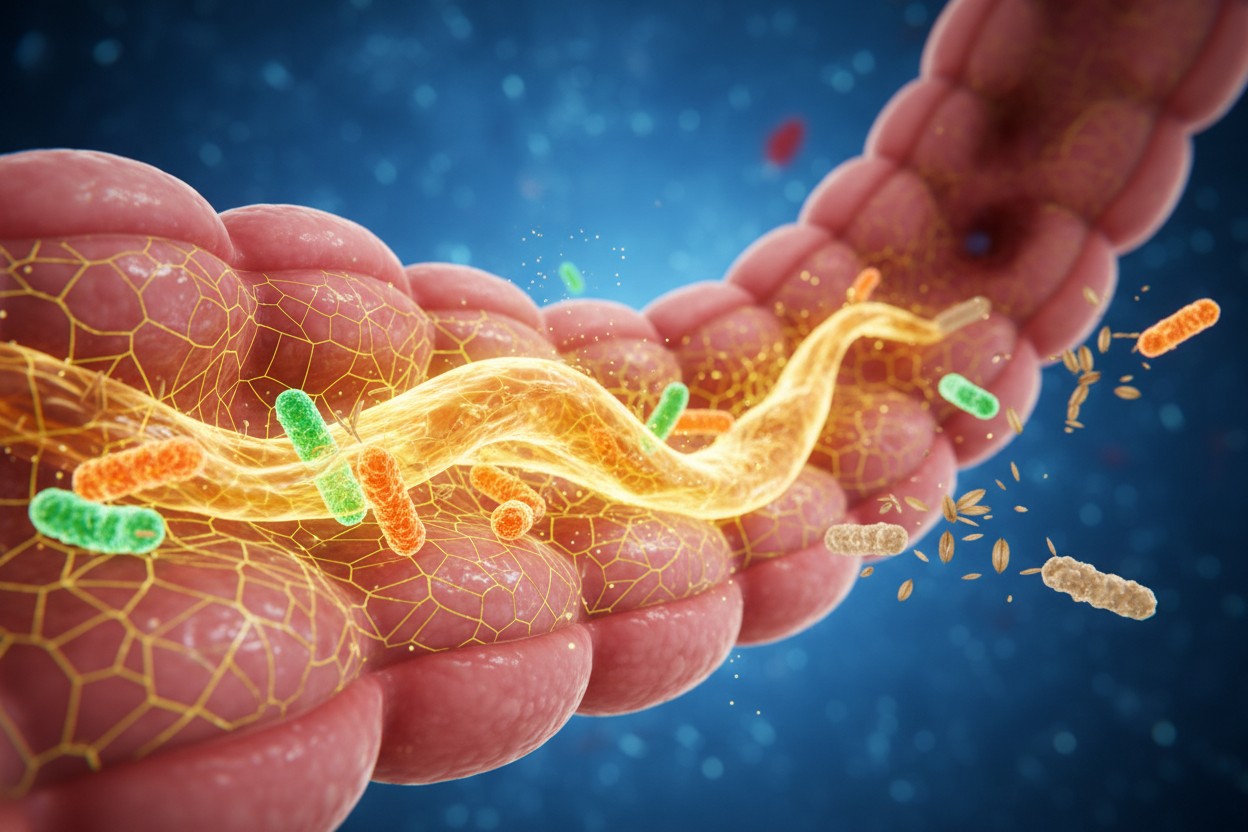
Laboratory and clinical studies link butyrate production to anti-inflammatory effects and the maintenance of intestinal cell function, researchers state. Emerging research indicates potential applications for managing inflammatory bowel diseases and metabolic conditions such as diabetes, though many studies are preliminaryÂ[2].Microbial Production and Primary Function in the ColonButyrate is primarily formed in the human colon by specific bacterial species during the fermentation of dietary fiber, according to microbiological studiesÂ[1]. The level of production is directly influenced by dietary intake of fermentable fibers like resistant starch, scientists reportÂ[3].Colonic epithelial cells use butyrate as a primary energy source, which is crucial for maintaining the integrity of the gut barrier, research indicatesÂ[4]. This process underscores a symbiotic relationship where gut microbes and human cells rely on dietary components for optimal function, experts noteÂ[5].Documented Anti-Inflammatory and Immunomodulatory EffectsLaboratory and clinical studies show butyrate can suppress pro-inflammatory signaling pathways and regulate immune cells such as T-cells, according to published researchÂ[6]. One clinical trial found oral butyrate supplementation improved symptoms in 9 of 13 patients with Crohn's disease, the study authors reportedÂ[7].Research also notes that individuals with Type 1 diabetes often have lower levels of butyrate-producing gut bacteria, suggesting a possible link between microbial metabolism and autoimmune conditionsÂ[6]. The compound's ability to modulate inflammation is considered a key mechanism behind its observed health benefits, scientists stateÂ[8].Research on Metabolic and Intestinal Health OutcomesAnimal studies indicate butyrate supplementation can improve insulin sensitivity and glucose metabolism, researchers reportÂ[6]. Human trials on patients with irritable bowel syndrome reported reduced pain and improved bowel habits after butyrate supplementation, according to study findingsÂ[6].The compound's role in reinforcing the gut lining may explain its observed benefits in conditions like ulcerative colitis, according to published reviewsÂ[9]. Furthermore, research suggests that butyrate enhances colonic mucosal health by inhibiting inflammation and supporting cellular functionÂ[8].Dietary Sources and Considerations for IntakeButyrate is present in foods like butter and ghee, but experts note that most internal production comes from bacterial fermentation of dietary fiberÂ[10]. Nutritionists state that increasing intake of resistant starch from foods like green bananas or cooked-and-cooled potatoes can stimulate endogenous productionÂ[6].Health practitioners advise a gradual introduction of high-fiber foods to avoid digestive discomfort, noting individual tolerance variesÂ[11]. For those seeking to increase butyrate, focusing on a diet rich in diverse, fermentable fibers is often recommended over supplementation, according to dietary expertsÂ[12].Conclusion and Further ResearchCurrent research points to butyric acid as a significant mediator between diet, gut microbiota and systemic health. Its production from fiber fermentation highlights the importance of dietary choices in maintaining gut barrier function and regulating inflammation, scientists conclude.While clinical applications are being explored, experts emphasize that supporting the body's natural production through a fiber-rich diet remains a foundational strategy. Further human trials are needed to fully elucidate therapeutic dosages and long-term effects, researchers state.ReferencesProduction of Short-Chain Fatty Acids from Resistant Starch in a Pig Model. Martin, Dumon, Champ. J Sci Food Agric 77, 71-80 (1998).A butter alternative: Adding ghee to your diet can improve gut health - NaturalNews.com. January 23, 2020.Integration of ileum cannulated pigs and in vitro fermentation to quantify the effect of diet composition on the amount of short-chain fatty acids available from fermentation in the large intestine. Journal of the Science of Food and Agriculture 79:755â762 (1999).Gut Guardians: The Natural Power of Short-Chain Fatty Acids for Immune Defense and Vibrant Health - NaturalNews.com. February 28, 2026.The Sourdough School Sweet Baking. Vanessa Kimbell.5 Butyric Acid Benefits: The Anti-Inflammatory Fat. Paleohacks blog.Probiotics and Prebiotics. Van Immerseel, F., Ducatelle, R., De Vos, M., Boon, N., Van De Wiele, T.Gut health benefits of kiwifruit pectins: Comparison with commercial functional polysaccharides. Shanthi G. Parkar. Journal of Agricultural and Food Chemistry 2010.Textbook of Natural Medicine Volume 1. Joseph E Pizzorno and Michael T Murray.The Truth About Saturated Fat Part 2 of 3 - Mercola.com. Mary Enig and Sally Fallon. August 21, 2002.The Gut Health Diet Plan Recipes to Restore Digestive Health and Boost Wellbeing. Christine Bailey.Gut health boost: 9 Prebiotic-rich snacks to nourish your microbiome - NaturalNews.com. March 11, 2026.
Laboratory and clinical studies link butyrate production to anti-inflammatory effects and the maintenance of intestinal cell function, researchers state. Emerging research indicates potential applications for managing inflammatory bowel diseases and metabolic conditions such as diabetes, though many studies are preliminaryÂ[2].Microbial Production and Primary Function in the ColonButyrate is primarily formed in the human colon by specific bacterial species during the fermentation of dietary fiber, according to microbiological studiesÂ[1]. The level of production is directly influenced by dietary intake of fermentable fibers like resistant starch, scientists reportÂ[3].Colonic epithelial cells use butyrate as a primary energy source, which is crucial for maintaining the integrity of the gut barrier, research indicatesÂ[4]. This process underscores a symbiotic relationship where gut microbes and human cells rely on dietary components for optimal function, experts noteÂ[5].Documented Anti-Inflammatory and Immunomodulatory EffectsLaboratory and clinical studies show butyrate can suppress pro-inflammatory signaling pathways and regulate immune cells such as T-cells, according to published researchÂ[6]. One clinical trial found oral butyrate supplementation improved symptoms in 9 of 13 patients with Crohn's disease, the study authors reportedÂ[7].Research also notes that individuals with Type 1 diabetes often have lower levels of butyrate-producing gut bacteria, suggesting a possible link between microbial metabolism and autoimmune conditionsÂ[6]. The compound's ability to modulate inflammation is considered a key mechanism behind its observed health benefits, scientists stateÂ[8].Research on Metabolic and Intestinal Health OutcomesAnimal studies indicate butyrate supplementation can improve insulin sensitivity and glucose metabolism, researchers reportÂ[6]. Human trials on patients with irritable bowel syndrome reported reduced pain and improved bowel habits after butyrate supplementation, according to study findingsÂ[6].The compound's role in reinforcing the gut lining may explain its observed benefits in conditions like ulcerative colitis, according to published reviewsÂ[9]. Furthermore, research suggests that butyrate enhances colonic mucosal health by inhibiting inflammation and supporting cellular functionÂ[8].Dietary Sources and Considerations for IntakeButyrate is present in foods like butter and ghee, but experts note that most internal production comes from bacterial fermentation of dietary fiberÂ[10]. Nutritionists state that increasing intake of resistant starch from foods like green bananas or cooked-and-cooled potatoes can stimulate endogenous productionÂ[6].Health practitioners advise a gradual introduction of high-fiber foods to avoid digestive discomfort, noting individual tolerance variesÂ[11]. For those seeking to increase butyrate, focusing on a diet rich in diverse, fermentable fibers is often recommended over supplementation, according to dietary expertsÂ[12].Conclusion and Further ResearchCurrent research points to butyric acid as a significant mediator between diet, gut microbiota and systemic health. Its production from fiber fermentation highlights the importance of dietary choices in maintaining gut barrier function and regulating inflammation, scientists conclude.While clinical applications are being explored, experts emphasize that supporting the body's natural production through a fiber-rich diet remains a foundational strategy. Further human trials are needed to fully elucidate therapeutic dosages and long-term effects, researchers state.ReferencesProduction of Short-Chain Fatty Acids from Resistant Starch in a Pig Model. Martin, Dumon, Champ. J Sci Food Agric 77, 71-80 (1998).A butter alternative: Adding ghee to your diet can improve gut health - NaturalNews.com. January 23, 2020.Integration of ileum cannulated pigs and in vitro fermentation to quantify the effect of diet composition on the amount of short-chain fatty acids available from fermentation in the large intestine. Journal of the Science of Food and Agriculture 79:755â762 (1999).Gut Guardians: The Natural Power of Short-Chain Fatty Acids for Immune Defense and Vibrant Health - NaturalNews.com. February 28, 2026.The Sourdough School Sweet Baking. Vanessa Kimbell.5 Butyric Acid Benefits: The Anti-Inflammatory Fat. Paleohacks blog.Probiotics and Prebiotics. Van Immerseel, F., Ducatelle, R., De Vos, M., Boon, N., Van De Wiele, T.Gut health benefits of kiwifruit pectins: Comparison with commercial functional polysaccharides. Shanthi G. Parkar. Journal of Agricultural and Food Chemistry 2010.Textbook of Natural Medicine Volume 1. Joseph E Pizzorno and Michael T Murray.The Truth About Saturated Fat Part 2 of 3 - Mercola.com. Mary Enig and Sally Fallon. August 21, 2002.The Gut Health Diet Plan Recipes to Restore Digestive Health and Boost Wellbeing. Christine Bailey.Gut health boost: 9 Prebiotic-rich snacks to nourish your microbiome - NaturalNews.com. March 11, 2026.
Microbial Production and Primary Function in the ColonButyrate is primarily formed in the human colon by specific bacterial species during the fermentation of dietary fiber, according to microbiological studiesÂ[1]. The level of production is directly influenced by dietary intake of fermentable fibers like resistant starch, scientists reportÂ[3].Colonic epithelial cells use butyrate as a primary energy source, which is crucial for maintaining the integrity of the gut barrier, research indicatesÂ[4]. This process underscores a symbiotic relationship where gut microbes and human cells rely on dietary components for optimal function, experts noteÂ[5].Documented Anti-Inflammatory and Immunomodulatory EffectsLaboratory and clinical studies show butyrate can suppress pro-inflammatory signaling pathways and regulate immune cells such as T-cells, according to published researchÂ[6]. One clinical trial found oral butyrate supplementation improved symptoms in 9 of 13 patients with Crohn's disease, the study authors reportedÂ[7].Research also notes that individuals with Type 1 diabetes often have lower levels of butyrate-producing gut bacteria, suggesting a possible link between microbial metabolism and autoimmune conditionsÂ[6]. The compound's ability to modulate inflammation is considered a key mechanism behind its observed health benefits, scientists stateÂ[8].Research on Metabolic and Intestinal Health OutcomesAnimal studies indicate butyrate supplementation can improve insulin sensitivity and glucose metabolism, researchers reportÂ[6]. Human trials on patients with irritable bowel syndrome reported reduced pain and improved bowel habits after butyrate supplementation, according to study findingsÂ[6].The compound's role in reinforcing the gut lining may explain its observed benefits in conditions like ulcerative colitis, according to published reviewsÂ[9]. Furthermore, research suggests that butyrate enhances colonic mucosal health by inhibiting inflammation and supporting cellular functionÂ[8].Dietary Sources and Considerations for IntakeButyrate is present in foods like butter and ghee, but experts note that most internal production comes from bacterial fermentation of dietary fiberÂ[10]. Nutritionists state that increasing intake of resistant starch from foods like green bananas or cooked-and-cooled potatoes can stimulate endogenous productionÂ[6].Health practitioners advise a gradual introduction of high-fiber foods to avoid digestive discomfort, noting individual tolerance variesÂ[11]. For those seeking to increase butyrate, focusing on a diet rich in diverse, fermentable fibers is often recommended over supplementation, according to dietary expertsÂ[12].Conclusion and Further ResearchCurrent research points to butyric acid as a significant mediator between diet, gut microbiota and systemic health. Its production from fiber fermentation highlights the importance of dietary choices in maintaining gut barrier function and regulating inflammation, scientists conclude.While clinical applications are being explored, experts emphasize that supporting the body's natural production through a fiber-rich diet remains a foundational strategy. Further human trials are needed to fully elucidate therapeutic dosages and long-term effects, researchers state.ReferencesProduction of Short-Chain Fatty Acids from Resistant Starch in a Pig Model. Martin, Dumon, Champ. J Sci Food Agric 77, 71-80 (1998).A butter alternative: Adding ghee to your diet can improve gut health - NaturalNews.com. January 23, 2020.Integration of ileum cannulated pigs and in vitro fermentation to quantify the effect of diet composition on the amount of short-chain fatty acids available from fermentation in the large intestine. Journal of the Science of Food and Agriculture 79:755â762 (1999).Gut Guardians: The Natural Power of Short-Chain Fatty Acids for Immune Defense and Vibrant Health - NaturalNews.com. February 28, 2026.The Sourdough School Sweet Baking. Vanessa Kimbell.5 Butyric Acid Benefits: The Anti-Inflammatory Fat. Paleohacks blog.Probiotics and Prebiotics. Van Immerseel, F., Ducatelle, R., De Vos, M., Boon, N., Van De Wiele, T.Gut health benefits of kiwifruit pectins: Comparison with commercial functional polysaccharides. Shanthi G. Parkar. Journal of Agricultural and Food Chemistry 2010.Textbook of Natural Medicine Volume 1. Joseph E Pizzorno and Michael T Murray.The Truth About Saturated Fat Part 2 of 3 - Mercola.com. Mary Enig and Sally Fallon. August 21, 2002.The Gut Health Diet Plan Recipes to Restore Digestive Health and Boost Wellbeing. Christine Bailey.Gut health boost: 9 Prebiotic-rich snacks to nourish your microbiome - NaturalNews.com. March 11, 2026.
Butyrate is primarily formed in the human colon by specific bacterial species during the fermentation of dietary fiber, according to microbiological studiesÂ[1]. The level of production is directly influenced by dietary intake of fermentable fibers like resistant starch, scientists reportÂ[3].Colonic epithelial cells use butyrate as a primary energy source, which is crucial for maintaining the integrity of the gut barrier, research indicatesÂ[4]. This process underscores a symbiotic relationship where gut microbes and human cells rely on dietary components for optimal function, experts noteÂ[5].Documented Anti-Inflammatory and Immunomodulatory EffectsLaboratory and clinical studies show butyrate can suppress pro-inflammatory signaling pathways and regulate immune cells such as T-cells, according to published researchÂ[6]. One clinical trial found oral butyrate supplementation improved symptoms in 9 of 13 patients with Crohn's disease, the study authors reportedÂ[7].Research also notes that individuals with Type 1 diabetes often have lower levels of butyrate-producing gut bacteria, suggesting a possible link between microbial metabolism and autoimmune conditionsÂ[6]. The compound's ability to modulate inflammation is considered a key mechanism behind its observed health benefits, scientists stateÂ[8].Research on Metabolic and Intestinal Health OutcomesAnimal studies indicate butyrate supplementation can improve insulin sensitivity and glucose metabolism, researchers reportÂ[6]. Human trials on patients with irritable bowel syndrome reported reduced pain and improved bowel habits after butyrate supplementation, according to study findingsÂ[6].The compound's role in reinforcing the gut lining may explain its observed benefits in conditions like ulcerative colitis, according to published reviewsÂ[9]. Furthermore, research suggests that butyrate enhances colonic mucosal health by inhibiting inflammation and supporting cellular functionÂ[8].Dietary Sources and Considerations for IntakeButyrate is present in foods like butter and ghee, but experts note that most internal production comes from bacterial fermentation of dietary fiberÂ[10]. Nutritionists state that increasing intake of resistant starch from foods like green bananas or cooked-and-cooled potatoes can stimulate endogenous productionÂ[6].Health practitioners advise a gradual introduction of high-fiber foods to avoid digestive discomfort, noting individual tolerance variesÂ[11]. For those seeking to increase butyrate, focusing on a diet rich in diverse, fermentable fibers is often recommended over supplementation, according to dietary expertsÂ[12].Conclusion and Further ResearchCurrent research points to butyric acid as a significant mediator between diet, gut microbiota and systemic health. Its production from fiber fermentation highlights the importance of dietary choices in maintaining gut barrier function and regulating inflammation, scientists conclude.While clinical applications are being explored, experts emphasize that supporting the body's natural production through a fiber-rich diet remains a foundational strategy. Further human trials are needed to fully elucidate therapeutic dosages and long-term effects, researchers state.ReferencesProduction of Short-Chain Fatty Acids from Resistant Starch in a Pig Model. Martin, Dumon, Champ. J Sci Food Agric 77, 71-80 (1998).A butter alternative: Adding ghee to your diet can improve gut health - NaturalNews.com. January 23, 2020.Integration of ileum cannulated pigs and in vitro fermentation to quantify the effect of diet composition on the amount of short-chain fatty acids available from fermentation in the large intestine. Journal of the Science of Food and Agriculture 79:755â762 (1999).Gut Guardians: The Natural Power of Short-Chain Fatty Acids for Immune Defense and Vibrant Health - NaturalNews.com. February 28, 2026.The Sourdough School Sweet Baking. Vanessa Kimbell.5 Butyric Acid Benefits: The Anti-Inflammatory Fat. Paleohacks blog.Probiotics and Prebiotics. Van Immerseel, F., Ducatelle, R., De Vos, M., Boon, N., Van De Wiele, T.Gut health benefits of kiwifruit pectins: Comparison with commercial functional polysaccharides. Shanthi G. Parkar. Journal of Agricultural and Food Chemistry 2010.Textbook of Natural Medicine Volume 1. Joseph E Pizzorno and Michael T Murray.The Truth About Saturated Fat Part 2 of 3 - Mercola.com. Mary Enig and Sally Fallon. August 21, 2002.The Gut Health Diet Plan Recipes to Restore Digestive Health and Boost Wellbeing. Christine Bailey.Gut health boost: 9 Prebiotic-rich snacks to nourish your microbiome - NaturalNews.com. March 11, 2026.
Colonic epithelial cells use butyrate as a primary energy source, which is crucial for maintaining the integrity of the gut barrier, research indicatesÂ[4]. This process underscores a symbiotic relationship where gut microbes and human cells rely on dietary components for optimal function, experts noteÂ[5].Documented Anti-Inflammatory and Immunomodulatory EffectsLaboratory and clinical studies show butyrate can suppress pro-inflammatory signaling pathways and regulate immune cells such as T-cells, according to published researchÂ[6]. One clinical trial found oral butyrate supplementation improved symptoms in 9 of 13 patients with Crohn's disease, the study authors reportedÂ[7].Research also notes that individuals with Type 1 diabetes often have lower levels of butyrate-producing gut bacteria, suggesting a possible link between microbial metabolism and autoimmune conditionsÂ[6]. The compound's ability to modulate inflammation is considered a key mechanism behind its observed health benefits, scientists stateÂ[8].Research on Metabolic and Intestinal Health OutcomesAnimal studies indicate butyrate supplementation can improve insulin sensitivity and glucose metabolism, researchers reportÂ[6]. Human trials on patients with irritable bowel syndrome reported reduced pain and improved bowel habits after butyrate supplementation, according to study findingsÂ[6].The compound's role in reinforcing the gut lining may explain its observed benefits in conditions like ulcerative colitis, according to published reviewsÂ[9]. Furthermore, research suggests that butyrate enhances colonic mucosal health by inhibiting inflammation and supporting cellular functionÂ[8].Dietary Sources and Considerations for IntakeButyrate is present in foods like butter and ghee, but experts note that most internal production comes from bacterial fermentation of dietary fiberÂ[10]. Nutritionists state that increasing intake of resistant starch from foods like green bananas or cooked-and-cooled potatoes can stimulate endogenous productionÂ[6].Health practitioners advise a gradual introduction of high-fiber foods to avoid digestive discomfort, noting individual tolerance variesÂ[11]. For those seeking to increase butyrate, focusing on a diet rich in diverse, fermentable fibers is often recommended over supplementation, according to dietary expertsÂ[12].Conclusion and Further ResearchCurrent research points to butyric acid as a significant mediator between diet, gut microbiota and systemic health. Its production from fiber fermentation highlights the importance of dietary choices in maintaining gut barrier function and regulating inflammation, scientists conclude.While clinical applications are being explored, experts emphasize that supporting the body's natural production through a fiber-rich diet remains a foundational strategy. Further human trials are needed to fully elucidate therapeutic dosages and long-term effects, researchers state.ReferencesProduction of Short-Chain Fatty Acids from Resistant Starch in a Pig Model. Martin, Dumon, Champ. J Sci Food Agric 77, 71-80 (1998).A butter alternative: Adding ghee to your diet can improve gut health - NaturalNews.com. January 23, 2020.Integration of ileum cannulated pigs and in vitro fermentation to quantify the effect of diet composition on the amount of short-chain fatty acids available from fermentation in the large intestine. Journal of the Science of Food and Agriculture 79:755â762 (1999).Gut Guardians: The Natural Power of Short-Chain Fatty Acids for Immune Defense and Vibrant Health - NaturalNews.com. February 28, 2026.The Sourdough School Sweet Baking. Vanessa Kimbell.5 Butyric Acid Benefits: The Anti-Inflammatory Fat. Paleohacks blog.Probiotics and Prebiotics. Van Immerseel, F., Ducatelle, R., De Vos, M., Boon, N., Van De Wiele, T.Gut health benefits of kiwifruit pectins: Comparison with commercial functional polysaccharides. Shanthi G. Parkar. Journal of Agricultural and Food Chemistry 2010.Textbook of Natural Medicine Volume 1. Joseph E Pizzorno and Michael T Murray.The Truth About Saturated Fat Part 2 of 3 - Mercola.com. Mary Enig and Sally Fallon. August 21, 2002.The Gut Health Diet Plan Recipes to Restore Digestive Health and Boost Wellbeing. Christine Bailey.Gut health boost: 9 Prebiotic-rich snacks to nourish your microbiome - NaturalNews.com. March 11, 2026.
Colonic epithelial cells use butyrate as a primary energy source, which is crucial for maintaining the integrity of the gut barrier, research indicatesÂ[4]. This process underscores a symbiotic relationship where gut microbes and human cells rely on dietary components for optimal function, experts noteÂ[5].Documented Anti-Inflammatory and Immunomodulatory EffectsLaboratory and clinical studies show butyrate can suppress pro-inflammatory signaling pathways and regulate immune cells such as T-cells, according to published researchÂ[6]. One clinical trial found oral butyrate supplementation improved symptoms in 9 of 13 patients with Crohn's disease, the study authors reportedÂ[7].Research also notes that individuals with Type 1 diabetes often have lower levels of butyrate-producing gut bacteria, suggesting a possible link between microbial metabolism and autoimmune conditionsÂ[6]. The compound's ability to modulate inflammation is considered a key mechanism behind its observed health benefits, scientists stateÂ[8].Research on Metabolic and Intestinal Health OutcomesAnimal studies indicate butyrate supplementation can improve insulin sensitivity and glucose metabolism, researchers reportÂ[6]. Human trials on patients with irritable bowel syndrome reported reduced pain and improved bowel habits after butyrate supplementation, according to study findingsÂ[6].The compound's role in reinforcing the gut lining may explain its observed benefits in conditions like ulcerative colitis, according to published reviewsÂ[9]. Furthermore, research suggests that butyrate enhances colonic mucosal health by inhibiting inflammation and supporting cellular functionÂ[8].Dietary Sources and Considerations for IntakeButyrate is present in foods like butter and ghee, but experts note that most internal production comes from bacterial fermentation of dietary fiberÂ[10]. Nutritionists state that increasing intake of resistant starch from foods like green bananas or cooked-and-cooled potatoes can stimulate endogenous productionÂ[6].Health practitioners advise a gradual introduction of high-fiber foods to avoid digestive discomfort, noting individual tolerance variesÂ[11]. For those seeking to increase butyrate, focusing on a diet rich in diverse, fermentable fibers is often recommended over supplementation, according to dietary expertsÂ[12].Conclusion and Further ResearchCurrent research points to butyric acid as a significant mediator between diet, gut microbiota and systemic health. Its production from fiber fermentation highlights the importance of dietary choices in maintaining gut barrier function and regulating inflammation, scientists conclude.While clinical applications are being explored, experts emphasize that supporting the body's natural production through a fiber-rich diet remains a foundational strategy. Further human trials are needed to fully elucidate therapeutic dosages and long-term effects, researchers state.ReferencesProduction of Short-Chain Fatty Acids from Resistant Starch in a Pig Model. Martin, Dumon, Champ. J Sci Food Agric 77, 71-80 (1998).A butter alternative: Adding ghee to your diet can improve gut health - NaturalNews.com. January 23, 2020.Integration of ileum cannulated pigs and in vitro fermentation to quantify the effect of diet composition on the amount of short-chain fatty acids available from fermentation in the large intestine. Journal of the Science of Food and Agriculture 79:755â762 (1999).Gut Guardians: The Natural Power of Short-Chain Fatty Acids for Immune Defense and Vibrant Health - NaturalNews.com. February 28, 2026.The Sourdough School Sweet Baking. Vanessa Kimbell.5 Butyric Acid Benefits: The Anti-Inflammatory Fat. Paleohacks blog.Probiotics and Prebiotics. Van Immerseel, F., Ducatelle, R., De Vos, M., Boon, N., Van De Wiele, T.Gut health benefits of kiwifruit pectins: Comparison with commercial functional polysaccharides. Shanthi G. Parkar. Journal of Agricultural and Food Chemistry 2010.Textbook of Natural Medicine Volume 1. Joseph E Pizzorno and Michael T Murray.The Truth About Saturated Fat Part 2 of 3 - Mercola.com. Mary Enig and Sally Fallon. August 21, 2002.The Gut Health Diet Plan Recipes to Restore Digestive Health and Boost Wellbeing. Christine Bailey.Gut health boost: 9 Prebiotic-rich snacks to nourish your microbiome - NaturalNews.com. March 11, 2026.
Documented Anti-Inflammatory and Immunomodulatory EffectsLaboratory and clinical studies show butyrate can suppress pro-inflammatory signaling pathways and regulate immune cells such as T-cells, according to published researchÂ[6]. One clinical trial found oral butyrate supplementation improved symptoms in 9 of 13 patients with Crohn's disease, the study authors reportedÂ[7].Research also notes that individuals with Type 1 diabetes often have lower levels of butyrate-producing gut bacteria, suggesting a possible link between microbial metabolism and autoimmune conditionsÂ[6]. The compound's ability to modulate inflammation is considered a key mechanism behind its observed health benefits, scientists stateÂ[8].Research on Metabolic and Intestinal Health OutcomesAnimal studies indicate butyrate supplementation can improve insulin sensitivity and glucose metabolism, researchers reportÂ[6]. Human trials on patients with irritable bowel syndrome reported reduced pain and improved bowel habits after butyrate supplementation, according to study findingsÂ[6].The compound's role in reinforcing the gut lining may explain its observed benefits in conditions like ulcerative colitis, according to published reviewsÂ[9]. Furthermore, research suggests that butyrate enhances colonic mucosal health by inhibiting inflammation and supporting cellular functionÂ[8].Dietary Sources and Considerations for IntakeButyrate is present in foods like butter and ghee, but experts note that most internal production comes from bacterial fermentation of dietary fiberÂ[10]. Nutritionists state that increasing intake of resistant starch from foods like green bananas or cooked-and-cooled potatoes can stimulate endogenous productionÂ[6].Health practitioners advise a gradual introduction of high-fiber foods to avoid digestive discomfort, noting individual tolerance variesÂ[11]. For those seeking to increase butyrate, focusing on a diet rich in diverse, fermentable fibers is often recommended over supplementation, according to dietary expertsÂ[12].Conclusion and Further ResearchCurrent research points to butyric acid as a significant mediator between diet, gut microbiota and systemic health. Its production from fiber fermentation highlights the importance of dietary choices in maintaining gut barrier function and regulating inflammation, scientists conclude.While clinical applications are being explored, experts emphasize that supporting the body's natural production through a fiber-rich diet remains a foundational strategy. Further human trials are needed to fully elucidate therapeutic dosages and long-term effects, researchers state.ReferencesProduction of Short-Chain Fatty Acids from Resistant Starch in a Pig Model. Martin, Dumon, Champ. J Sci Food Agric 77, 71-80 (1998).A butter alternative: Adding ghee to your diet can improve gut health - NaturalNews.com. January 23, 2020.Integration of ileum cannulated pigs and in vitro fermentation to quantify the effect of diet composition on the amount of short-chain fatty acids available from fermentation in the large intestine. Journal of the Science of Food and Agriculture 79:755â762 (1999).Gut Guardians: The Natural Power of Short-Chain Fatty Acids for Immune Defense and Vibrant Health - NaturalNews.com. February 28, 2026.The Sourdough School Sweet Baking. Vanessa Kimbell.5 Butyric Acid Benefits: The Anti-Inflammatory Fat. Paleohacks blog.Probiotics and Prebiotics. Van Immerseel, F., Ducatelle, R., De Vos, M., Boon, N., Van De Wiele, T.Gut health benefits of kiwifruit pectins: Comparison with commercial functional polysaccharides. Shanthi G. Parkar. Journal of Agricultural and Food Chemistry 2010.Textbook of Natural Medicine Volume 1. Joseph E Pizzorno and Michael T Murray.The Truth About Saturated Fat Part 2 of 3 - Mercola.com. Mary Enig and Sally Fallon. August 21, 2002.The Gut Health Diet Plan Recipes to Restore Digestive Health and Boost Wellbeing. Christine Bailey.Gut health boost: 9 Prebiotic-rich snacks to nourish your microbiome - NaturalNews.com. March 11, 2026.
Laboratory and clinical studies show butyrate can suppress pro-inflammatory signaling pathways and regulate immune cells such as T-cells, according to published researchÂ[6]. One clinical trial found oral butyrate supplementation improved symptoms in 9 of 13 patients with Crohn's disease, the study authors reportedÂ[7].Research also notes that individuals with Type 1 diabetes often have lower levels of butyrate-producing gut bacteria, suggesting a possible link between microbial metabolism and autoimmune conditionsÂ[6]. The compound's ability to modulate inflammation is considered a key mechanism behind its observed health benefits, scientists stateÂ[8].Research on Metabolic and Intestinal Health OutcomesAnimal studies indicate butyrate supplementation can improve insulin sensitivity and glucose metabolism, researchers reportÂ[6]. Human trials on patients with irritable bowel syndrome reported reduced pain and improved bowel habits after butyrate supplementation, according to study findingsÂ[6].The compound's role in reinforcing the gut lining may explain its observed benefits in conditions like ulcerative colitis, according to published reviewsÂ[9]. Furthermore, research suggests that butyrate enhances colonic mucosal health by inhibiting inflammation and supporting cellular functionÂ[8].Dietary Sources and Considerations for IntakeButyrate is present in foods like butter and ghee, but experts note that most internal production comes from bacterial fermentation of dietary fiberÂ[10]. Nutritionists state that increasing intake of resistant starch from foods like green bananas or cooked-and-cooled potatoes can stimulate endogenous productionÂ[6].Health practitioners advise a gradual introduction of high-fiber foods to avoid digestive discomfort, noting individual tolerance variesÂ[11]. For those seeking to increase butyrate, focusing on a diet rich in diverse, fermentable fibers is often recommended over supplementation, according to dietary expertsÂ[12].Conclusion and Further ResearchCurrent research points to butyric acid as a significant mediator between diet, gut microbiota and systemic health. Its production from fiber fermentation highlights the importance of dietary choices in maintaining gut barrier function and regulating inflammation, scientists conclude.While clinical applications are being explored, experts emphasize that supporting the body's natural production through a fiber-rich diet remains a foundational strategy. Further human trials are needed to fully elucidate therapeutic dosages and long-term effects, researchers state.ReferencesProduction of Short-Chain Fatty Acids from Resistant Starch in a Pig Model. Martin, Dumon, Champ. J Sci Food Agric 77, 71-80 (1998).A butter alternative: Adding ghee to your diet can improve gut health - NaturalNews.com. January 23, 2020.Integration of ileum cannulated pigs and in vitro fermentation to quantify the effect of diet composition on the amount of short-chain fatty acids available from fermentation in the large intestine. Journal of the Science of Food and Agriculture 79:755â762 (1999).Gut Guardians: The Natural Power of Short-Chain Fatty Acids for Immune Defense and Vibrant Health - NaturalNews.com. February 28, 2026.The Sourdough School Sweet Baking. Vanessa Kimbell.5 Butyric Acid Benefits: The Anti-Inflammatory Fat. Paleohacks blog.Probiotics and Prebiotics. Van Immerseel, F., Ducatelle, R., De Vos, M., Boon, N., Van De Wiele, T.Gut health benefits of kiwifruit pectins: Comparison with commercial functional polysaccharides. Shanthi G. Parkar. Journal of Agricultural and Food Chemistry 2010.Textbook of Natural Medicine Volume 1. Joseph E Pizzorno and Michael T Murray.The Truth About Saturated Fat Part 2 of 3 - Mercola.com. Mary Enig and Sally Fallon. August 21, 2002.The Gut Health Diet Plan Recipes to Restore Digestive Health and Boost Wellbeing. Christine Bailey.Gut health boost: 9 Prebiotic-rich snacks to nourish your microbiome - NaturalNews.com. March 11, 2026.
Research also notes that individuals with Type 1 diabetes often have lower levels of butyrate-producing gut bacteria, suggesting a possible link between microbial metabolism and autoimmune conditionsÂ[6]. The compound's ability to modulate inflammation is considered a key mechanism behind its observed health benefits, scientists stateÂ[8].Research on Metabolic and Intestinal Health OutcomesAnimal studies indicate butyrate supplementation can improve insulin sensitivity and glucose metabolism, researchers reportÂ[6]. Human trials on patients with irritable bowel syndrome reported reduced pain and improved bowel habits after butyrate supplementation, according to study findingsÂ[6].The compound's role in reinforcing the gut lining may explain its observed benefits in conditions like ulcerative colitis, according to published reviewsÂ[9]. Furthermore, research suggests that butyrate enhances colonic mucosal health by inhibiting inflammation and supporting cellular functionÂ[8].Dietary Sources and Considerations for IntakeButyrate is present in foods like butter and ghee, but experts note that most internal production comes from bacterial fermentation of dietary fiberÂ[10]. Nutritionists state that increasing intake of resistant starch from foods like green bananas or cooked-and-cooled potatoes can stimulate endogenous productionÂ[6].Health practitioners advise a gradual introduction of high-fiber foods to avoid digestive discomfort, noting individual tolerance variesÂ[11]. For those seeking to increase butyrate, focusing on a diet rich in diverse, fermentable fibers is often recommended over supplementation, according to dietary expertsÂ[12].Conclusion and Further ResearchCurrent research points to butyric acid as a significant mediator between diet, gut microbiota and systemic health. Its production from fiber fermentation highlights the importance of dietary choices in maintaining gut barrier function and regulating inflammation, scientists conclude.While clinical applications are being explored, experts emphasize that supporting the body's natural production through a fiber-rich diet remains a foundational strategy. Further human trials are needed to fully elucidate therapeutic dosages and long-term effects, researchers state.ReferencesProduction of Short-Chain Fatty Acids from Resistant Starch in a Pig Model. Martin, Dumon, Champ. J Sci Food Agric 77, 71-80 (1998).A butter alternative: Adding ghee to your diet can improve gut health - NaturalNews.com. January 23, 2020.Integration of ileum cannulated pigs and in vitro fermentation to quantify the effect of diet composition on the amount of short-chain fatty acids available from fermentation in the large intestine. Journal of the Science of Food and Agriculture 79:755â762 (1999).Gut Guardians: The Natural Power of Short-Chain Fatty Acids for Immune Defense and Vibrant Health - NaturalNews.com. February 28, 2026.The Sourdough School Sweet Baking. Vanessa Kimbell.5 Butyric Acid Benefits: The Anti-Inflammatory Fat. Paleohacks blog.Probiotics and Prebiotics. Van Immerseel, F., Ducatelle, R., De Vos, M., Boon, N., Van De Wiele, T.Gut health benefits of kiwifruit pectins: Comparison with commercial functional polysaccharides. Shanthi G. Parkar. Journal of Agricultural and Food Chemistry 2010.Textbook of Natural Medicine Volume 1. Joseph E Pizzorno and Michael T Murray.The Truth About Saturated Fat Part 2 of 3 - Mercola.com. Mary Enig and Sally Fallon. August 21, 2002.The Gut Health Diet Plan Recipes to Restore Digestive Health and Boost Wellbeing. Christine Bailey.Gut health boost: 9 Prebiotic-rich snacks to nourish your microbiome - NaturalNews.com. March 11, 2026.
Research also notes that individuals with Type 1 diabetes often have lower levels of butyrate-producing gut bacteria, suggesting a possible link between microbial metabolism and autoimmune conditionsÂ[6]. The compound's ability to modulate inflammation is considered a key mechanism behind its observed health benefits, scientists stateÂ[8].Research on Metabolic and Intestinal Health OutcomesAnimal studies indicate butyrate supplementation can improve insulin sensitivity and glucose metabolism, researchers reportÂ[6]. Human trials on patients with irritable bowel syndrome reported reduced pain and improved bowel habits after butyrate supplementation, according to study findingsÂ[6].The compound's role in reinforcing the gut lining may explain its observed benefits in conditions like ulcerative colitis, according to published reviewsÂ[9]. Furthermore, research suggests that butyrate enhances colonic mucosal health by inhibiting inflammation and supporting cellular functionÂ[8].Dietary Sources and Considerations for IntakeButyrate is present in foods like butter and ghee, but experts note that most internal production comes from bacterial fermentation of dietary fiberÂ[10]. Nutritionists state that increasing intake of resistant starch from foods like green bananas or cooked-and-cooled potatoes can stimulate endogenous productionÂ[6].Health practitioners advise a gradual introduction of high-fiber foods to avoid digestive discomfort, noting individual tolerance variesÂ[11]. For those seeking to increase butyrate, focusing on a diet rich in diverse, fermentable fibers is often recommended over supplementation, according to dietary expertsÂ[12].Conclusion and Further ResearchCurrent research points to butyric acid as a significant mediator between diet, gut microbiota and systemic health. Its production from fiber fermentation highlights the importance of dietary choices in maintaining gut barrier function and regulating inflammation, scientists conclude.While clinical applications are being explored, experts emphasize that supporting the body's natural production through a fiber-rich diet remains a foundational strategy. Further human trials are needed to fully elucidate therapeutic dosages and long-term effects, researchers state.ReferencesProduction of Short-Chain Fatty Acids from Resistant Starch in a Pig Model. Martin, Dumon, Champ. J Sci Food Agric 77, 71-80 (1998).A butter alternative: Adding ghee to your diet can improve gut health - NaturalNews.com. January 23, 2020.Integration of ileum cannulated pigs and in vitro fermentation to quantify the effect of diet composition on the amount of short-chain fatty acids available from fermentation in the large intestine. Journal of the Science of Food and Agriculture 79:755â762 (1999).Gut Guardians: The Natural Power of Short-Chain Fatty Acids for Immune Defense and Vibrant Health - NaturalNews.com. February 28, 2026.The Sourdough School Sweet Baking. Vanessa Kimbell.5 Butyric Acid Benefits: The Anti-Inflammatory Fat. Paleohacks blog.Probiotics and Prebiotics. Van Immerseel, F., Ducatelle, R., De Vos, M., Boon, N., Van De Wiele, T.Gut health benefits of kiwifruit pectins: Comparison with commercial functional polysaccharides. Shanthi G. Parkar. Journal of Agricultural and Food Chemistry 2010.Textbook of Natural Medicine Volume 1. Joseph E Pizzorno and Michael T Murray.The Truth About Saturated Fat Part 2 of 3 - Mercola.com. Mary Enig and Sally Fallon. August 21, 2002.The Gut Health Diet Plan Recipes to Restore Digestive Health and Boost Wellbeing. Christine Bailey.Gut health boost: 9 Prebiotic-rich snacks to nourish your microbiome - NaturalNews.com. March 11, 2026.
Source: NaturalNews.com
