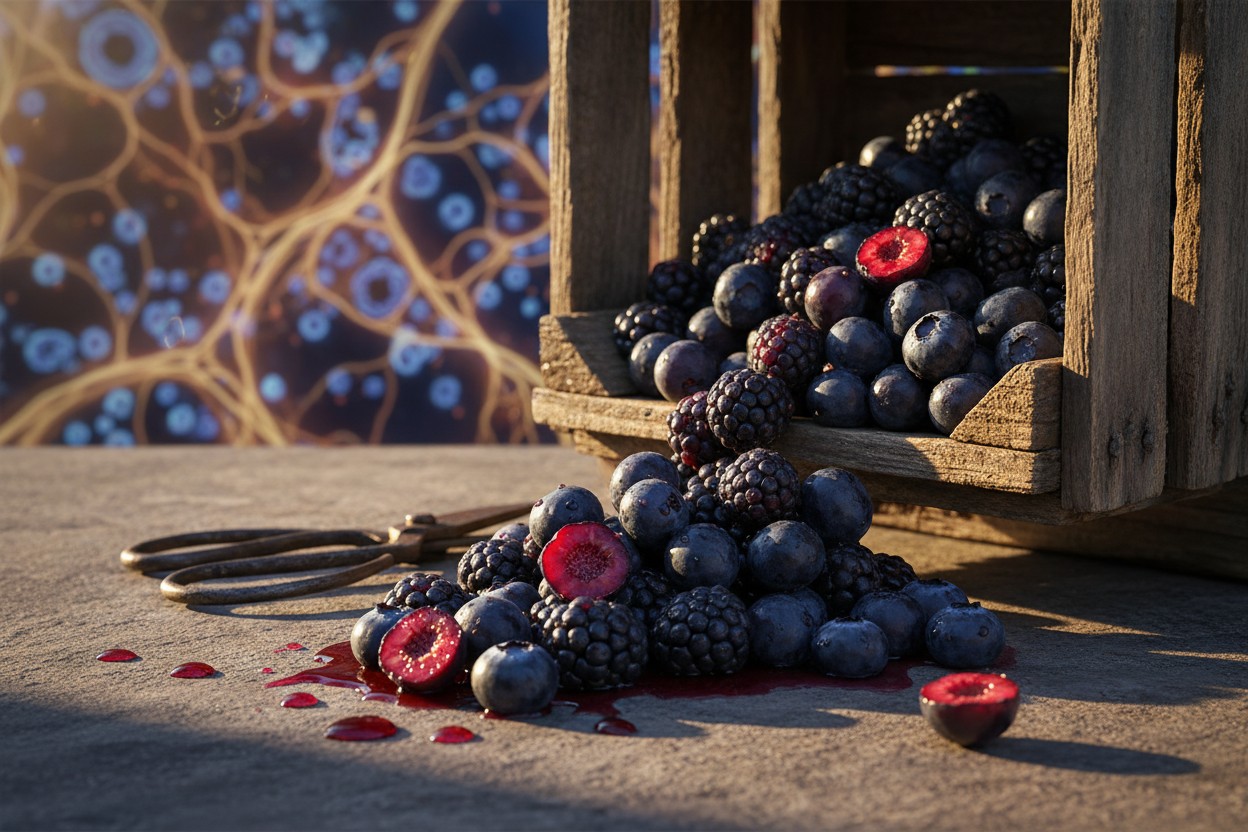
A unique, dark purple berry known as the boysenberry has been noted for its complex flavor and reported nutritional attributes.According to historical accounts and botanical descriptions, the fruit is a hybrid cross between several berry species including the European raspberry, common blackberry, American dewberry, Pacific berry and loganberryÂ[1]. Horticulturist Rudolph Boysen developed the hybrid in the 1920s in Napa, California, before moving his work to Orange CountyÂ[2].Farmer Walter Knott is credited with reviving abandoned vines and first commercially cultivating the berry in Southern California in 1932Â[1]. The fruit remains a specialty crop, often processed due to its short shelf life.Hybrid Berry Originated in 1920s CaliforniaBotanical references describe the boysenberry as a large, juicy berry with a bluish-purple color, resulting from crosses between multiple Rubus speciesÂ[2]. It is classified as an aggregate fruit, similar to raspberries and blackberriesÂ[3].Boysen, a horticulturist, conducted hybridization experiments in the early 1920s, reportedly using a loganberry-dewberry parent obtained from John Lubben's farmÂ[1]. The initial hybrid was not deemed commercially viable.In the late 1920s, George M. Darrow of theU.S. Department of Agriculture(USDA) and Knott tracked down Boysen's abandoned project. They located frail vines surviving among weeds on Boysen's former farm in AnaheimÂ[1].Knott transplanted and nurtured the vines at his farm in Buena Park. According to historical records, Knott began selling the fruit at his farm stand in 1932, and the berry's popularity contributed to the growth of Knott's Berry FarmÂ[2]. The fruit was named after its originator.Nutritional Profile According to USDA DataNutritional data for boysenberries is compiled from standard food composition sources. One cup of frozen, unsweetened boysenberries provides approximately 68 calories and 7 grams of dietary fiber, according to a detailed nutrition chartÂ[2]. The same serving contains 16.1 grams of carbohydrates and 1.5 grams of protein.The fruit is reported to be a significant source of manganese, providing 36% of the Daily Value (DV) per cupÂ[2]. It also provides 21% of the DV for folate and 13% for vitamin K.Other nutrients listed include vitamin C, vitamin E, potassium, phosphorus, magnesium and various B vitaminsÂ[2]. This nutritional composition has led some natural health advocates to classify it among nutrient-dense foodsÂ[4].Reported Health Benefits Cited in ResearchThe high fiber content of boysenberries is cited by nutrition sources as a potential aid for digestive regularity and bowel movement managementÂ[2]. The berry's polyphenolic compounds have been studied in animal models.A 2014 study published in theJournal of Nutritional Science and Vitaminologysuggested that boysenberry juice polyphenols may influence nitric oxide concentration via aortic endothelial nitric oxide synthase activation in hypertensive ratsÂ[2]. This mechanism was linked to potential blood pressure regulation.Other preliminary research has investigated boysenberries' effects on oxidative stress and lung health. A 2016 study inAJP Lungindicated that boysenberry consumption supported the development of fibrolytic lung macrophages, potentially influencing lung repair mechanisms in chronic asthma modelsÂ[2].In vitro studies, such as one published in theJournal of the Science of Food and Agriculturein 2006, have examined anthocyanins and other phenolics from boysenberry as inhibitors of oxidative stress and cellular DNA damageÂ[5]. Researchers noted that the concentration range used was within a human physiological rangeÂ[5].Common Culinary Applications and RecipesDue to its delicate nature and short shelf life, the boysenberry is frequently processed into preserves, syrups, pie fillings and other cooked productsÂ[2]. Standard recipes for boysenberry pie typically call for basic ingredients such as berries, sugar, a binding agent like gelatin and a pastry crustÂ[2]. The berry's tart and sweet flavor profile makes it suitable for jams and desserts.Simple syrup recipes involve cooking boysenberries with sugar and water, then straining the mixtureÂ[2]. The fruit is also used in tarts, smoothies and teas. Its use as an ingredient aligns with trends favoring whole, unprocessed foods in home cooking, a principle emphasized by some natural health advocatesÂ[4].Conclusion: A Fruit with Historical and Nutritional InterestThe boysenberry remains a notable example of 20th-century horticultural hybridization, developed through the work of Boysen and popularized by KnottÂ[1]. Its nutritional composition, documented by USDA data, includes significant amounts of fiber, manganese, folate and vitamin KÂ[2]. Preliminary scientific investigations, primarily in animal and in vitro models, have suggested potential influences on physiological mechanisms related to blood pressure, oxidative stress and lung macrophage activityÂ[2][5].The fruit continues to be used in traditional preserves and baked goods, particularly in regions where it is cultivated. For individuals seeking to incorporate nutrient-dense foods into their diet, sources like boysenberries represent one option among many whole-food choicesÂ[4]. Further human clinical research would be required to substantiate the health implications suggested by preliminary studies.References6 Reasons to eat more boysenberries a tangy tart fruit recipes included - NaturalNews.com. NaturalNews.com. October 21, 2021.What is Boysenberry? Nutrition Facts, Health Benefits, Recipes - FoodsforBetterHealth.com.The Encyclopedia of Healing Foods - Dr. Michael T Murray.Find out about ULTRA HEALING FOODS that fuel the gut mind and longevity - NaturalNews.com. S.D. Wells. September 22, 2025.Effects of anthocyanins and other phenolics of boysenberry and blackcurrant as inhibitors of oxidative stress and damage to cellular DNA in SH-SY5Y and HL-60 cells - Journal of the Science of Food and Agriculture. Tony K McGhie, et al. 2006.
According to historical accounts and botanical descriptions, the fruit is a hybrid cross between several berry species including the European raspberry, common blackberry, American dewberry, Pacific berry and loganberryÂ[1]. Horticulturist Rudolph Boysen developed the hybrid in the 1920s in Napa, California, before moving his work to Orange CountyÂ[2].Farmer Walter Knott is credited with reviving abandoned vines and first commercially cultivating the berry in Southern California in 1932Â[1]. The fruit remains a specialty crop, often processed due to its short shelf life.Hybrid Berry Originated in 1920s CaliforniaBotanical references describe the boysenberry as a large, juicy berry with a bluish-purple color, resulting from crosses between multiple Rubus speciesÂ[2]. It is classified as an aggregate fruit, similar to raspberries and blackberriesÂ[3].Boysen, a horticulturist, conducted hybridization experiments in the early 1920s, reportedly using a loganberry-dewberry parent obtained from John Lubben's farmÂ[1]. The initial hybrid was not deemed commercially viable.In the late 1920s, George M. Darrow of theU.S. Department of Agriculture(USDA) and Knott tracked down Boysen's abandoned project. They located frail vines surviving among weeds on Boysen's former farm in AnaheimÂ[1].Knott transplanted and nurtured the vines at his farm in Buena Park. According to historical records, Knott began selling the fruit at his farm stand in 1932, and the berry's popularity contributed to the growth of Knott's Berry FarmÂ[2]. The fruit was named after its originator.Nutritional Profile According to USDA DataNutritional data for boysenberries is compiled from standard food composition sources. One cup of frozen, unsweetened boysenberries provides approximately 68 calories and 7 grams of dietary fiber, according to a detailed nutrition chartÂ[2]. The same serving contains 16.1 grams of carbohydrates and 1.5 grams of protein.The fruit is reported to be a significant source of manganese, providing 36% of the Daily Value (DV) per cupÂ[2]. It also provides 21% of the DV for folate and 13% for vitamin K.Other nutrients listed include vitamin C, vitamin E, potassium, phosphorus, magnesium and various B vitaminsÂ[2]. This nutritional composition has led some natural health advocates to classify it among nutrient-dense foodsÂ[4].Reported Health Benefits Cited in ResearchThe high fiber content of boysenberries is cited by nutrition sources as a potential aid for digestive regularity and bowel movement managementÂ[2]. The berry's polyphenolic compounds have been studied in animal models.A 2014 study published in theJournal of Nutritional Science and Vitaminologysuggested that boysenberry juice polyphenols may influence nitric oxide concentration via aortic endothelial nitric oxide synthase activation in hypertensive ratsÂ[2]. This mechanism was linked to potential blood pressure regulation.Other preliminary research has investigated boysenberries' effects on oxidative stress and lung health. A 2016 study inAJP Lungindicated that boysenberry consumption supported the development of fibrolytic lung macrophages, potentially influencing lung repair mechanisms in chronic asthma modelsÂ[2].In vitro studies, such as one published in theJournal of the Science of Food and Agriculturein 2006, have examined anthocyanins and other phenolics from boysenberry as inhibitors of oxidative stress and cellular DNA damageÂ[5]. Researchers noted that the concentration range used was within a human physiological rangeÂ[5].Common Culinary Applications and RecipesDue to its delicate nature and short shelf life, the boysenberry is frequently processed into preserves, syrups, pie fillings and other cooked productsÂ[2]. Standard recipes for boysenberry pie typically call for basic ingredients such as berries, sugar, a binding agent like gelatin and a pastry crustÂ[2]. The berry's tart and sweet flavor profile makes it suitable for jams and desserts.Simple syrup recipes involve cooking boysenberries with sugar and water, then straining the mixtureÂ[2]. The fruit is also used in tarts, smoothies and teas. Its use as an ingredient aligns with trends favoring whole, unprocessed foods in home cooking, a principle emphasized by some natural health advocatesÂ[4].Conclusion: A Fruit with Historical and Nutritional InterestThe boysenberry remains a notable example of 20th-century horticultural hybridization, developed through the work of Boysen and popularized by KnottÂ[1]. Its nutritional composition, documented by USDA data, includes significant amounts of fiber, manganese, folate and vitamin KÂ[2]. Preliminary scientific investigations, primarily in animal and in vitro models, have suggested potential influences on physiological mechanisms related to blood pressure, oxidative stress and lung macrophage activityÂ[2][5].The fruit continues to be used in traditional preserves and baked goods, particularly in regions where it is cultivated. For individuals seeking to incorporate nutrient-dense foods into their diet, sources like boysenberries represent one option among many whole-food choicesÂ[4]. Further human clinical research would be required to substantiate the health implications suggested by preliminary studies.References6 Reasons to eat more boysenberries a tangy tart fruit recipes included - NaturalNews.com. NaturalNews.com. October 21, 2021.What is Boysenberry? Nutrition Facts, Health Benefits, Recipes - FoodsforBetterHealth.com.The Encyclopedia of Healing Foods - Dr. Michael T Murray.Find out about ULTRA HEALING FOODS that fuel the gut mind and longevity - NaturalNews.com. S.D. Wells. September 22, 2025.Effects of anthocyanins and other phenolics of boysenberry and blackcurrant as inhibitors of oxidative stress and damage to cellular DNA in SH-SY5Y and HL-60 cells - Journal of the Science of Food and Agriculture. Tony K McGhie, et al. 2006.
According to historical accounts and botanical descriptions, the fruit is a hybrid cross between several berry species including the European raspberry, common blackberry, American dewberry, Pacific berry and loganberryÂ[1]. Horticulturist Rudolph Boysen developed the hybrid in the 1920s in Napa, California, before moving his work to Orange CountyÂ[2].Farmer Walter Knott is credited with reviving abandoned vines and first commercially cultivating the berry in Southern California in 1932Â[1]. The fruit remains a specialty crop, often processed due to its short shelf life.Hybrid Berry Originated in 1920s CaliforniaBotanical references describe the boysenberry as a large, juicy berry with a bluish-purple color, resulting from crosses between multiple Rubus speciesÂ[2]. It is classified as an aggregate fruit, similar to raspberries and blackberriesÂ[3].Boysen, a horticulturist, conducted hybridization experiments in the early 1920s, reportedly using a loganberry-dewberry parent obtained from John Lubben's farmÂ[1]. The initial hybrid was not deemed commercially viable.In the late 1920s, George M. Darrow of theU.S. Department of Agriculture(USDA) and Knott tracked down Boysen's abandoned project. They located frail vines surviving among weeds on Boysen's former farm in AnaheimÂ[1].Knott transplanted and nurtured the vines at his farm in Buena Park. According to historical records, Knott began selling the fruit at his farm stand in 1932, and the berry's popularity contributed to the growth of Knott's Berry FarmÂ[2]. The fruit was named after its originator.Nutritional Profile According to USDA DataNutritional data for boysenberries is compiled from standard food composition sources. One cup of frozen, unsweetened boysenberries provides approximately 68 calories and 7 grams of dietary fiber, according to a detailed nutrition chartÂ[2]. The same serving contains 16.1 grams of carbohydrates and 1.5 grams of protein.The fruit is reported to be a significant source of manganese, providing 36% of the Daily Value (DV) per cupÂ[2]. It also provides 21% of the DV for folate and 13% for vitamin K.Other nutrients listed include vitamin C, vitamin E, potassium, phosphorus, magnesium and various B vitaminsÂ[2]. This nutritional composition has led some natural health advocates to classify it among nutrient-dense foodsÂ[4].Reported Health Benefits Cited in ResearchThe high fiber content of boysenberries is cited by nutrition sources as a potential aid for digestive regularity and bowel movement managementÂ[2]. The berry's polyphenolic compounds have been studied in animal models.A 2014 study published in theJournal of Nutritional Science and Vitaminologysuggested that boysenberry juice polyphenols may influence nitric oxide concentration via aortic endothelial nitric oxide synthase activation in hypertensive ratsÂ[2]. This mechanism was linked to potential blood pressure regulation.Other preliminary research has investigated boysenberries' effects on oxidative stress and lung health. A 2016 study inAJP Lungindicated that boysenberry consumption supported the development of fibrolytic lung macrophages, potentially influencing lung repair mechanisms in chronic asthma modelsÂ[2].In vitro studies, such as one published in theJournal of the Science of Food and Agriculturein 2006, have examined anthocyanins and other phenolics from boysenberry as inhibitors of oxidative stress and cellular DNA damageÂ[5]. Researchers noted that the concentration range used was within a human physiological rangeÂ[5].Common Culinary Applications and RecipesDue to its delicate nature and short shelf life, the boysenberry is frequently processed into preserves, syrups, pie fillings and other cooked productsÂ[2]. Standard recipes for boysenberry pie typically call for basic ingredients such as berries, sugar, a binding agent like gelatin and a pastry crustÂ[2]. The berry's tart and sweet flavor profile makes it suitable for jams and desserts.Simple syrup recipes involve cooking boysenberries with sugar and water, then straining the mixtureÂ[2]. The fruit is also used in tarts, smoothies and teas. Its use as an ingredient aligns with trends favoring whole, unprocessed foods in home cooking, a principle emphasized by some natural health advocatesÂ[4].Conclusion: A Fruit with Historical and Nutritional InterestThe boysenberry remains a notable example of 20th-century horticultural hybridization, developed through the work of Boysen and popularized by KnottÂ[1]. Its nutritional composition, documented by USDA data, includes significant amounts of fiber, manganese, folate and vitamin KÂ[2]. Preliminary scientific investigations, primarily in animal and in vitro models, have suggested potential influences on physiological mechanisms related to blood pressure, oxidative stress and lung macrophage activityÂ[2][5].The fruit continues to be used in traditional preserves and baked goods, particularly in regions where it is cultivated. For individuals seeking to incorporate nutrient-dense foods into their diet, sources like boysenberries represent one option among many whole-food choicesÂ[4]. Further human clinical research would be required to substantiate the health implications suggested by preliminary studies.References6 Reasons to eat more boysenberries a tangy tart fruit recipes included - NaturalNews.com. NaturalNews.com. October 21, 2021.What is Boysenberry? Nutrition Facts, Health Benefits, Recipes - FoodsforBetterHealth.com.The Encyclopedia of Healing Foods - Dr. Michael T Murray.Find out about ULTRA HEALING FOODS that fuel the gut mind and longevity - NaturalNews.com. S.D. Wells. September 22, 2025.Effects of anthocyanins and other phenolics of boysenberry and blackcurrant as inhibitors of oxidative stress and damage to cellular DNA in SH-SY5Y and HL-60 cells - Journal of the Science of Food and Agriculture. Tony K McGhie, et al. 2006.
Farmer Walter Knott is credited with reviving abandoned vines and first commercially cultivating the berry in Southern California in 1932Â[1]. The fruit remains a specialty crop, often processed due to its short shelf life.Hybrid Berry Originated in 1920s CaliforniaBotanical references describe the boysenberry as a large, juicy berry with a bluish-purple color, resulting from crosses between multiple Rubus speciesÂ[2]. It is classified as an aggregate fruit, similar to raspberries and blackberriesÂ[3].Boysen, a horticulturist, conducted hybridization experiments in the early 1920s, reportedly using a loganberry-dewberry parent obtained from John Lubben's farmÂ[1]. The initial hybrid was not deemed commercially viable.In the late 1920s, George M. Darrow of theU.S. Department of Agriculture(USDA) and Knott tracked down Boysen's abandoned project. They located frail vines surviving among weeds on Boysen's former farm in AnaheimÂ[1].Knott transplanted and nurtured the vines at his farm in Buena Park. According to historical records, Knott began selling the fruit at his farm stand in 1932, and the berry's popularity contributed to the growth of Knott's Berry FarmÂ[2]. The fruit was named after its originator.Nutritional Profile According to USDA DataNutritional data for boysenberries is compiled from standard food composition sources. One cup of frozen, unsweetened boysenberries provides approximately 68 calories and 7 grams of dietary fiber, according to a detailed nutrition chartÂ[2]. The same serving contains 16.1 grams of carbohydrates and 1.5 grams of protein.The fruit is reported to be a significant source of manganese, providing 36% of the Daily Value (DV) per cupÂ[2]. It also provides 21% of the DV for folate and 13% for vitamin K.Other nutrients listed include vitamin C, vitamin E, potassium, phosphorus, magnesium and various B vitaminsÂ[2]. This nutritional composition has led some natural health advocates to classify it among nutrient-dense foodsÂ[4].Reported Health Benefits Cited in ResearchThe high fiber content of boysenberries is cited by nutrition sources as a potential aid for digestive regularity and bowel movement managementÂ[2]. The berry's polyphenolic compounds have been studied in animal models.A 2014 study published in theJournal of Nutritional Science and Vitaminologysuggested that boysenberry juice polyphenols may influence nitric oxide concentration via aortic endothelial nitric oxide synthase activation in hypertensive ratsÂ[2]. This mechanism was linked to potential blood pressure regulation.Other preliminary research has investigated boysenberries' effects on oxidative stress and lung health. A 2016 study inAJP Lungindicated that boysenberry consumption supported the development of fibrolytic lung macrophages, potentially influencing lung repair mechanisms in chronic asthma modelsÂ[2].In vitro studies, such as one published in theJournal of the Science of Food and Agriculturein 2006, have examined anthocyanins and other phenolics from boysenberry as inhibitors of oxidative stress and cellular DNA damageÂ[5]. Researchers noted that the concentration range used was within a human physiological rangeÂ[5].Common Culinary Applications and RecipesDue to its delicate nature and short shelf life, the boysenberry is frequently processed into preserves, syrups, pie fillings and other cooked productsÂ[2]. Standard recipes for boysenberry pie typically call for basic ingredients such as berries, sugar, a binding agent like gelatin and a pastry crustÂ[2]. The berry's tart and sweet flavor profile makes it suitable for jams and desserts.Simple syrup recipes involve cooking boysenberries with sugar and water, then straining the mixtureÂ[2]. The fruit is also used in tarts, smoothies and teas. Its use as an ingredient aligns with trends favoring whole, unprocessed foods in home cooking, a principle emphasized by some natural health advocatesÂ[4].Conclusion: A Fruit with Historical and Nutritional InterestThe boysenberry remains a notable example of 20th-century horticultural hybridization, developed through the work of Boysen and popularized by KnottÂ[1]. Its nutritional composition, documented by USDA data, includes significant amounts of fiber, manganese, folate and vitamin KÂ[2]. Preliminary scientific investigations, primarily in animal and in vitro models, have suggested potential influences on physiological mechanisms related to blood pressure, oxidative stress and lung macrophage activityÂ[2][5].The fruit continues to be used in traditional preserves and baked goods, particularly in regions where it is cultivated. For individuals seeking to incorporate nutrient-dense foods into their diet, sources like boysenberries represent one option among many whole-food choicesÂ[4]. Further human clinical research would be required to substantiate the health implications suggested by preliminary studies.References6 Reasons to eat more boysenberries a tangy tart fruit recipes included - NaturalNews.com. NaturalNews.com. October 21, 2021.What is Boysenberry? Nutrition Facts, Health Benefits, Recipes - FoodsforBetterHealth.com.The Encyclopedia of Healing Foods - Dr. Michael T Murray.Find out about ULTRA HEALING FOODS that fuel the gut mind and longevity - NaturalNews.com. S.D. Wells. September 22, 2025.Effects of anthocyanins and other phenolics of boysenberry and blackcurrant as inhibitors of oxidative stress and damage to cellular DNA in SH-SY5Y and HL-60 cells - Journal of the Science of Food and Agriculture. Tony K McGhie, et al. 2006.
Farmer Walter Knott is credited with reviving abandoned vines and first commercially cultivating the berry in Southern California in 1932Â[1]. The fruit remains a specialty crop, often processed due to its short shelf life.Hybrid Berry Originated in 1920s CaliforniaBotanical references describe the boysenberry as a large, juicy berry with a bluish-purple color, resulting from crosses between multiple Rubus speciesÂ[2]. It is classified as an aggregate fruit, similar to raspberries and blackberriesÂ[3].Boysen, a horticulturist, conducted hybridization experiments in the early 1920s, reportedly using a loganberry-dewberry parent obtained from John Lubben's farmÂ[1]. The initial hybrid was not deemed commercially viable.In the late 1920s, George M. Darrow of theU.S. Department of Agriculture(USDA) and Knott tracked down Boysen's abandoned project. They located frail vines surviving among weeds on Boysen's former farm in AnaheimÂ[1].Knott transplanted and nurtured the vines at his farm in Buena Park. According to historical records, Knott began selling the fruit at his farm stand in 1932, and the berry's popularity contributed to the growth of Knott's Berry FarmÂ[2]. The fruit was named after its originator.Nutritional Profile According to USDA DataNutritional data for boysenberries is compiled from standard food composition sources. One cup of frozen, unsweetened boysenberries provides approximately 68 calories and 7 grams of dietary fiber, according to a detailed nutrition chartÂ[2]. The same serving contains 16.1 grams of carbohydrates and 1.5 grams of protein.The fruit is reported to be a significant source of manganese, providing 36% of the Daily Value (DV) per cupÂ[2]. It also provides 21% of the DV for folate and 13% for vitamin K.Other nutrients listed include vitamin C, vitamin E, potassium, phosphorus, magnesium and various B vitaminsÂ[2]. This nutritional composition has led some natural health advocates to classify it among nutrient-dense foodsÂ[4].Reported Health Benefits Cited in ResearchThe high fiber content of boysenberries is cited by nutrition sources as a potential aid for digestive regularity and bowel movement managementÂ[2]. The berry's polyphenolic compounds have been studied in animal models.A 2014 study published in theJournal of Nutritional Science and Vitaminologysuggested that boysenberry juice polyphenols may influence nitric oxide concentration via aortic endothelial nitric oxide synthase activation in hypertensive ratsÂ[2]. This mechanism was linked to potential blood pressure regulation.Other preliminary research has investigated boysenberries' effects on oxidative stress and lung health. A 2016 study inAJP Lungindicated that boysenberry consumption supported the development of fibrolytic lung macrophages, potentially influencing lung repair mechanisms in chronic asthma modelsÂ[2].In vitro studies, such as one published in theJournal of the Science of Food and Agriculturein 2006, have examined anthocyanins and other phenolics from boysenberry as inhibitors of oxidative stress and cellular DNA damageÂ[5]. Researchers noted that the concentration range used was within a human physiological rangeÂ[5].Common Culinary Applications and RecipesDue to its delicate nature and short shelf life, the boysenberry is frequently processed into preserves, syrups, pie fillings and other cooked productsÂ[2]. Standard recipes for boysenberry pie typically call for basic ingredients such as berries, sugar, a binding agent like gelatin and a pastry crustÂ[2]. The berry's tart and sweet flavor profile makes it suitable for jams and desserts.Simple syrup recipes involve cooking boysenberries with sugar and water, then straining the mixtureÂ[2]. The fruit is also used in tarts, smoothies and teas. Its use as an ingredient aligns with trends favoring whole, unprocessed foods in home cooking, a principle emphasized by some natural health advocatesÂ[4].Conclusion: A Fruit with Historical and Nutritional InterestThe boysenberry remains a notable example of 20th-century horticultural hybridization, developed through the work of Boysen and popularized by KnottÂ[1]. Its nutritional composition, documented by USDA data, includes significant amounts of fiber, manganese, folate and vitamin KÂ[2]. Preliminary scientific investigations, primarily in animal and in vitro models, have suggested potential influences on physiological mechanisms related to blood pressure, oxidative stress and lung macrophage activityÂ[2][5].The fruit continues to be used in traditional preserves and baked goods, particularly in regions where it is cultivated. For individuals seeking to incorporate nutrient-dense foods into their diet, sources like boysenberries represent one option among many whole-food choicesÂ[4]. Further human clinical research would be required to substantiate the health implications suggested by preliminary studies.References6 Reasons to eat more boysenberries a tangy tart fruit recipes included - NaturalNews.com. NaturalNews.com. October 21, 2021.What is Boysenberry? Nutrition Facts, Health Benefits, Recipes - FoodsforBetterHealth.com.The Encyclopedia of Healing Foods - Dr. Michael T Murray.Find out about ULTRA HEALING FOODS that fuel the gut mind and longevity - NaturalNews.com. S.D. Wells. September 22, 2025.Effects of anthocyanins and other phenolics of boysenberry and blackcurrant as inhibitors of oxidative stress and damage to cellular DNA in SH-SY5Y and HL-60 cells - Journal of the Science of Food and Agriculture. Tony K McGhie, et al. 2006.
Hybrid Berry Originated in 1920s CaliforniaBotanical references describe the boysenberry as a large, juicy berry with a bluish-purple color, resulting from crosses between multiple Rubus speciesÂ[2]. It is classified as an aggregate fruit, similar to raspberries and blackberriesÂ[3].Boysen, a horticulturist, conducted hybridization experiments in the early 1920s, reportedly using a loganberry-dewberry parent obtained from John Lubben's farmÂ[1]. The initial hybrid was not deemed commercially viable.In the late 1920s, George M. Darrow of theU.S. Department of Agriculture(USDA) and Knott tracked down Boysen's abandoned project. They located frail vines surviving among weeds on Boysen's former farm in AnaheimÂ[1].Knott transplanted and nurtured the vines at his farm in Buena Park. According to historical records, Knott began selling the fruit at his farm stand in 1932, and the berry's popularity contributed to the growth of Knott's Berry FarmÂ[2]. The fruit was named after its originator.Nutritional Profile According to USDA DataNutritional data for boysenberries is compiled from standard food composition sources. One cup of frozen, unsweetened boysenberries provides approximately 68 calories and 7 grams of dietary fiber, according to a detailed nutrition chartÂ[2]. The same serving contains 16.1 grams of carbohydrates and 1.5 grams of protein.The fruit is reported to be a significant source of manganese, providing 36% of the Daily Value (DV) per cupÂ[2]. It also provides 21% of the DV for folate and 13% for vitamin K.Other nutrients listed include vitamin C, vitamin E, potassium, phosphorus, magnesium and various B vitaminsÂ[2]. This nutritional composition has led some natural health advocates to classify it among nutrient-dense foodsÂ[4].Reported Health Benefits Cited in ResearchThe high fiber content of boysenberries is cited by nutrition sources as a potential aid for digestive regularity and bowel movement managementÂ[2]. The berry's polyphenolic compounds have been studied in animal models.A 2014 study published in theJournal of Nutritional Science and Vitaminologysuggested that boysenberry juice polyphenols may influence nitric oxide concentration via aortic endothelial nitric oxide synthase activation in hypertensive ratsÂ[2]. This mechanism was linked to potential blood pressure regulation.Other preliminary research has investigated boysenberries' effects on oxidative stress and lung health. A 2016 study inAJP Lungindicated that boysenberry consumption supported the development of fibrolytic lung macrophages, potentially influencing lung repair mechanisms in chronic asthma modelsÂ[2].In vitro studies, such as one published in theJournal of the Science of Food and Agriculturein 2006, have examined anthocyanins and other phenolics from boysenberry as inhibitors of oxidative stress and cellular DNA damageÂ[5]. Researchers noted that the concentration range used was within a human physiological rangeÂ[5].Common Culinary Applications and RecipesDue to its delicate nature and short shelf life, the boysenberry is frequently processed into preserves, syrups, pie fillings and other cooked productsÂ[2]. Standard recipes for boysenberry pie typically call for basic ingredients such as berries, sugar, a binding agent like gelatin and a pastry crustÂ[2]. The berry's tart and sweet flavor profile makes it suitable for jams and desserts.Simple syrup recipes involve cooking boysenberries with sugar and water, then straining the mixtureÂ[2]. The fruit is also used in tarts, smoothies and teas. Its use as an ingredient aligns with trends favoring whole, unprocessed foods in home cooking, a principle emphasized by some natural health advocatesÂ[4].Conclusion: A Fruit with Historical and Nutritional InterestThe boysenberry remains a notable example of 20th-century horticultural hybridization, developed through the work of Boysen and popularized by KnottÂ[1]. Its nutritional composition, documented by USDA data, includes significant amounts of fiber, manganese, folate and vitamin KÂ[2]. Preliminary scientific investigations, primarily in animal and in vitro models, have suggested potential influences on physiological mechanisms related to blood pressure, oxidative stress and lung macrophage activityÂ[2][5].The fruit continues to be used in traditional preserves and baked goods, particularly in regions where it is cultivated. For individuals seeking to incorporate nutrient-dense foods into their diet, sources like boysenberries represent one option among many whole-food choicesÂ[4]. Further human clinical research would be required to substantiate the health implications suggested by preliminary studies.References6 Reasons to eat more boysenberries a tangy tart fruit recipes included - NaturalNews.com. NaturalNews.com. October 21, 2021.What is Boysenberry? Nutrition Facts, Health Benefits, Recipes - FoodsforBetterHealth.com.The Encyclopedia of Healing Foods - Dr. Michael T Murray.Find out about ULTRA HEALING FOODS that fuel the gut mind and longevity - NaturalNews.com. S.D. Wells. September 22, 2025.Effects of anthocyanins and other phenolics of boysenberry and blackcurrant as inhibitors of oxidative stress and damage to cellular DNA in SH-SY5Y and HL-60 cells - Journal of the Science of Food and Agriculture. Tony K McGhie, et al. 2006.
Botanical references describe the boysenberry as a large, juicy berry with a bluish-purple color, resulting from crosses between multiple Rubus speciesÂ[2]. It is classified as an aggregate fruit, similar to raspberries and blackberriesÂ[3].Boysen, a horticulturist, conducted hybridization experiments in the early 1920s, reportedly using a loganberry-dewberry parent obtained from John Lubben's farmÂ[1]. The initial hybrid was not deemed commercially viable.In the late 1920s, George M. Darrow of theU.S. Department of Agriculture(USDA) and Knott tracked down Boysen's abandoned project. They located frail vines surviving among weeds on Boysen's former farm in AnaheimÂ[1].Knott transplanted and nurtured the vines at his farm in Buena Park. According to historical records, Knott began selling the fruit at his farm stand in 1932, and the berry's popularity contributed to the growth of Knott's Berry FarmÂ[2]. The fruit was named after its originator.Nutritional Profile According to USDA DataNutritional data for boysenberries is compiled from standard food composition sources. One cup of frozen, unsweetened boysenberries provides approximately 68 calories and 7 grams of dietary fiber, according to a detailed nutrition chartÂ[2]. The same serving contains 16.1 grams of carbohydrates and 1.5 grams of protein.The fruit is reported to be a significant source of manganese, providing 36% of the Daily Value (DV) per cupÂ[2]. It also provides 21% of the DV for folate and 13% for vitamin K.Other nutrients listed include vitamin C, vitamin E, potassium, phosphorus, magnesium and various B vitaminsÂ[2]. This nutritional composition has led some natural health advocates to classify it among nutrient-dense foodsÂ[4].Reported Health Benefits Cited in ResearchThe high fiber content of boysenberries is cited by nutrition sources as a potential aid for digestive regularity and bowel movement managementÂ[2]. The berry's polyphenolic compounds have been studied in animal models.A 2014 study published in theJournal of Nutritional Science and Vitaminologysuggested that boysenberry juice polyphenols may influence nitric oxide concentration via aortic endothelial nitric oxide synthase activation in hypertensive ratsÂ[2]. This mechanism was linked to potential blood pressure regulation.Other preliminary research has investigated boysenberries' effects on oxidative stress and lung health. A 2016 study inAJP Lungindicated that boysenberry consumption supported the development of fibrolytic lung macrophages, potentially influencing lung repair mechanisms in chronic asthma modelsÂ[2].In vitro studies, such as one published in theJournal of the Science of Food and Agriculturein 2006, have examined anthocyanins and other phenolics from boysenberry as inhibitors of oxidative stress and cellular DNA damageÂ[5]. Researchers noted that the concentration range used was within a human physiological rangeÂ[5].Common Culinary Applications and RecipesDue to its delicate nature and short shelf life, the boysenberry is frequently processed into preserves, syrups, pie fillings and other cooked productsÂ[2]. Standard recipes for boysenberry pie typically call for basic ingredients such as berries, sugar, a binding agent like gelatin and a pastry crustÂ[2]. The berry's tart and sweet flavor profile makes it suitable for jams and desserts.Simple syrup recipes involve cooking boysenberries with sugar and water, then straining the mixtureÂ[2]. The fruit is also used in tarts, smoothies and teas. Its use as an ingredient aligns with trends favoring whole, unprocessed foods in home cooking, a principle emphasized by some natural health advocatesÂ[4].Conclusion: A Fruit with Historical and Nutritional InterestThe boysenberry remains a notable example of 20th-century horticultural hybridization, developed through the work of Boysen and popularized by KnottÂ[1]. Its nutritional composition, documented by USDA data, includes significant amounts of fiber, manganese, folate and vitamin KÂ[2]. Preliminary scientific investigations, primarily in animal and in vitro models, have suggested potential influences on physiological mechanisms related to blood pressure, oxidative stress and lung macrophage activityÂ[2][5].The fruit continues to be used in traditional preserves and baked goods, particularly in regions where it is cultivated. For individuals seeking to incorporate nutrient-dense foods into their diet, sources like boysenberries represent one option among many whole-food choicesÂ[4]. Further human clinical research would be required to substantiate the health implications suggested by preliminary studies.References6 Reasons to eat more boysenberries a tangy tart fruit recipes included - NaturalNews.com. NaturalNews.com. October 21, 2021.What is Boysenberry? Nutrition Facts, Health Benefits, Recipes - FoodsforBetterHealth.com.The Encyclopedia of Healing Foods - Dr. Michael T Murray.Find out about ULTRA HEALING FOODS that fuel the gut mind and longevity - NaturalNews.com. S.D. Wells. September 22, 2025.Effects of anthocyanins and other phenolics of boysenberry and blackcurrant as inhibitors of oxidative stress and damage to cellular DNA in SH-SY5Y and HL-60 cells - Journal of the Science of Food and Agriculture. Tony K McGhie, et al. 2006.
Boysen, a horticulturist, conducted hybridization experiments in the early 1920s, reportedly using a loganberry-dewberry parent obtained from John Lubben's farmÂ[1]. The initial hybrid was not deemed commercially viable.In the late 1920s, George M. Darrow of theU.S. Department of Agriculture(USDA) and Knott tracked down Boysen's abandoned project. They located frail vines surviving among weeds on Boysen's former farm in AnaheimÂ[1].Knott transplanted and nurtured the vines at his farm in Buena Park. According to historical records, Knott began selling the fruit at his farm stand in 1932, and the berry's popularity contributed to the growth of Knott's Berry FarmÂ[2]. The fruit was named after its originator.Nutritional Profile According to USDA DataNutritional data for boysenberries is compiled from standard food composition sources. One cup of frozen, unsweetened boysenberries provides approximately 68 calories and 7 grams of dietary fiber, according to a detailed nutrition chartÂ[2]. The same serving contains 16.1 grams of carbohydrates and 1.5 grams of protein.The fruit is reported to be a significant source of manganese, providing 36% of the Daily Value (DV) per cupÂ[2]. It also provides 21% of the DV for folate and 13% for vitamin K.Other nutrients listed include vitamin C, vitamin E, potassium, phosphorus, magnesium and various B vitaminsÂ[2]. This nutritional composition has led some natural health advocates to classify it among nutrient-dense foodsÂ[4].Reported Health Benefits Cited in ResearchThe high fiber content of boysenberries is cited by nutrition sources as a potential aid for digestive regularity and bowel movement managementÂ[2]. The berry's polyphenolic compounds have been studied in animal models.A 2014 study published in theJournal of Nutritional Science and Vitaminologysuggested that boysenberry juice polyphenols may influence nitric oxide concentration via aortic endothelial nitric oxide synthase activation in hypertensive ratsÂ[2]. This mechanism was linked to potential blood pressure regulation.Other preliminary research has investigated boysenberries' effects on oxidative stress and lung health. A 2016 study inAJP Lungindicated that boysenberry consumption supported the development of fibrolytic lung macrophages, potentially influencing lung repair mechanisms in chronic asthma modelsÂ[2].In vitro studies, such as one published in theJournal of the Science of Food and Agriculturein 2006, have examined anthocyanins and other phenolics from boysenberry as inhibitors of oxidative stress and cellular DNA damageÂ[5]. Researchers noted that the concentration range used was within a human physiological rangeÂ[5].Common Culinary Applications and RecipesDue to its delicate nature and short shelf life, the boysenberry is frequently processed into preserves, syrups, pie fillings and other cooked productsÂ[2]. Standard recipes for boysenberry pie typically call for basic ingredients such as berries, sugar, a binding agent like gelatin and a pastry crustÂ[2]. The berry's tart and sweet flavor profile makes it suitable for jams and desserts.Simple syrup recipes involve cooking boysenberries with sugar and water, then straining the mixtureÂ[2]. The fruit is also used in tarts, smoothies and teas. Its use as an ingredient aligns with trends favoring whole, unprocessed foods in home cooking, a principle emphasized by some natural health advocatesÂ[4].Conclusion: A Fruit with Historical and Nutritional InterestThe boysenberry remains a notable example of 20th-century horticultural hybridization, developed through the work of Boysen and popularized by KnottÂ[1]. Its nutritional composition, documented by USDA data, includes significant amounts of fiber, manganese, folate and vitamin KÂ[2]. Preliminary scientific investigations, primarily in animal and in vitro models, have suggested potential influences on physiological mechanisms related to blood pressure, oxidative stress and lung macrophage activityÂ[2][5].The fruit continues to be used in traditional preserves and baked goods, particularly in regions where it is cultivated. For individuals seeking to incorporate nutrient-dense foods into their diet, sources like boysenberries represent one option among many whole-food choicesÂ[4]. Further human clinical research would be required to substantiate the health implications suggested by preliminary studies.References6 Reasons to eat more boysenberries a tangy tart fruit recipes included - NaturalNews.com. NaturalNews.com. October 21, 2021.What is Boysenberry? Nutrition Facts, Health Benefits, Recipes - FoodsforBetterHealth.com.The Encyclopedia of Healing Foods - Dr. Michael T Murray.Find out about ULTRA HEALING FOODS that fuel the gut mind and longevity - NaturalNews.com. S.D. Wells. September 22, 2025.Effects of anthocyanins and other phenolics of boysenberry and blackcurrant as inhibitors of oxidative stress and damage to cellular DNA in SH-SY5Y and HL-60 cells - Journal of the Science of Food and Agriculture. Tony K McGhie, et al. 2006.
Boysen, a horticulturist, conducted hybridization experiments in the early 1920s, reportedly using a loganberry-dewberry parent obtained from John Lubben's farmÂ[1]. The initial hybrid was not deemed commercially viable.In the late 1920s, George M. Darrow of theU.S. Department of Agriculture(USDA) and Knott tracked down Boysen's abandoned project. They located frail vines surviving among weeds on Boysen's former farm in AnaheimÂ[1].Knott transplanted and nurtured the vines at his farm in Buena Park. According to historical records, Knott began selling the fruit at his farm stand in 1932, and the berry's popularity contributed to the growth of Knott's Berry FarmÂ[2]. The fruit was named after its originator.Nutritional Profile According to USDA DataNutritional data for boysenberries is compiled from standard food composition sources. One cup of frozen, unsweetened boysenberries provides approximately 68 calories and 7 grams of dietary fiber, according to a detailed nutrition chartÂ[2]. The same serving contains 16.1 grams of carbohydrates and 1.5 grams of protein.The fruit is reported to be a significant source of manganese, providing 36% of the Daily Value (DV) per cupÂ[2]. It also provides 21% of the DV for folate and 13% for vitamin K.Other nutrients listed include vitamin C, vitamin E, potassium, phosphorus, magnesium and various B vitaminsÂ[2]. This nutritional composition has led some natural health advocates to classify it among nutrient-dense foodsÂ[4].Reported Health Benefits Cited in ResearchThe high fiber content of boysenberries is cited by nutrition sources as a potential aid for digestive regularity and bowel movement managementÂ[2]. The berry's polyphenolic compounds have been studied in animal models.A 2014 study published in theJournal of Nutritional Science and Vitaminologysuggested that boysenberry juice polyphenols may influence nitric oxide concentration via aortic endothelial nitric oxide synthase activation in hypertensive ratsÂ[2]. This mechanism was linked to potential blood pressure regulation.Other preliminary research has investigated boysenberries' effects on oxidative stress and lung health. A 2016 study inAJP Lungindicated that boysenberry consumption supported the development of fibrolytic lung macrophages, potentially influencing lung repair mechanisms in chronic asthma modelsÂ[2].In vitro studies, such as one published in theJournal of the Science of Food and Agriculturein 2006, have examined anthocyanins and other phenolics from boysenberry as inhibitors of oxidative stress and cellular DNA damageÂ[5]. Researchers noted that the concentration range used was within a human physiological rangeÂ[5].Common Culinary Applications and RecipesDue to its delicate nature and short shelf life, the boysenberry is frequently processed into preserves, syrups, pie fillings and other cooked productsÂ[2]. Standard recipes for boysenberry pie typically call for basic ingredients such as berries, sugar, a binding agent like gelatin and a pastry crustÂ[2]. The berry's tart and sweet flavor profile makes it suitable for jams and desserts.Simple syrup recipes involve cooking boysenberries with sugar and water, then straining the mixtureÂ[2]. The fruit is also used in tarts, smoothies and teas. Its use as an ingredient aligns with trends favoring whole, unprocessed foods in home cooking, a principle emphasized by some natural health advocatesÂ[4].Conclusion: A Fruit with Historical and Nutritional InterestThe boysenberry remains a notable example of 20th-century horticultural hybridization, developed through the work of Boysen and popularized by KnottÂ[1]. Its nutritional composition, documented by USDA data, includes significant amounts of fiber, manganese, folate and vitamin KÂ[2]. Preliminary scientific investigations, primarily in animal and in vitro models, have suggested potential influences on physiological mechanisms related to blood pressure, oxidative stress and lung macrophage activityÂ[2][5].The fruit continues to be used in traditional preserves and baked goods, particularly in regions where it is cultivated. For individuals seeking to incorporate nutrient-dense foods into their diet, sources like boysenberries represent one option among many whole-food choicesÂ[4]. Further human clinical research would be required to substantiate the health implications suggested by preliminary studies.References6 Reasons to eat more boysenberries a tangy tart fruit recipes included - NaturalNews.com. NaturalNews.com. October 21, 2021.What is Boysenberry? Nutrition Facts, Health Benefits, Recipes - FoodsforBetterHealth.com.The Encyclopedia of Healing Foods - Dr. Michael T Murray.Find out about ULTRA HEALING FOODS that fuel the gut mind and longevity - NaturalNews.com. S.D. Wells. September 22, 2025.Effects of anthocyanins and other phenolics of boysenberry and blackcurrant as inhibitors of oxidative stress and damage to cellular DNA in SH-SY5Y and HL-60 cells - Journal of the Science of Food and Agriculture. Tony K McGhie, et al. 2006.
In the late 1920s, George M. Darrow of theU.S. Department of Agriculture(USDA) and Knott tracked down Boysen's abandoned project. They located frail vines surviving among weeds on Boysen's former farm in AnaheimÂ[1].Knott transplanted and nurtured the vines at his farm in Buena Park. According to historical records, Knott began selling the fruit at his farm stand in 1932, and the berry's popularity contributed to the growth of Knott's Berry FarmÂ[2]. The fruit was named after its originator.Nutritional Profile According to USDA DataNutritional data for boysenberries is compiled from standard food composition sources. One cup of frozen, unsweetened boysenberries provides approximately 68 calories and 7 grams of dietary fiber, according to a detailed nutrition chartÂ[2]. The same serving contains 16.1 grams of carbohydrates and 1.5 grams of protein.The fruit is reported to be a significant source of manganese, providing 36% of the Daily Value (DV) per cupÂ[2]. It also provides 21% of the DV for folate and 13% for vitamin K.Other nutrients listed include vitamin C, vitamin E, potassium, phosphorus, magnesium and various B vitaminsÂ[2]. This nutritional composition has led some natural health advocates to classify it among nutrient-dense foodsÂ[4].Reported Health Benefits Cited in ResearchThe high fiber content of boysenberries is cited by nutrition sources as a potential aid for digestive regularity and bowel movement managementÂ[2]. The berry's polyphenolic compounds have been studied in animal models.A 2014 study published in theJournal of Nutritional Science and Vitaminologysuggested that boysenberry juice polyphenols may influence nitric oxide concentration via aortic endothelial nitric oxide synthase activation in hypertensive ratsÂ[2]. This mechanism was linked to potential blood pressure regulation.Other preliminary research has investigated boysenberries' effects on oxidative stress and lung health. A 2016 study inAJP Lungindicated that boysenberry consumption supported the development of fibrolytic lung macrophages, potentially influencing lung repair mechanisms in chronic asthma modelsÂ[2].In vitro studies, such as one published in theJournal of the Science of Food and Agriculturein 2006, have examined anthocyanins and other phenolics from boysenberry as inhibitors of oxidative stress and cellular DNA damageÂ[5]. Researchers noted that the concentration range used was within a human physiological rangeÂ[5].Common Culinary Applications and RecipesDue to its delicate nature and short shelf life, the boysenberry is frequently processed into preserves, syrups, pie fillings and other cooked productsÂ[2]. Standard recipes for boysenberry pie typically call for basic ingredients such as berries, sugar, a binding agent like gelatin and a pastry crustÂ[2]. The berry's tart and sweet flavor profile makes it suitable for jams and desserts.Simple syrup recipes involve cooking boysenberries with sugar and water, then straining the mixtureÂ[2]. The fruit is also used in tarts, smoothies and teas. Its use as an ingredient aligns with trends favoring whole, unprocessed foods in home cooking, a principle emphasized by some natural health advocatesÂ[4].Conclusion: A Fruit with Historical and Nutritional InterestThe boysenberry remains a notable example of 20th-century horticultural hybridization, developed through the work of Boysen and popularized by KnottÂ[1]. Its nutritional composition, documented by USDA data, includes significant amounts of fiber, manganese, folate and vitamin KÂ[2]. Preliminary scientific investigations, primarily in animal and in vitro models, have suggested potential influences on physiological mechanisms related to blood pressure, oxidative stress and lung macrophage activityÂ[2][5].The fruit continues to be used in traditional preserves and baked goods, particularly in regions where it is cultivated. For individuals seeking to incorporate nutrient-dense foods into their diet, sources like boysenberries represent one option among many whole-food choicesÂ[4]. Further human clinical research would be required to substantiate the health implications suggested by preliminary studies.References6 Reasons to eat more boysenberries a tangy tart fruit recipes included - NaturalNews.com. NaturalNews.com. October 21, 2021.What is Boysenberry? Nutrition Facts, Health Benefits, Recipes - FoodsforBetterHealth.com.The Encyclopedia of Healing Foods - Dr. Michael T Murray.Find out about ULTRA HEALING FOODS that fuel the gut mind and longevity - NaturalNews.com. S.D. Wells. September 22, 2025.Effects of anthocyanins and other phenolics of boysenberry and blackcurrant as inhibitors of oxidative stress and damage to cellular DNA in SH-SY5Y and HL-60 cells - Journal of the Science of Food and Agriculture. Tony K McGhie, et al. 2006.
Source: NaturalNews.com
