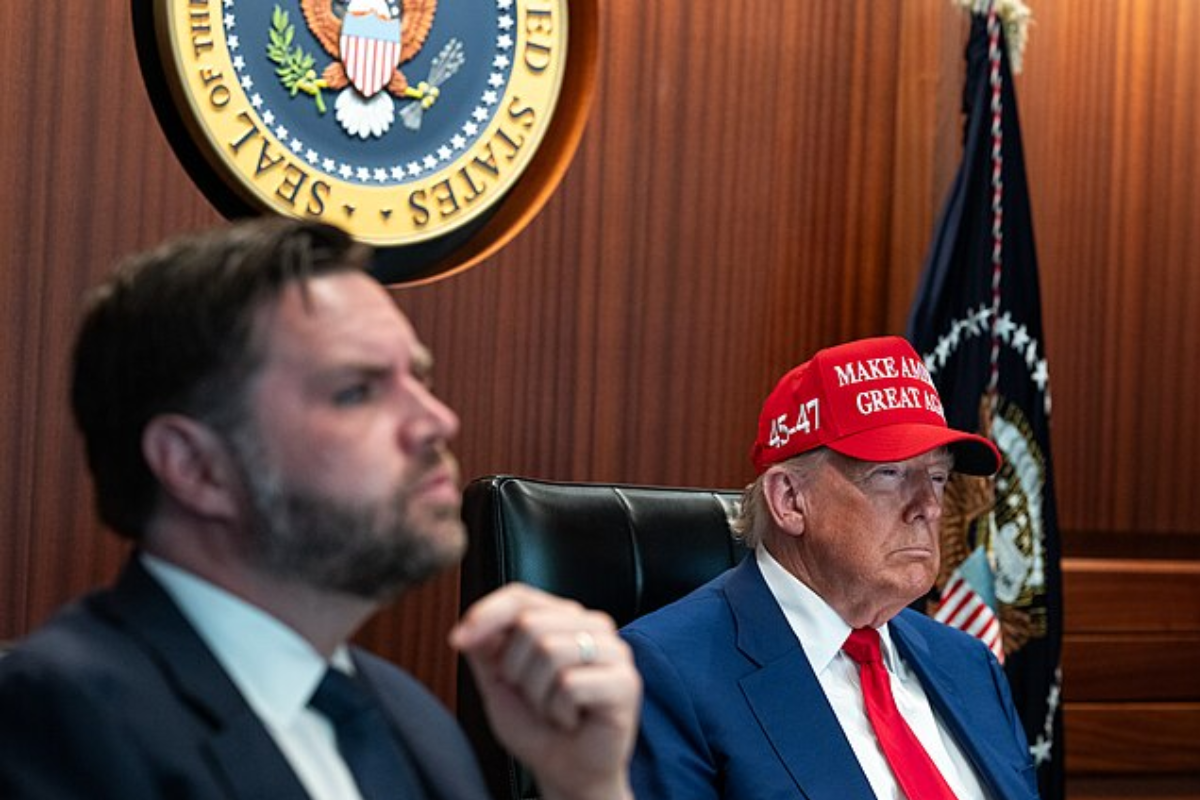
President Donald Trump has abruptly pulled Vice PresidentJD Vancefrom high-stakes Iran peace talks, citing 'security concerns' as fragile ceasefire negotiations hang in the balance.
The move comes as the United States prepares for a critical new phase of diplomacy following a 39-day conflict involving Iran and Israel. The White House had initially positioned Vance as a central figure in the negotiations, underscoring the significance of his sudden removal.
Trump signalled the shift in a direct interview, expressing uncertainty about Vance's participation due to safety risks associated with the negotiations.
'We'll have Steve Witkoff, Jared Kushner, JD, maybe JD, I don't know. There's a question of safety, security,' Trump said, according to remarkspublished by the New York Post.
The statement marked a notable departure from earlier White House messaging, which had framed Vance as leading the diplomatic effort. Hours before, White House press secretary Karoline Leavitt confirmed that Vance would head the delegation to Pakistan for the next phase of talks.
Leavitt described Vance as 'the president's right-hand man' and emphasised his deep involvement in negotiations 'since the very beginning'. That contrast has raised questions about the immediacy and seriousness of the security concerns Trump cited.
The talks are expected to begin on Saturday morning local time in Islamabad, with Pakistan acting as a mediator amid escalating regional tensions.
.@PressSec: "@VPhas played very significant and a key role in this since the very beginning. Of course, he’s@POTUS' right hand man...he’s been involved in all of these discussions and, as I just announced, he’ll be leading this new phase of negotiations in Islamabad."pic.twitter.com/vRd76kXv6E
The diplomatic push follows a tenuous ceasefire that ended more than five weeks of hostilities between Iran and Israel, a conflict in which the United States played a direct role alongside Israeli forces.
Despite the ceasefire, instability persists across the region. Iranian officials have reportedly linked their participation in talks to broader conditions, including a halt to Israeli military operations in Lebanon and guarantees surrounding theStrait of Hormuz.
Source: International Business Times UK
