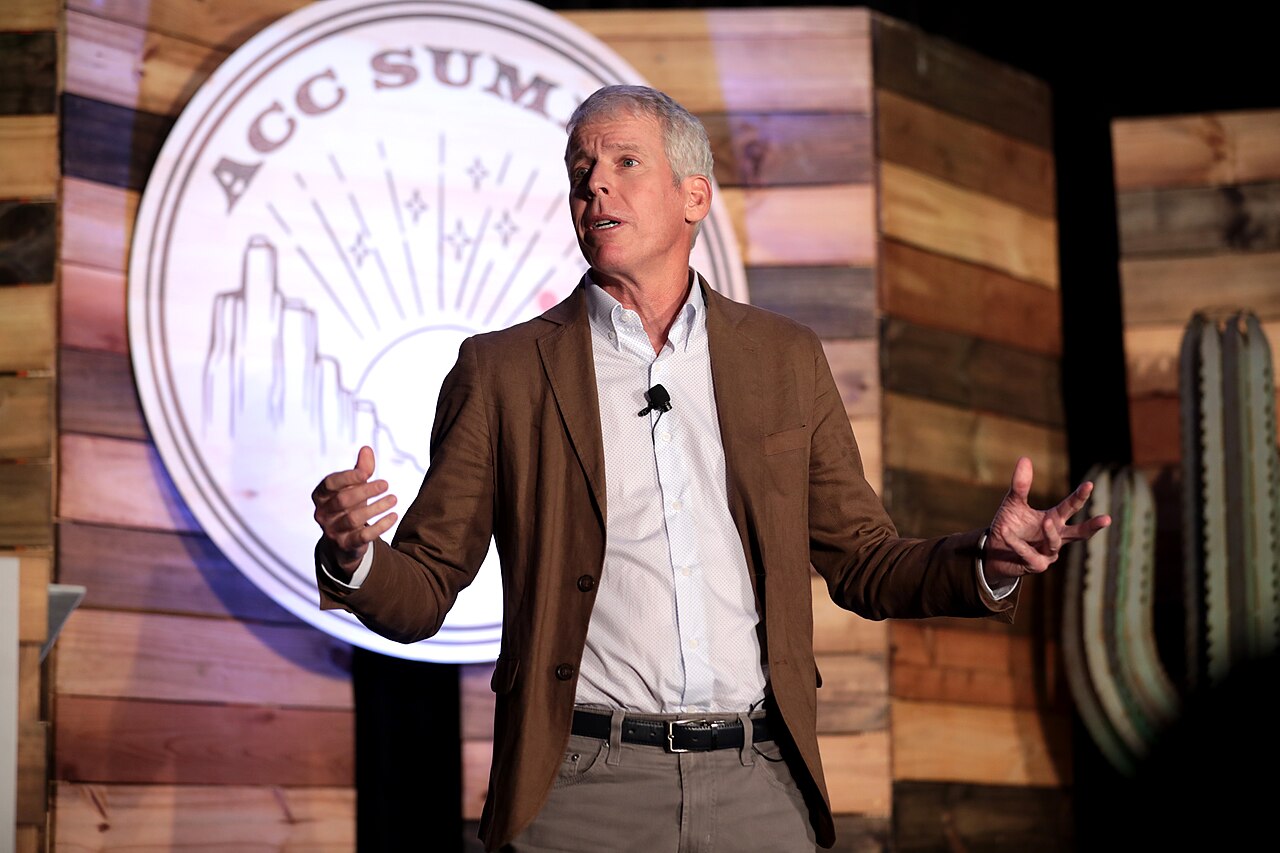
Energy markets rattled by geopolitical tensions are beginning to stabilise, according to Chris Wright, who says the recent surge in fuel costs triggered by the Iran conflict has already 'peaked'. Yet despite this apparent shift, the prospect of gas prices falling below $3 (£2.23) a gallon — a psychological benchmark for consumers — may not materialise until next year.
According to a New York Postreport, Wright, while speaking on State of the Union, offered a cautiously optimistic outlook, suggesting that while the worst of the price spike is over, the path to affordability will be gradual rather than immediate. For households already grappling with elevated living costs, that delay could carry significant financial implications.
Wright's assessment is grounded in recent pricing trends. Data from GasBuddy shows that average gas prices reached $4.16 (£3.09) per gallon earlier this month before beginning to stabilise. This level, while high, remains below the record $5.01 (£3.73) per gallon seen in June 2022.
According to Wright, the peak occurred roughly a week ago, even as global energy flows faced what he described as 'the largest interruption' in history. The disruption stemmed largely from tensions in the Middle East, particularly the conflict involving Iran, which threatened key supply routes.
'Prices have likely peaked, and they'll start going down,' Wright said, though he cautioned that declines will be incremental. Current national averages remain around $4.04 (£3.00) per gallon, based on figures from the American Automobile Association.
Despite signs of stabilisation, Wright warned that a return to sub-$3 (£2.23) pricing may not occur until 2027. Before the outbreak of conflict earlier this year, prices had hovered below that threshold, making its absence particularly noticeable for consumers.
'That might not happen until next year,' he explained, underscoring how fuel costs remain historically significant even at lower nominal levels.
For motorists, the difference is tangible. A sustained price above $4 (£2.98) per gallon translates into higher commuting costs, increased delivery expenses, and broader inflationary pressure on goods and services.
The underlying cause of the recent price volatility lies in the disruption of oil flows through the Strait of Hormuz, a critical chokepoint responsible for over a fifth of global seaborne oil supply. Iran's actions in the region, including attacks on vessels, have heightened risks and tightened supply chains.
In response, member nations of theInternational Energy Agencyreleased approximately 400 million barrels of oil to stabilise markets. This intervention helped prevent even sharper price increases, according to analysts.
Source: International Business Times UK
