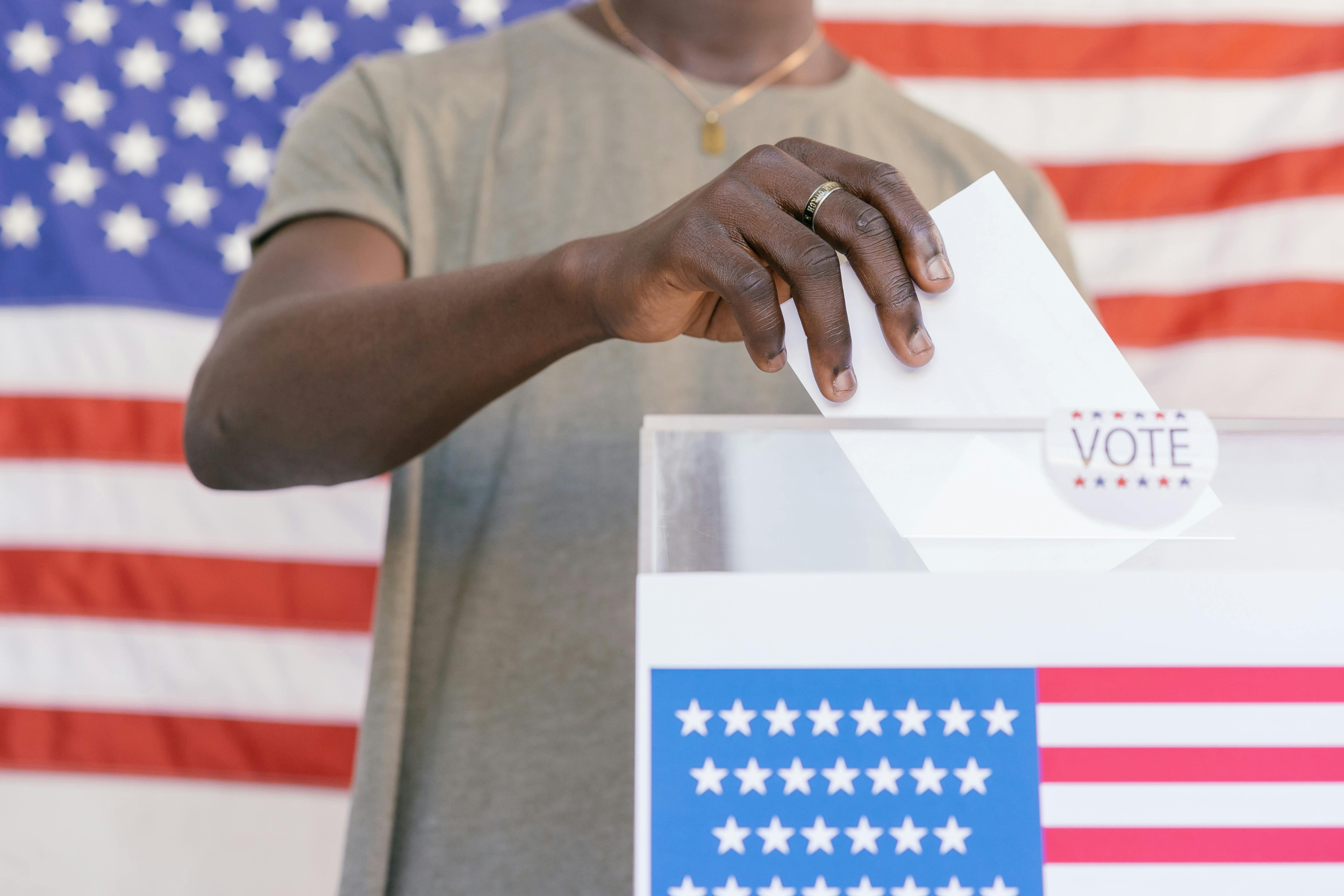
The United States House of Representatives has passed a controversial piece of legislation that could significantly alter how Americans cast their ballots. Known as theSAVE America Act, the bill was approved on Wednesday, 11 February, with a vote of 218 to 213. Supported heavily by PresidentDonald Trump, the measure seeks to tighten election security through strict identification requirements. However, it faces stiff opposition from Democrats who argue it will prevent millions of eligible voters from participating in the upcoming midterm elections.
Introduced by Republican Representative Chip Roy of Texas, the Save America Act is an updated and stricter version of a bill that passed the House in April 2025. The new legislation mandates that individuals must provide documentary proof of citizenship to register to vote. Additionally, it requires voters to present a photo identification card when they arrive at the ballot box for any federal election.
Beyond voter registration, the bill forces state election officials to share data with federal authorities to verify the citizenship status of people currently on voter rolls. It also empowers the Department of Homeland Security (DHS) to pursue deportation cases if non-citizens are found to be registered. Supporters claim this is necessary to ensure election integrity, whilst opponents view it as a tactic to reduce voter turnout.
The potential effect of this act on the 2026 elections is at the centre of the debate. If the bill were to become law, it would impose new barriers for a significant portion of the electorate. Research from the Brennan Center for Justice and the University of Maryland indicates that approximately 21 million Americans do not have ready access to documents proving their citizenship. Furthermore, about 2.6 million citizens lack a government-issued photo ID.
Experts warn that these requirements would disproportionately affect young voters, voters of colour, and women whose married names do not match their birth certificates. Democrats argue that this is a deliberate strategy by the Republican party to maintain power. Representative Joe Morelle, a Democrat from New York, stated that Republicans fear losing their majority in the House and Senate during the midterms. 'They want to do it because Republicans know that if the midterm elections go off as they expect they should ... he [Trump] will lose the majority,' Morelle said.
Conversely, Republicans argue the act is essential to stop non-citizens from voting, a claim President Trump has frequently made. House Speaker Mike Johnson stated, 'If we want to rebuild confidence again in American elections, we need to pass the SAVE Act.' He insisted that the opposing party wants 'illegals to participate in elections so that they can continue to win'.
Republicans are still trying to pass the SAVE Act—a bill that would make it harder to vote and disenfranchise millions of Americans. Join@RedistrictActand tell your member of Congress to vote no:https://t.co/Cc4JHKr73Qpic.twitter.com/tUyxEbYJ0y
The vote on Wednesday highlighted the deep partisan divide in Washington. Only one Democrat, Representative Henry Cuellar of Texas, crossed party lines to vote in favour of the bill. This stands in contrast to the earlier version of the bill from 2025, which had garnered support from four Democrats.
Some moderate Democrats who previously supported the gentler version of the bill have turned against this new iteration. Representative Jared Golden of Maine remarked that the new version is 'not even close to the same' as the one he supported last year. Representative Marie Gluesenkamp Perez also withdrew her support, criticising the bill on social media. She noted that legislation requiring the government to provide free photocopy services was not well-written.
Despite its success in the House, the Save America Act faces a difficult path forward. To become law, it must pass the Senate, where it needs 60 votes to overcome a filibuster. Currently, Democrats control enough seats to block the measure, and even some Republicans are skeptical. Senator Lisa Murkowski of Alaska has already expressed her opposition to the bill.
Source: International Business Times UK
