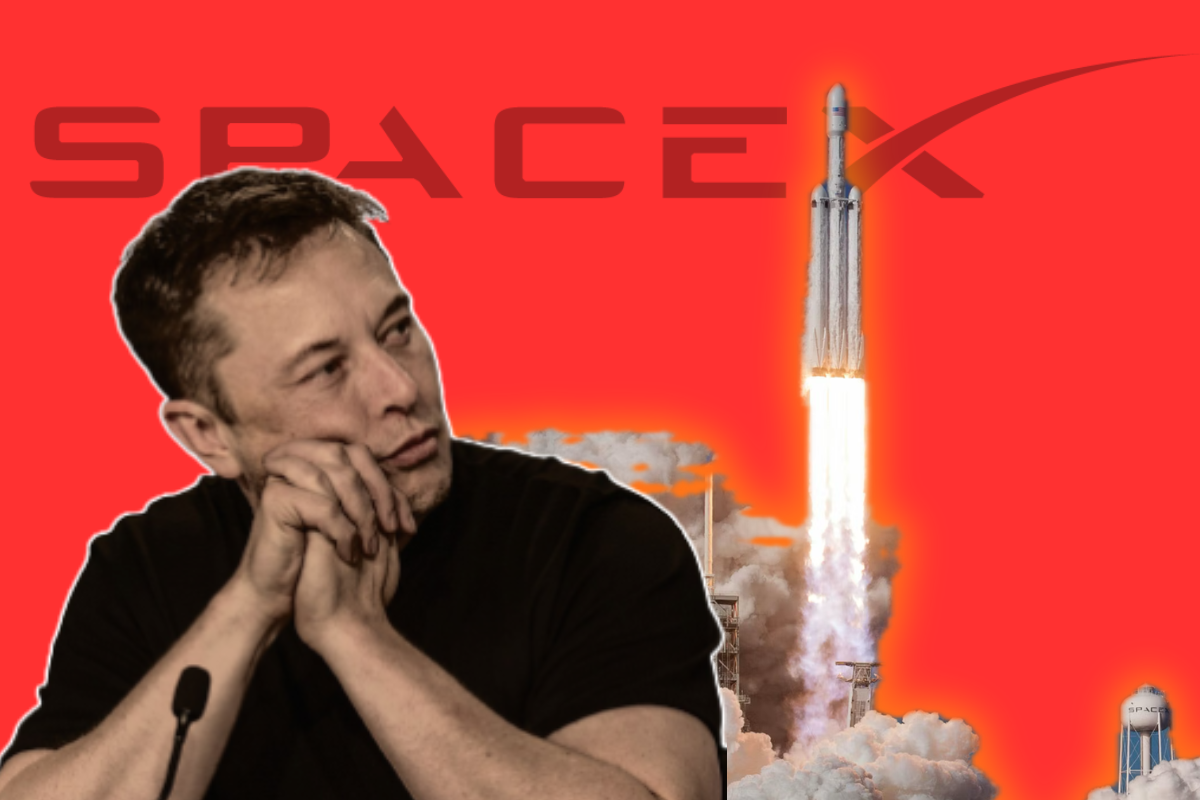
SpaceX, helmed by billionaire Elon Musk, is preparing for an IPO that could value the company at up to $1.75 trillion, making it potentially the sixth most valuable publicly traded company in the world upon listing. The sheer scale of the IPO has drawn attention and scrutiny from retail and institutional investors. But the headline number isn't what worries analysts who have studied the offering's fine print.
The single biggest risk, according to Intellectia.ai, is SpaceX founder Elon Musk's singular control over the company through a dual-class share structure. What this structure means is that a class of shares held by insiders carries disproportionately higher voting rights than those held by the public. In simple terms, ordinary investors who buy SpaceX stock on an exchange would own an economic stake but would have no real say in how the company is run.
Why Dual-Class Shares Matter for SpaceX Investors
Dual-class share structures are not entirely new. Major corporations such as Meta, Alphabet, and Snap have all listed with similar arrangements. However, what sets the SpaceX situation apart is the degree of concentration—all centered around Musk.
Beyond SpaceX, Musk simultaneously leads Tesla andxAI, and his attention and strategic priorities are spread across those competing demands. SpaceX's IPO pitch is said to rely heavily on Musk's long-term vision rather than current financial metrics, which means public shareholders would be betting on one individual's judgment without a structural mechanism to challenge it.
For American retail investors expecting the governance protections that come with standard corporate bylaws, a dual-class listing imposes hard limits. The board cannot be easily replaced. Executive pay cannot be blocked by a shareholder vote, and strategic pivots. For instance, no amount of investor pressure can reverse Musk's choice to prioritize Mars colonization over near-term profit. Musk has been explicit thatSpaceX's ultimate mission is multiplanetary human civilization, a goal whose timeline and economics are entirely at his discretion.
SpaceX is priced at roughly 100 times trailing sales, something that far exceeds benchmarks set by major tech listings over the past two decades. Even high-growth technology companies rarely clear 30 to 40 times revenue at IPO. At roughly 100 times the sales, the margin for error is narrow. And with a dual-class structure in place, public shareholders would have no formal recourse if the company's trajectory disappoints.
The 401(k) Warning and Secondary Market Risks
Investor Michael Burry has raised a specific concern about how SpaceX's IPO could affect American retirement savers. Burry warned that once SpaceX joins major equity indexes, the stock would land in retirement portfolios regardless of the price due to the $1.75 trillion valuation, putting it in the top 10 companies from day one. He noted risks of turning ordinary retirement savers into exit liquidity for early insiders who bought shares at far lower private-market valuations.
George Noble, a former Fidelity fund manager, called the proposal "the most SHAMELESS structural manipulation of a major index I've ever seen" in a viral Substack post in March.
Source: International Business Times UK
