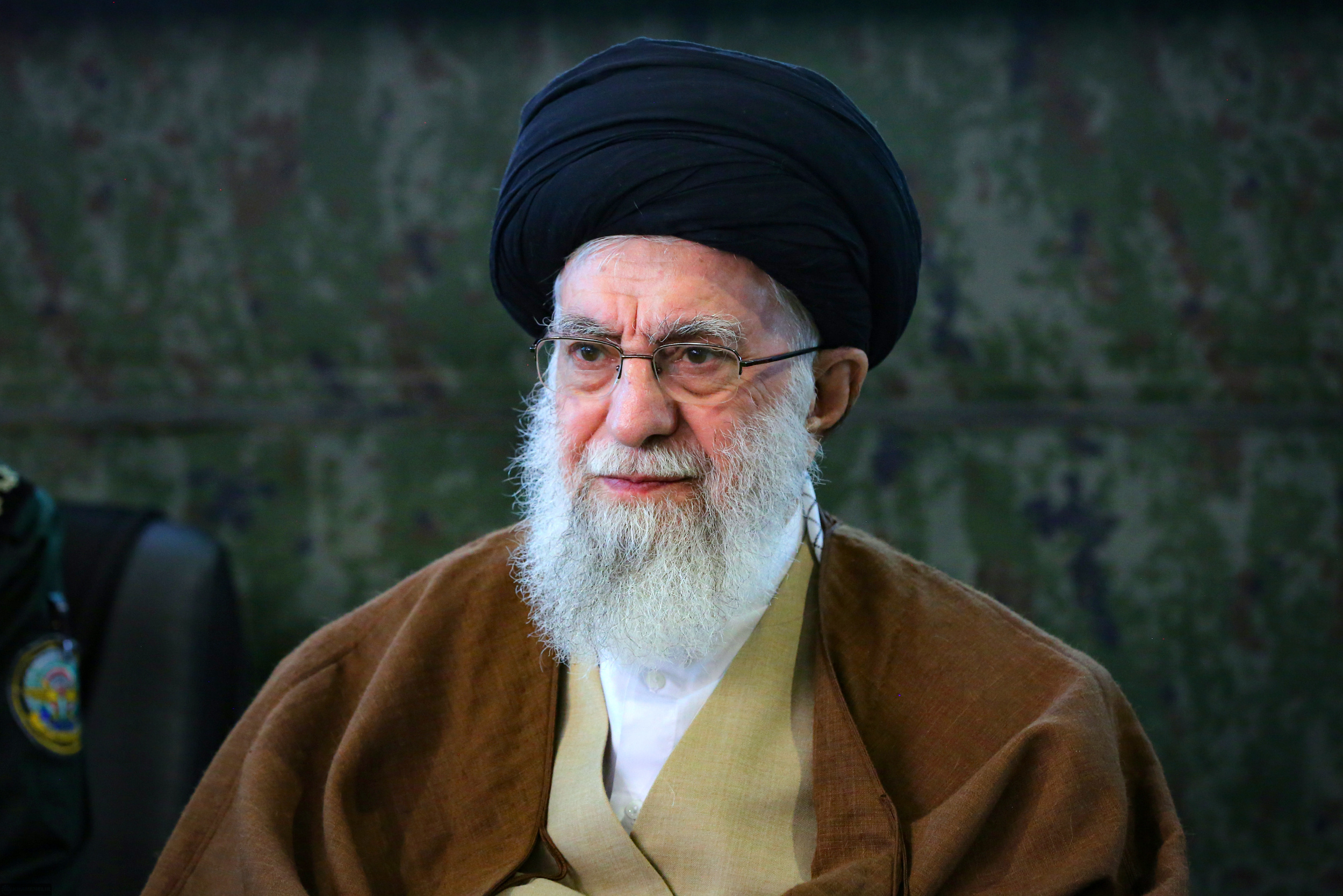
Ali Khamenei has still not been buried in Iran seven weeks after his assassination in a joint US‑Israeli airstrike on 28 February, with analysts claiming the regime in Tehran is 'too afraid' and 'too weak' to stage a state funeral for the late Supreme Leader while war with Washington hangs in the balance.
The news came after a bloody and chaotic period for Iran's leadership. Khamenei's killing, confirmed by Iranian officials in the hours after the strike, detonated the already‑fraught standoff with the United States and Israel and helped tip the region into open conflict.
Since then, senior figures including security chiefAli Larijani have also been assassinated in further US‑Israeli attacks, and Iran has imposed a sweeping internet blackout that has lasted around 50 days. Against that background, the once‑unthinkable prospect of the Islamic Republic hesitating over how to bury its most powerful man has become a quietly damning symbol of its current vulnerability.
Khamenei's burial was initially treated by state media as a settled matter. In early March, Fars News, which is affiliated with the Islamic Revolutionary Guard Corps (IRGC), reported that his body would be laid to rest in Mashhad, the north‑eastern city of almost five million people where he was born. The outlet described officials at a special headquarters tasked with organising a 'grand farewell ceremony,' including a public memorial in Tehran.
Iranian media went further in the days after his death, announcing a three‑day farewell for Ali Khamenei at the Imam Khomeini prayer ground in the capital. Hojjatoleslam Mahmoudi, who heads Iran's Islamic Propagation Council, was cited on state outlets detailing how the farewell would run over three days, with a funeral procession to be confirmed at a later date.
None of that has actually happened. No large‑scale memorial has taken place in Tehran. No public burial in Mashhad has been confirmed. The regime has not provided a clear explanation for the delay, leaving a vacuum filled by speculation, outside commentary and mounting comparisons with the recent past.
The contrast with 1989 is difficult for the authorities to wish away. When Khamenei's predecessor, Ayatollah Ruhollah Khomeini, died that year, millions of Iranians poured into the streets over several days in one of the biggest mass funeral processions of the twentieth century. The leadership took that turnout as proof of its popular authority. The absence of anything remotely similar for Khamenei, more than a month after his killing, is now being used by critics and foreign analysts as evidence of a system that no longer trusts its own people.
Behnam Taleblu, a senior fellow at the Washington‑based Foundation for Defense of Democracies, told theNew York Postthat Tehran simply does not dare take the risk. 'Simply put, the regime is too afraid and too weak to roll the dice,' he said, arguing that a large public ceremony would expose the leadership to both security threats and visible dissent at a time when its grip feels more fragile than it cares to admit.
Taleblu pointed to the long internet shutdown as another signal of unease. 'The Islamic Republic likes to talk a big game about owning the streets,' he said, 'but a 50‑day internet blackout tells you all you need to know. The regime fears the consequences of the truth getting out.' His comments are analysis rather than inside knowledge, but they chime with a longstanding suspicion among critics that Tehran's rulers now fear spontaneous crowds almost as much as foreign enemies.
Iranian officials, for their part, have not publicly framed the absence of a funeral for Ali Khamenei as a political problem. Apart from early promises of a farewell and burial, state media have largely fallen silent on the issue, focusing instead on battlefield developments and diplomatic manoeuvres around the war. There have been no new official statements clarifying where Khamenei's body is being kept, when a burial might take place, or whether previous plans for Mashhad and Tehran are still under consideration.
Source: International Business Times UK
