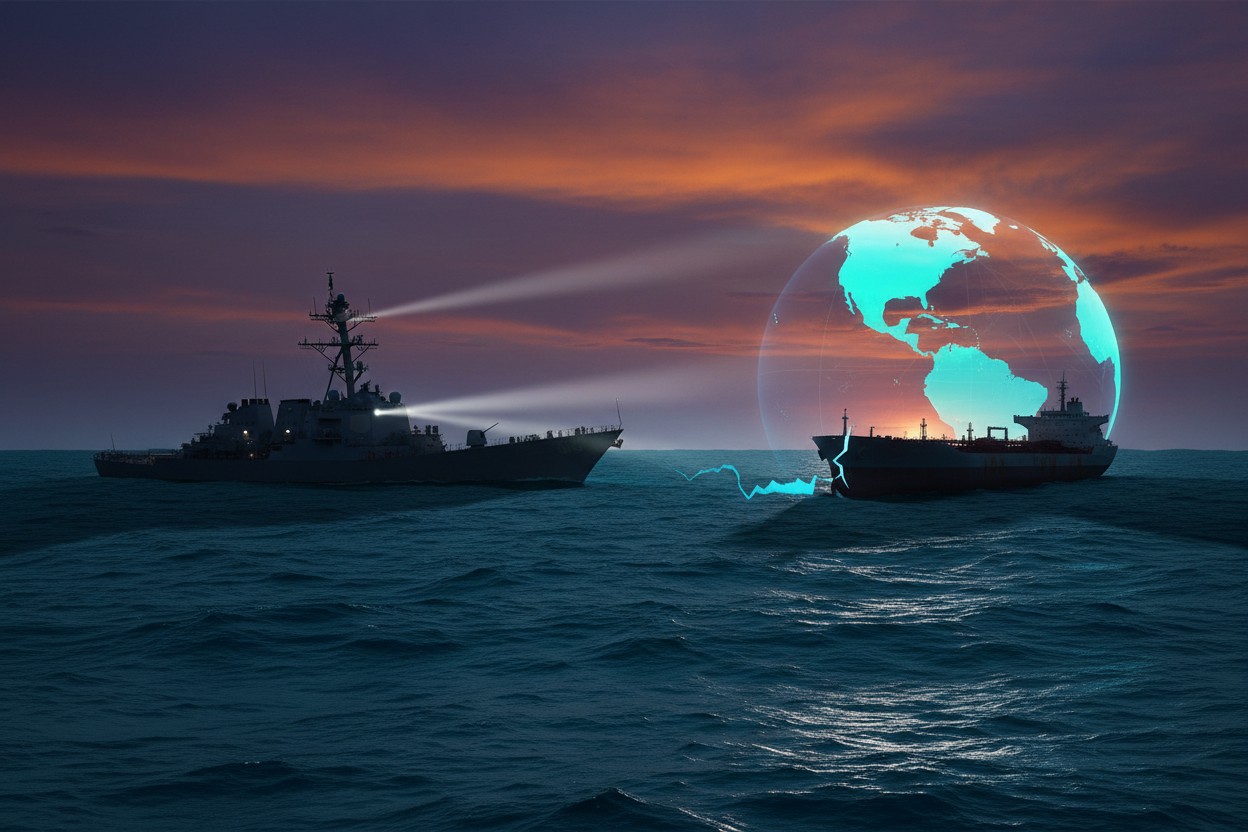
The expanded policy extends a blockade initially focused on Iran's ports to a global campaign, targeting what officials call 'dark fleet' oil tankers that operate outside Western financial systems. Caine stated the enforcement would occur in international waters and inside Iranâs territorial seas. [2]Pentagon Outlines Expanded Interception Policy Targeting Iranian Support NetworksGeneral Dan Caine told reporters at the Pentagon that the U.S. Joint Force would 'actively pursue any Iranian-flagged vessel, or any vessel, attempting to provide material support to Iran' in areas of responsibility like the Pacific. He added, 'This includes dark fleet vessels carrying Iranian oil.' [1]The announcement followed the implementation of a U.S. blockade against Iranâs ports earlier in the week, after talks in Pakistan aimed at reopening the Strait of Hormuz failed. Caine emphasized the action was a blockade of Iranâs coastline, not the strait itself. [3]According to a report from The War Zone, Caine clarified the blockade applies to all ships, regardless of nationality, heading into or from Iranian ports, framing it as a global campaign. [2]Background: Blockade in Strait of Hormuz and Iran's ResponseThe U.S. action is a direct response to Iranâs seizure and closure of the Strait of Hormuz to most shipping in late February 2026, following U.S. and Israeli airstrikes. Iran had implemented a preferential transit system, allowing its own vessels out of the Gulf while blocking most bound for neighboring Arab states. [1]The Islamic Republic was also working to introduce a toll system that could charge vessels up to $2 million to pass through the waterway, according to reports from Middle East Eye. The closure of the strait, a chokepoint for roughly one-fifth of global oil consumption, has caused significant disruption to global energy markets and shipping. [1] [4]In response to the closure, the U.S. began moving military assets, including mine countermeasure vessels from Japan and a Marine Expeditionary Unit, to the region. [5] [6]Analyst Perspectives on Regional Tensions and Chinese InterestsAnalysts told Middle East Eye that expanding the U.S. blockade into the Pacific could provoke concern in China, which has significant strategic interests in the region. They noted that while Beijing has little appetite for open conflict, it is the main customer for Iranian oil transported via the 'shadow fleet.' [1]China relied on Iranâs cheap, sanctioned oil, and the U.S. military campaign has disrupted this supply, according to a report from Just the News. The conflict has forced Chinese airlines to hike fuel surcharges on domestic flights due to rising oil prices. [7] [8]The situation places a spotlight on whether the U.S. would board Chinese vessels, as Chinese refineries are the primary destination for Iranian crude shipped by the sanctioned fleet. [1]China's Position and Diplomatic ExchangesChina's Foreign Minister, Wang Yi, spoke with his Iranian counterpart, Abbas Aragchi, on Wednesday, April 15. According to a Chinese readout of the call, Yi called for respect for the 'sovereignty, security and legitimate rights and interests of Iran as a country bordering the Strait of Hormuz' and added that 'the freedom and security of navigation in the internationally accessible strait should also be guaranteed.' [1]Earlier in the week, unconfirmed social media reports cited an alleged quote from Chinaâs defense minister rejecting the U.S. blockade. Yun Sun, director of the China Programme at the Stimson Center, told Middle East Eye that the remarks were not confirmed by the Chinese government and had been disavowed in state media. [1]Sun previously stated that the Strait of Hormuz was 'so far' from China and that Beijing would not challenge the U.S. in the waterway, though China is trying to position itself as the dominant power in the Pacific. [1]Historical Context of Iran-China Trade and Military TransfersTrade and military ties between Beijing and Tehran form a backdrop to the current tensions. Chinese firms are known to have sold sodium perchlorate, a material used to manufacture solid propellant for missiles, to Iran, with deliveries occurring by ship, according to Middle East Eye. [1]The same outlet reported that China sold air defense systems to Iran after attacks in June 2025, and later drones. Separately, The New York Times reported on Saturday, April 11, that China may have delivered shoulder-fired missiles to Iran, though the method of transport was unclear. [1]In an interview with Fox News on April 15, President Donald Trump stated he had heard reports that China was providing weapons to Iran and had written to Chinese President Xi Jinping asking him to stop. [9]ConclusionThe expanded U.S. interception policy marks a significant geographical escalation in the ongoing conflict with Iran, moving enforcement actions into the vast expanses of the Pacific and Indian Oceans. The move directly challenges the networks Iran uses to circumvent sanctions and export its oil, primarily to China.Market reactions have been volatile, with oil prices and stock futures fluctuating on reports of ceasefire pushes and escalations. The Strait of Hormuz remains effectively closed, and the global economic repercussions, from shipping rates to fuel costs, continue to unfold. [10] [11] [12]ReferencesUS says it will pursue ships in Pacific Ocean supporting Iran. - Middle East Eye. Sean Mathews. April 16, 2026.U.S. Pursuing Iranian-Linked Ships All Over The World As Part Of Its Blockade. - The War Zone. April 16, 2026.US to go after Iran-linked ships worldwide â top general. - RT.com. April 17, 2026.The strait of hormuz crisis shows the world still runs on fossil fuels. - Watts Up With That. March 24, 2026.Flurry Of Navy Minesweepers Appear To Be Heading Toward The Middle East. - The War Zone. April 13, 2026.Marine Expeditionary Unit Deploying To The Middle East: Report. - The War Zone. March 13, 2026.War with Iran disrupts Chinese oil supply, strategies in Middle East. - Just the News. March 4, 2026.The Iran War is Forcing China to Hike Fuel Surcharges for Domestic Flights. - The National Pulse. April 2, 2026.Trump Treads Lightly on China Amid Suspicions of Weapons Flow to Iran. - The New American. April 15, 2026.Futures Rise, Oil Drops On Report Of Ceasefire Push. - Zero Hedge. April 6, 2026.Futures Unchanged Just Shy Of All Time High On Peace Hopes, Solid Earnings. - Zero Hedge. April 15, 2026.Strait of Hormuz closure pushes Asia-US ocean rates up 29%. - FreightWaves. April 2, 2026.
The expanded policy extends a blockade initially focused on Iran's ports to a global campaign, targeting what officials call 'dark fleet' oil tankers that operate outside Western financial systems. Caine stated the enforcement would occur in international waters and inside Iranâs territorial seas. [2]Pentagon Outlines Expanded Interception Policy Targeting Iranian Support NetworksGeneral Dan Caine told reporters at the Pentagon that the U.S. Joint Force would 'actively pursue any Iranian-flagged vessel, or any vessel, attempting to provide material support to Iran' in areas of responsibility like the Pacific. He added, 'This includes dark fleet vessels carrying Iranian oil.' [1]The announcement followed the implementation of a U.S. blockade against Iranâs ports earlier in the week, after talks in Pakistan aimed at reopening the Strait of Hormuz failed. Caine emphasized the action was a blockade of Iranâs coastline, not the strait itself. [3]According to a report from The War Zone, Caine clarified the blockade applies to all ships, regardless of nationality, heading into or from Iranian ports, framing it as a global campaign. [2]Background: Blockade in Strait of Hormuz and Iran's ResponseThe U.S. action is a direct response to Iranâs seizure and closure of the Strait of Hormuz to most shipping in late February 2026, following U.S. and Israeli airstrikes. Iran had implemented a preferential transit system, allowing its own vessels out of the Gulf while blocking most bound for neighboring Arab states. [1]The Islamic Republic was also working to introduce a toll system that could charge vessels up to $2 million to pass through the waterway, according to reports from Middle East Eye. The closure of the strait, a chokepoint for roughly one-fifth of global oil consumption, has caused significant disruption to global energy markets and shipping. [1] [4]In response to the closure, the U.S. began moving military assets, including mine countermeasure vessels from Japan and a Marine Expeditionary Unit, to the region. [5] [6]Analyst Perspectives on Regional Tensions and Chinese InterestsAnalysts told Middle East Eye that expanding the U.S. blockade into the Pacific could provoke concern in China, which has significant strategic interests in the region. They noted that while Beijing has little appetite for open conflict, it is the main customer for Iranian oil transported via the 'shadow fleet.' [1]China relied on Iranâs cheap, sanctioned oil, and the U.S. military campaign has disrupted this supply, according to a report from Just the News. The conflict has forced Chinese airlines to hike fuel surcharges on domestic flights due to rising oil prices. [7] [8]The situation places a spotlight on whether the U.S. would board Chinese vessels, as Chinese refineries are the primary destination for Iranian crude shipped by the sanctioned fleet. [1]China's Position and Diplomatic ExchangesChina's Foreign Minister, Wang Yi, spoke with his Iranian counterpart, Abbas Aragchi, on Wednesday, April 15. According to a Chinese readout of the call, Yi called for respect for the 'sovereignty, security and legitimate rights and interests of Iran as a country bordering the Strait of Hormuz' and added that 'the freedom and security of navigation in the internationally accessible strait should also be guaranteed.' [1]Earlier in the week, unconfirmed social media reports cited an alleged quote from Chinaâs defense minister rejecting the U.S. blockade. Yun Sun, director of the China Programme at the Stimson Center, told Middle East Eye that the remarks were not confirmed by the Chinese government and had been disavowed in state media. [1]Sun previously stated that the Strait of Hormuz was 'so far' from China and that Beijing would not challenge the U.S. in the waterway, though China is trying to position itself as the dominant power in the Pacific. [1]Historical Context of Iran-China Trade and Military TransfersTrade and military ties between Beijing and Tehran form a backdrop to the current tensions. Chinese firms are known to have sold sodium perchlorate, a material used to manufacture solid propellant for missiles, to Iran, with deliveries occurring by ship, according to Middle East Eye. [1]The same outlet reported that China sold air defense systems to Iran after attacks in June 2025, and later drones. Separately, The New York Times reported on Saturday, April 11, that China may have delivered shoulder-fired missiles to Iran, though the method of transport was unclear. [1]In an interview with Fox News on April 15, President Donald Trump stated he had heard reports that China was providing weapons to Iran and had written to Chinese President Xi Jinping asking him to stop. [9]ConclusionThe expanded U.S. interception policy marks a significant geographical escalation in the ongoing conflict with Iran, moving enforcement actions into the vast expanses of the Pacific and Indian Oceans. The move directly challenges the networks Iran uses to circumvent sanctions and export its oil, primarily to China.Market reactions have been volatile, with oil prices and stock futures fluctuating on reports of ceasefire pushes and escalations. The Strait of Hormuz remains effectively closed, and the global economic repercussions, from shipping rates to fuel costs, continue to unfold. [10] [11] [12]ReferencesUS says it will pursue ships in Pacific Ocean supporting Iran. - Middle East Eye. Sean Mathews. April 16, 2026.U.S. Pursuing Iranian-Linked Ships All Over The World As Part Of Its Blockade. - The War Zone. April 16, 2026.US to go after Iran-linked ships worldwide â top general. - RT.com. April 17, 2026.The strait of hormuz crisis shows the world still runs on fossil fuels. - Watts Up With That. March 24, 2026.Flurry Of Navy Minesweepers Appear To Be Heading Toward The Middle East. - The War Zone. April 13, 2026.Marine Expeditionary Unit Deploying To The Middle East: Report. - The War Zone. March 13, 2026.War with Iran disrupts Chinese oil supply, strategies in Middle East. - Just the News. March 4, 2026.The Iran War is Forcing China to Hike Fuel Surcharges for Domestic Flights. - The National Pulse. April 2, 2026.Trump Treads Lightly on China Amid Suspicions of Weapons Flow to Iran. - The New American. April 15, 2026.Futures Rise, Oil Drops On Report Of Ceasefire Push. - Zero Hedge. April 6, 2026.Futures Unchanged Just Shy Of All Time High On Peace Hopes, Solid Earnings. - Zero Hedge. April 15, 2026.Strait of Hormuz closure pushes Asia-US ocean rates up 29%. - FreightWaves. April 2, 2026.
Pentagon Outlines Expanded Interception Policy Targeting Iranian Support NetworksGeneral Dan Caine told reporters at the Pentagon that the U.S. Joint Force would 'actively pursue any Iranian-flagged vessel, or any vessel, attempting to provide material support to Iran' in areas of responsibility like the Pacific. He added, 'This includes dark fleet vessels carrying Iranian oil.' [1]The announcement followed the implementation of a U.S. blockade against Iranâs ports earlier in the week, after talks in Pakistan aimed at reopening the Strait of Hormuz failed. Caine emphasized the action was a blockade of Iranâs coastline, not the strait itself. [3]According to a report from The War Zone, Caine clarified the blockade applies to all ships, regardless of nationality, heading into or from Iranian ports, framing it as a global campaign. [2]Background: Blockade in Strait of Hormuz and Iran's ResponseThe U.S. action is a direct response to Iranâs seizure and closure of the Strait of Hormuz to most shipping in late February 2026, following U.S. and Israeli airstrikes. Iran had implemented a preferential transit system, allowing its own vessels out of the Gulf while blocking most bound for neighboring Arab states. [1]The Islamic Republic was also working to introduce a toll system that could charge vessels up to $2 million to pass through the waterway, according to reports from Middle East Eye. The closure of the strait, a chokepoint for roughly one-fifth of global oil consumption, has caused significant disruption to global energy markets and shipping. [1] [4]In response to the closure, the U.S. began moving military assets, including mine countermeasure vessels from Japan and a Marine Expeditionary Unit, to the region. [5] [6]Analyst Perspectives on Regional Tensions and Chinese InterestsAnalysts told Middle East Eye that expanding the U.S. blockade into the Pacific could provoke concern in China, which has significant strategic interests in the region. They noted that while Beijing has little appetite for open conflict, it is the main customer for Iranian oil transported via the 'shadow fleet.' [1]China relied on Iranâs cheap, sanctioned oil, and the U.S. military campaign has disrupted this supply, according to a report from Just the News. The conflict has forced Chinese airlines to hike fuel surcharges on domestic flights due to rising oil prices. [7] [8]The situation places a spotlight on whether the U.S. would board Chinese vessels, as Chinese refineries are the primary destination for Iranian crude shipped by the sanctioned fleet. [1]China's Position and Diplomatic ExchangesChina's Foreign Minister, Wang Yi, spoke with his Iranian counterpart, Abbas Aragchi, on Wednesday, April 15. According to a Chinese readout of the call, Yi called for respect for the 'sovereignty, security and legitimate rights and interests of Iran as a country bordering the Strait of Hormuz' and added that 'the freedom and security of navigation in the internationally accessible strait should also be guaranteed.' [1]Earlier in the week, unconfirmed social media reports cited an alleged quote from Chinaâs defense minister rejecting the U.S. blockade. Yun Sun, director of the China Programme at the Stimson Center, told Middle East Eye that the remarks were not confirmed by the Chinese government and had been disavowed in state media. [1]Sun previously stated that the Strait of Hormuz was 'so far' from China and that Beijing would not challenge the U.S. in the waterway, though China is trying to position itself as the dominant power in the Pacific. [1]Historical Context of Iran-China Trade and Military TransfersTrade and military ties between Beijing and Tehran form a backdrop to the current tensions. Chinese firms are known to have sold sodium perchlorate, a material used to manufacture solid propellant for missiles, to Iran, with deliveries occurring by ship, according to Middle East Eye. [1]The same outlet reported that China sold air defense systems to Iran after attacks in June 2025, and later drones. Separately, The New York Times reported on Saturday, April 11, that China may have delivered shoulder-fired missiles to Iran, though the method of transport was unclear. [1]In an interview with Fox News on April 15, President Donald Trump stated he had heard reports that China was providing weapons to Iran and had written to Chinese President Xi Jinping asking him to stop. [9]ConclusionThe expanded U.S. interception policy marks a significant geographical escalation in the ongoing conflict with Iran, moving enforcement actions into the vast expanses of the Pacific and Indian Oceans. The move directly challenges the networks Iran uses to circumvent sanctions and export its oil, primarily to China.Market reactions have been volatile, with oil prices and stock futures fluctuating on reports of ceasefire pushes and escalations. The Strait of Hormuz remains effectively closed, and the global economic repercussions, from shipping rates to fuel costs, continue to unfold. [10] [11] [12]ReferencesUS says it will pursue ships in Pacific Ocean supporting Iran. - Middle East Eye. Sean Mathews. April 16, 2026.U.S. Pursuing Iranian-Linked Ships All Over The World As Part Of Its Blockade. - The War Zone. April 16, 2026.US to go after Iran-linked ships worldwide â top general. - RT.com. April 17, 2026.The strait of hormuz crisis shows the world still runs on fossil fuels. - Watts Up With That. March 24, 2026.Flurry Of Navy Minesweepers Appear To Be Heading Toward The Middle East. - The War Zone. April 13, 2026.Marine Expeditionary Unit Deploying To The Middle East: Report. - The War Zone. March 13, 2026.War with Iran disrupts Chinese oil supply, strategies in Middle East. - Just the News. March 4, 2026.The Iran War is Forcing China to Hike Fuel Surcharges for Domestic Flights. - The National Pulse. April 2, 2026.Trump Treads Lightly on China Amid Suspicions of Weapons Flow to Iran. - The New American. April 15, 2026.Futures Rise, Oil Drops On Report Of Ceasefire Push. - Zero Hedge. April 6, 2026.Futures Unchanged Just Shy Of All Time High On Peace Hopes, Solid Earnings. - Zero Hedge. April 15, 2026.Strait of Hormuz closure pushes Asia-US ocean rates up 29%. - FreightWaves. April 2, 2026.
General Dan Caine told reporters at the Pentagon that the U.S. Joint Force would 'actively pursue any Iranian-flagged vessel, or any vessel, attempting to provide material support to Iran' in areas of responsibility like the Pacific. He added, 'This includes dark fleet vessels carrying Iranian oil.' [1]The announcement followed the implementation of a U.S. blockade against Iranâs ports earlier in the week, after talks in Pakistan aimed at reopening the Strait of Hormuz failed. Caine emphasized the action was a blockade of Iranâs coastline, not the strait itself. [3]According to a report from The War Zone, Caine clarified the blockade applies to all ships, regardless of nationality, heading into or from Iranian ports, framing it as a global campaign. [2]Background: Blockade in Strait of Hormuz and Iran's ResponseThe U.S. action is a direct response to Iranâs seizure and closure of the Strait of Hormuz to most shipping in late February 2026, following U.S. and Israeli airstrikes. Iran had implemented a preferential transit system, allowing its own vessels out of the Gulf while blocking most bound for neighboring Arab states. [1]The Islamic Republic was also working to introduce a toll system that could charge vessels up to $2 million to pass through the waterway, according to reports from Middle East Eye. The closure of the strait, a chokepoint for roughly one-fifth of global oil consumption, has caused significant disruption to global energy markets and shipping. [1] [4]In response to the closure, the U.S. began moving military assets, including mine countermeasure vessels from Japan and a Marine Expeditionary Unit, to the region. [5] [6]Analyst Perspectives on Regional Tensions and Chinese InterestsAnalysts told Middle East Eye that expanding the U.S. blockade into the Pacific could provoke concern in China, which has significant strategic interests in the region. They noted that while Beijing has little appetite for open conflict, it is the main customer for Iranian oil transported via the 'shadow fleet.' [1]China relied on Iranâs cheap, sanctioned oil, and the U.S. military campaign has disrupted this supply, according to a report from Just the News. The conflict has forced Chinese airlines to hike fuel surcharges on domestic flights due to rising oil prices. [7] [8]The situation places a spotlight on whether the U.S. would board Chinese vessels, as Chinese refineries are the primary destination for Iranian crude shipped by the sanctioned fleet. [1]China's Position and Diplomatic ExchangesChina's Foreign Minister, Wang Yi, spoke with his Iranian counterpart, Abbas Aragchi, on Wednesday, April 15. According to a Chinese readout of the call, Yi called for respect for the 'sovereignty, security and legitimate rights and interests of Iran as a country bordering the Strait of Hormuz' and added that 'the freedom and security of navigation in the internationally accessible strait should also be guaranteed.' [1]Earlier in the week, unconfirmed social media reports cited an alleged quote from Chinaâs defense minister rejecting the U.S. blockade. Yun Sun, director of the China Programme at the Stimson Center, told Middle East Eye that the remarks were not confirmed by the Chinese government and had been disavowed in state media. [1]Sun previously stated that the Strait of Hormuz was 'so far' from China and that Beijing would not challenge the U.S. in the waterway, though China is trying to position itself as the dominant power in the Pacific. [1]Historical Context of Iran-China Trade and Military TransfersTrade and military ties between Beijing and Tehran form a backdrop to the current tensions. Chinese firms are known to have sold sodium perchlorate, a material used to manufacture solid propellant for missiles, to Iran, with deliveries occurring by ship, according to Middle East Eye. [1]The same outlet reported that China sold air defense systems to Iran after attacks in June 2025, and later drones. Separately, The New York Times reported on Saturday, April 11, that China may have delivered shoulder-fired missiles to Iran, though the method of transport was unclear. [1]In an interview with Fox News on April 15, President Donald Trump stated he had heard reports that China was providing weapons to Iran and had written to Chinese President Xi Jinping asking him to stop. [9]ConclusionThe expanded U.S. interception policy marks a significant geographical escalation in the ongoing conflict with Iran, moving enforcement actions into the vast expanses of the Pacific and Indian Oceans. The move directly challenges the networks Iran uses to circumvent sanctions and export its oil, primarily to China.Market reactions have been volatile, with oil prices and stock futures fluctuating on reports of ceasefire pushes and escalations. The Strait of Hormuz remains effectively closed, and the global economic repercussions, from shipping rates to fuel costs, continue to unfold. [10] [11] [12]ReferencesUS says it will pursue ships in Pacific Ocean supporting Iran. - Middle East Eye. Sean Mathews. April 16, 2026.U.S. Pursuing Iranian-Linked Ships All Over The World As Part Of Its Blockade. - The War Zone. April 16, 2026.US to go after Iran-linked ships worldwide â top general. - RT.com. April 17, 2026.The strait of hormuz crisis shows the world still runs on fossil fuels. - Watts Up With That. March 24, 2026.Flurry Of Navy Minesweepers Appear To Be Heading Toward The Middle East. - The War Zone. April 13, 2026.Marine Expeditionary Unit Deploying To The Middle East: Report. - The War Zone. March 13, 2026.War with Iran disrupts Chinese oil supply, strategies in Middle East. - Just the News. March 4, 2026.The Iran War is Forcing China to Hike Fuel Surcharges for Domestic Flights. - The National Pulse. April 2, 2026.Trump Treads Lightly on China Amid Suspicions of Weapons Flow to Iran. - The New American. April 15, 2026.Futures Rise, Oil Drops On Report Of Ceasefire Push. - Zero Hedge. April 6, 2026.Futures Unchanged Just Shy Of All Time High On Peace Hopes, Solid Earnings. - Zero Hedge. April 15, 2026.Strait of Hormuz closure pushes Asia-US ocean rates up 29%. - FreightWaves. April 2, 2026.
The announcement followed the implementation of a U.S. blockade against Iranâs ports earlier in the week, after talks in Pakistan aimed at reopening the Strait of Hormuz failed. Caine emphasized the action was a blockade of Iranâs coastline, not the strait itself. [3]According to a report from The War Zone, Caine clarified the blockade applies to all ships, regardless of nationality, heading into or from Iranian ports, framing it as a global campaign. [2]Background: Blockade in Strait of Hormuz and Iran's ResponseThe U.S. action is a direct response to Iranâs seizure and closure of the Strait of Hormuz to most shipping in late February 2026, following U.S. and Israeli airstrikes. Iran had implemented a preferential transit system, allowing its own vessels out of the Gulf while blocking most bound for neighboring Arab states. [1]The Islamic Republic was also working to introduce a toll system that could charge vessels up to $2 million to pass through the waterway, according to reports from Middle East Eye. The closure of the strait, a chokepoint for roughly one-fifth of global oil consumption, has caused significant disruption to global energy markets and shipping. [1] [4]In response to the closure, the U.S. began moving military assets, including mine countermeasure vessels from Japan and a Marine Expeditionary Unit, to the region. [5] [6]Analyst Perspectives on Regional Tensions and Chinese InterestsAnalysts told Middle East Eye that expanding the U.S. blockade into the Pacific could provoke concern in China, which has significant strategic interests in the region. They noted that while Beijing has little appetite for open conflict, it is the main customer for Iranian oil transported via the 'shadow fleet.' [1]China relied on Iranâs cheap, sanctioned oil, and the U.S. military campaign has disrupted this supply, according to a report from Just the News. The conflict has forced Chinese airlines to hike fuel surcharges on domestic flights due to rising oil prices. [7] [8]The situation places a spotlight on whether the U.S. would board Chinese vessels, as Chinese refineries are the primary destination for Iranian crude shipped by the sanctioned fleet. [1]China's Position and Diplomatic ExchangesChina's Foreign Minister, Wang Yi, spoke with his Iranian counterpart, Abbas Aragchi, on Wednesday, April 15. According to a Chinese readout of the call, Yi called for respect for the 'sovereignty, security and legitimate rights and interests of Iran as a country bordering the Strait of Hormuz' and added that 'the freedom and security of navigation in the internationally accessible strait should also be guaranteed.' [1]Earlier in the week, unconfirmed social media reports cited an alleged quote from Chinaâs defense minister rejecting the U.S. blockade. Yun Sun, director of the China Programme at the Stimson Center, told Middle East Eye that the remarks were not confirmed by the Chinese government and had been disavowed in state media. [1]Sun previously stated that the Strait of Hormuz was 'so far' from China and that Beijing would not challenge the U.S. in the waterway, though China is trying to position itself as the dominant power in the Pacific. [1]Historical Context of Iran-China Trade and Military TransfersTrade and military ties between Beijing and Tehran form a backdrop to the current tensions. Chinese firms are known to have sold sodium perchlorate, a material used to manufacture solid propellant for missiles, to Iran, with deliveries occurring by ship, according to Middle East Eye. [1]The same outlet reported that China sold air defense systems to Iran after attacks in June 2025, and later drones. Separately, The New York Times reported on Saturday, April 11, that China may have delivered shoulder-fired missiles to Iran, though the method of transport was unclear. [1]In an interview with Fox News on April 15, President Donald Trump stated he had heard reports that China was providing weapons to Iran and had written to Chinese President Xi Jinping asking him to stop. [9]ConclusionThe expanded U.S. interception policy marks a significant geographical escalation in the ongoing conflict with Iran, moving enforcement actions into the vast expanses of the Pacific and Indian Oceans. The move directly challenges the networks Iran uses to circumvent sanctions and export its oil, primarily to China.Market reactions have been volatile, with oil prices and stock futures fluctuating on reports of ceasefire pushes and escalations. The Strait of Hormuz remains effectively closed, and the global economic repercussions, from shipping rates to fuel costs, continue to unfold. [10] [11] [12]ReferencesUS says it will pursue ships in Pacific Ocean supporting Iran. - Middle East Eye. Sean Mathews. April 16, 2026.U.S. Pursuing Iranian-Linked Ships All Over The World As Part Of Its Blockade. - The War Zone. April 16, 2026.US to go after Iran-linked ships worldwide â top general. - RT.com. April 17, 2026.The strait of hormuz crisis shows the world still runs on fossil fuels. - Watts Up With That. March 24, 2026.Flurry Of Navy Minesweepers Appear To Be Heading Toward The Middle East. - The War Zone. April 13, 2026.Marine Expeditionary Unit Deploying To The Middle East: Report. - The War Zone. March 13, 2026.War with Iran disrupts Chinese oil supply, strategies in Middle East. - Just the News. March 4, 2026.The Iran War is Forcing China to Hike Fuel Surcharges for Domestic Flights. - The National Pulse. April 2, 2026.Trump Treads Lightly on China Amid Suspicions of Weapons Flow to Iran. - The New American. April 15, 2026.Futures Rise, Oil Drops On Report Of Ceasefire Push. - Zero Hedge. April 6, 2026.Futures Unchanged Just Shy Of All Time High On Peace Hopes, Solid Earnings. - Zero Hedge. April 15, 2026.Strait of Hormuz closure pushes Asia-US ocean rates up 29%. - FreightWaves. April 2, 2026.
The announcement followed the implementation of a U.S. blockade against Iranâs ports earlier in the week, after talks in Pakistan aimed at reopening the Strait of Hormuz failed. Caine emphasized the action was a blockade of Iranâs coastline, not the strait itself. [3]According to a report from The War Zone, Caine clarified the blockade applies to all ships, regardless of nationality, heading into or from Iranian ports, framing it as a global campaign. [2]Background: Blockade in Strait of Hormuz and Iran's ResponseThe U.S. action is a direct response to Iranâs seizure and closure of the Strait of Hormuz to most shipping in late February 2026, following U.S. and Israeli airstrikes. Iran had implemented a preferential transit system, allowing its own vessels out of the Gulf while blocking most bound for neighboring Arab states. [1]The Islamic Republic was also working to introduce a toll system that could charge vessels up to $2 million to pass through the waterway, according to reports from Middle East Eye. The closure of the strait, a chokepoint for roughly one-fifth of global oil consumption, has caused significant disruption to global energy markets and shipping. [1] [4]In response to the closure, the U.S. began moving military assets, including mine countermeasure vessels from Japan and a Marine Expeditionary Unit, to the region. [5] [6]Analyst Perspectives on Regional Tensions and Chinese InterestsAnalysts told Middle East Eye that expanding the U.S. blockade into the Pacific could provoke concern in China, which has significant strategic interests in the region. They noted that while Beijing has little appetite for open conflict, it is the main customer for Iranian oil transported via the 'shadow fleet.' [1]China relied on Iranâs cheap, sanctioned oil, and the U.S. military campaign has disrupted this supply, according to a report from Just the News. The conflict has forced Chinese airlines to hike fuel surcharges on domestic flights due to rising oil prices. [7] [8]The situation places a spotlight on whether the U.S. would board Chinese vessels, as Chinese refineries are the primary destination for Iranian crude shipped by the sanctioned fleet. [1]China's Position and Diplomatic ExchangesChina's Foreign Minister, Wang Yi, spoke with his Iranian counterpart, Abbas Aragchi, on Wednesday, April 15. According to a Chinese readout of the call, Yi called for respect for the 'sovereignty, security and legitimate rights and interests of Iran as a country bordering the Strait of Hormuz' and added that 'the freedom and security of navigation in the internationally accessible strait should also be guaranteed.' [1]Earlier in the week, unconfirmed social media reports cited an alleged quote from Chinaâs defense minister rejecting the U.S. blockade. Yun Sun, director of the China Programme at the Stimson Center, told Middle East Eye that the remarks were not confirmed by the Chinese government and had been disavowed in state media. [1]Sun previously stated that the Strait of Hormuz was 'so far' from China and that Beijing would not challenge the U.S. in the waterway, though China is trying to position itself as the dominant power in the Pacific. [1]Historical Context of Iran-China Trade and Military TransfersTrade and military ties between Beijing and Tehran form a backdrop to the current tensions. Chinese firms are known to have sold sodium perchlorate, a material used to manufacture solid propellant for missiles, to Iran, with deliveries occurring by ship, according to Middle East Eye. [1]The same outlet reported that China sold air defense systems to Iran after attacks in June 2025, and later drones. Separately, The New York Times reported on Saturday, April 11, that China may have delivered shoulder-fired missiles to Iran, though the method of transport was unclear. [1]In an interview with Fox News on April 15, President Donald Trump stated he had heard reports that China was providing weapons to Iran and had written to Chinese President Xi Jinping asking him to stop. [9]ConclusionThe expanded U.S. interception policy marks a significant geographical escalation in the ongoing conflict with Iran, moving enforcement actions into the vast expanses of the Pacific and Indian Oceans. The move directly challenges the networks Iran uses to circumvent sanctions and export its oil, primarily to China.Market reactions have been volatile, with oil prices and stock futures fluctuating on reports of ceasefire pushes and escalations. The Strait of Hormuz remains effectively closed, and the global economic repercussions, from shipping rates to fuel costs, continue to unfold. [10] [11] [12]ReferencesUS says it will pursue ships in Pacific Ocean supporting Iran. - Middle East Eye. Sean Mathews. April 16, 2026.U.S. Pursuing Iranian-Linked Ships All Over The World As Part Of Its Blockade. - The War Zone. April 16, 2026.US to go after Iran-linked ships worldwide â top general. - RT.com. April 17, 2026.The strait of hormuz crisis shows the world still runs on fossil fuels. - Watts Up With That. March 24, 2026.Flurry Of Navy Minesweepers Appear To Be Heading Toward The Middle East. - The War Zone. April 13, 2026.Marine Expeditionary Unit Deploying To The Middle East: Report. - The War Zone. March 13, 2026.War with Iran disrupts Chinese oil supply, strategies in Middle East. - Just the News. March 4, 2026.The Iran War is Forcing China to Hike Fuel Surcharges for Domestic Flights. - The National Pulse. April 2, 2026.Trump Treads Lightly on China Amid Suspicions of Weapons Flow to Iran. - The New American. April 15, 2026.Futures Rise, Oil Drops On Report Of Ceasefire Push. - Zero Hedge. April 6, 2026.Futures Unchanged Just Shy Of All Time High On Peace Hopes, Solid Earnings. - Zero Hedge. April 15, 2026.Strait of Hormuz closure pushes Asia-US ocean rates up 29%. - FreightWaves. April 2, 2026.
According to a report from The War Zone, Caine clarified the blockade applies to all ships, regardless of nationality, heading into or from Iranian ports, framing it as a global campaign. [2]Background: Blockade in Strait of Hormuz and Iran's ResponseThe U.S. action is a direct response to Iranâs seizure and closure of the Strait of Hormuz to most shipping in late February 2026, following U.S. and Israeli airstrikes. Iran had implemented a preferential transit system, allowing its own vessels out of the Gulf while blocking most bound for neighboring Arab states. [1]The Islamic Republic was also working to introduce a toll system that could charge vessels up to $2 million to pass through the waterway, according to reports from Middle East Eye. The closure of the strait, a chokepoint for roughly one-fifth of global oil consumption, has caused significant disruption to global energy markets and shipping. [1] [4]In response to the closure, the U.S. began moving military assets, including mine countermeasure vessels from Japan and a Marine Expeditionary Unit, to the region. [5] [6]Analyst Perspectives on Regional Tensions and Chinese InterestsAnalysts told Middle East Eye that expanding the U.S. blockade into the Pacific could provoke concern in China, which has significant strategic interests in the region. They noted that while Beijing has little appetite for open conflict, it is the main customer for Iranian oil transported via the 'shadow fleet.' [1]China relied on Iranâs cheap, sanctioned oil, and the U.S. military campaign has disrupted this supply, according to a report from Just the News. The conflict has forced Chinese airlines to hike fuel surcharges on domestic flights due to rising oil prices. [7] [8]The situation places a spotlight on whether the U.S. would board Chinese vessels, as Chinese refineries are the primary destination for Iranian crude shipped by the sanctioned fleet. [1]China's Position and Diplomatic ExchangesChina's Foreign Minister, Wang Yi, spoke with his Iranian counterpart, Abbas Aragchi, on Wednesday, April 15. According to a Chinese readout of the call, Yi called for respect for the 'sovereignty, security and legitimate rights and interests of Iran as a country bordering the Strait of Hormuz' and added that 'the freedom and security of navigation in the internationally accessible strait should also be guaranteed.' [1]Earlier in the week, unconfirmed social media reports cited an alleged quote from Chinaâs defense minister rejecting the U.S. blockade. Yun Sun, director of the China Programme at the Stimson Center, told Middle East Eye that the remarks were not confirmed by the Chinese government and had been disavowed in state media. [1]Sun previously stated that the Strait of Hormuz was 'so far' from China and that Beijing would not challenge the U.S. in the waterway, though China is trying to position itself as the dominant power in the Pacific. [1]Historical Context of Iran-China Trade and Military TransfersTrade and military ties between Beijing and Tehran form a backdrop to the current tensions. Chinese firms are known to have sold sodium perchlorate, a material used to manufacture solid propellant for missiles, to Iran, with deliveries occurring by ship, according to Middle East Eye. [1]The same outlet reported that China sold air defense systems to Iran after attacks in June 2025, and later drones. Separately, The New York Times reported on Saturday, April 11, that China may have delivered shoulder-fired missiles to Iran, though the method of transport was unclear. [1]In an interview with Fox News on April 15, President Donald Trump stated he had heard reports that China was providing weapons to Iran and had written to Chinese President Xi Jinping asking him to stop. [9]ConclusionThe expanded U.S. interception policy marks a significant geographical escalation in the ongoing conflict with Iran, moving enforcement actions into the vast expanses of the Pacific and Indian Oceans. The move directly challenges the networks Iran uses to circumvent sanctions and export its oil, primarily to China.Market reactions have been volatile, with oil prices and stock futures fluctuating on reports of ceasefire pushes and escalations. The Strait of Hormuz remains effectively closed, and the global economic repercussions, from shipping rates to fuel costs, continue to unfold. [10] [11] [12]ReferencesUS says it will pursue ships in Pacific Ocean supporting Iran. - Middle East Eye. Sean Mathews. April 16, 2026.U.S. Pursuing Iranian-Linked Ships All Over The World As Part Of Its Blockade. - The War Zone. April 16, 2026.US to go after Iran-linked ships worldwide â top general. - RT.com. April 17, 2026.The strait of hormuz crisis shows the world still runs on fossil fuels. - Watts Up With That. March 24, 2026.Flurry Of Navy Minesweepers Appear To Be Heading Toward The Middle East. - The War Zone. April 13, 2026.Marine Expeditionary Unit Deploying To The Middle East: Report. - The War Zone. March 13, 2026.War with Iran disrupts Chinese oil supply, strategies in Middle East. - Just the News. March 4, 2026.The Iran War is Forcing China to Hike Fuel Surcharges for Domestic Flights. - The National Pulse. April 2, 2026.Trump Treads Lightly on China Amid Suspicions of Weapons Flow to Iran. - The New American. April 15, 2026.Futures Rise, Oil Drops On Report Of Ceasefire Push. - Zero Hedge. April 6, 2026.Futures Unchanged Just Shy Of All Time High On Peace Hopes, Solid Earnings. - Zero Hedge. April 15, 2026.Strait of Hormuz closure pushes Asia-US ocean rates up 29%. - FreightWaves. April 2, 2026.
According to a report from The War Zone, Caine clarified the blockade applies to all ships, regardless of nationality, heading into or from Iranian ports, framing it as a global campaign. [2]Background: Blockade in Strait of Hormuz and Iran's ResponseThe U.S. action is a direct response to Iranâs seizure and closure of the Strait of Hormuz to most shipping in late February 2026, following U.S. and Israeli airstrikes. Iran had implemented a preferential transit system, allowing its own vessels out of the Gulf while blocking most bound for neighboring Arab states. [1]The Islamic Republic was also working to introduce a toll system that could charge vessels up to $2 million to pass through the waterway, according to reports from Middle East Eye. The closure of the strait, a chokepoint for roughly one-fifth of global oil consumption, has caused significant disruption to global energy markets and shipping. [1] [4]In response to the closure, the U.S. began moving military assets, including mine countermeasure vessels from Japan and a Marine Expeditionary Unit, to the region. [5] [6]Analyst Perspectives on Regional Tensions and Chinese InterestsAnalysts told Middle East Eye that expanding the U.S. blockade into the Pacific could provoke concern in China, which has significant strategic interests in the region. They noted that while Beijing has little appetite for open conflict, it is the main customer for Iranian oil transported via the 'shadow fleet.' [1]China relied on Iranâs cheap, sanctioned oil, and the U.S. military campaign has disrupted this supply, according to a report from Just the News. The conflict has forced Chinese airlines to hike fuel surcharges on domestic flights due to rising oil prices. [7] [8]The situation places a spotlight on whether the U.S. would board Chinese vessels, as Chinese refineries are the primary destination for Iranian crude shipped by the sanctioned fleet. [1]China's Position and Diplomatic ExchangesChina's Foreign Minister, Wang Yi, spoke with his Iranian counterpart, Abbas Aragchi, on Wednesday, April 15. According to a Chinese readout of the call, Yi called for respect for the 'sovereignty, security and legitimate rights and interests of Iran as a country bordering the Strait of Hormuz' and added that 'the freedom and security of navigation in the internationally accessible strait should also be guaranteed.' [1]Earlier in the week, unconfirmed social media reports cited an alleged quote from Chinaâs defense minister rejecting the U.S. blockade. Yun Sun, director of the China Programme at the Stimson Center, told Middle East Eye that the remarks were not confirmed by the Chinese government and had been disavowed in state media. [1]Sun previously stated that the Strait of Hormuz was 'so far' from China and that Beijing would not challenge the U.S. in the waterway, though China is trying to position itself as the dominant power in the Pacific. [1]Historical Context of Iran-China Trade and Military TransfersTrade and military ties between Beijing and Tehran form a backdrop to the current tensions. Chinese firms are known to have sold sodium perchlorate, a material used to manufacture solid propellant for missiles, to Iran, with deliveries occurring by ship, according to Middle East Eye. [1]The same outlet reported that China sold air defense systems to Iran after attacks in June 2025, and later drones. Separately, The New York Times reported on Saturday, April 11, that China may have delivered shoulder-fired missiles to Iran, though the method of transport was unclear. [1]In an interview with Fox News on April 15, President Donald Trump stated he had heard reports that China was providing weapons to Iran and had written to Chinese President Xi Jinping asking him to stop. [9]ConclusionThe expanded U.S. interception policy marks a significant geographical escalation in the ongoing conflict with Iran, moving enforcement actions into the vast expanses of the Pacific and Indian Oceans. The move directly challenges the networks Iran uses to circumvent sanctions and export its oil, primarily to China.Market reactions have been volatile, with oil prices and stock futures fluctuating on reports of ceasefire pushes and escalations. The Strait of Hormuz remains effectively closed, and the global economic repercussions, from shipping rates to fuel costs, continue to unfold. [10] [11] [12]ReferencesUS says it will pursue ships in Pacific Ocean supporting Iran. - Middle East Eye. Sean Mathews. April 16, 2026.U.S. Pursuing Iranian-Linked Ships All Over The World As Part Of Its Blockade. - The War Zone. April 16, 2026.US to go after Iran-linked ships worldwide â top general. - RT.com. April 17, 2026.The strait of hormuz crisis shows the world still runs on fossil fuels. - Watts Up With That. March 24, 2026.Flurry Of Navy Minesweepers Appear To Be Heading Toward The Middle East. - The War Zone. April 13, 2026.Marine Expeditionary Unit Deploying To The Middle East: Report. - The War Zone. March 13, 2026.War with Iran disrupts Chinese oil supply, strategies in Middle East. - Just the News. March 4, 2026.The Iran War is Forcing China to Hike Fuel Surcharges for Domestic Flights. - The National Pulse. April 2, 2026.Trump Treads Lightly on China Amid Suspicions of Weapons Flow to Iran. - The New American. April 15, 2026.Futures Rise, Oil Drops On Report Of Ceasefire Push. - Zero Hedge. April 6, 2026.Futures Unchanged Just Shy Of All Time High On Peace Hopes, Solid Earnings. - Zero Hedge. April 15, 2026.Strait of Hormuz closure pushes Asia-US ocean rates up 29%. - FreightWaves. April 2, 2026.
Background: Blockade in Strait of Hormuz and Iran's ResponseThe U.S. action is a direct response to Iranâs seizure and closure of the Strait of Hormuz to most shipping in late February 2026, following U.S. and Israeli airstrikes. Iran had implemented a preferential transit system, allowing its own vessels out of the Gulf while blocking most bound for neighboring Arab states. [1]The Islamic Republic was also working to introduce a toll system that could charge vessels up to $2 million to pass through the waterway, according to reports from Middle East Eye. The closure of the strait, a chokepoint for roughly one-fifth of global oil consumption, has caused significant disruption to global energy markets and shipping. [1] [4]In response to the closure, the U.S. began moving military assets, including mine countermeasure vessels from Japan and a Marine Expeditionary Unit, to the region. [5] [6]Analyst Perspectives on Regional Tensions and Chinese InterestsAnalysts told Middle East Eye that expanding the U.S. blockade into the Pacific could provoke concern in China, which has significant strategic interests in the region. They noted that while Beijing has little appetite for open conflict, it is the main customer for Iranian oil transported via the 'shadow fleet.' [1]China relied on Iranâs cheap, sanctioned oil, and the U.S. military campaign has disrupted this supply, according to a report from Just the News. The conflict has forced Chinese airlines to hike fuel surcharges on domestic flights due to rising oil prices. [7] [8]The situation places a spotlight on whether the U.S. would board Chinese vessels, as Chinese refineries are the primary destination for Iranian crude shipped by the sanctioned fleet. [1]China's Position and Diplomatic ExchangesChina's Foreign Minister, Wang Yi, spoke with his Iranian counterpart, Abbas Aragchi, on Wednesday, April 15. According to a Chinese readout of the call, Yi called for respect for the 'sovereignty, security and legitimate rights and interests of Iran as a country bordering the Strait of Hormuz' and added that 'the freedom and security of navigation in the internationally accessible strait should also be guaranteed.' [1]Earlier in the week, unconfirmed social media reports cited an alleged quote from Chinaâs defense minister rejecting the U.S. blockade. Yun Sun, director of the China Programme at the Stimson Center, told Middle East Eye that the remarks were not confirmed by the Chinese government and had been disavowed in state media. [1]Sun previously stated that the Strait of Hormuz was 'so far' from China and that Beijing would not challenge the U.S. in the waterway, though China is trying to position itself as the dominant power in the Pacific. [1]Historical Context of Iran-China Trade and Military TransfersTrade and military ties between Beijing and Tehran form a backdrop to the current tensions. Chinese firms are known to have sold sodium perchlorate, a material used to manufacture solid propellant for missiles, to Iran, with deliveries occurring by ship, according to Middle East Eye. [1]The same outlet reported that China sold air defense systems to Iran after attacks in June 2025, and later drones. Separately, The New York Times reported on Saturday, April 11, that China may have delivered shoulder-fired missiles to Iran, though the method of transport was unclear. [1]In an interview with Fox News on April 15, President Donald Trump stated he had heard reports that China was providing weapons to Iran and had written to Chinese President Xi Jinping asking him to stop. [9]ConclusionThe expanded U.S. interception policy marks a significant geographical escalation in the ongoing conflict with Iran, moving enforcement actions into the vast expanses of the Pacific and Indian Oceans. The move directly challenges the networks Iran uses to circumvent sanctions and export its oil, primarily to China.Market reactions have been volatile, with oil prices and stock futures fluctuating on reports of ceasefire pushes and escalations. The Strait of Hormuz remains effectively closed, and the global economic repercussions, from shipping rates to fuel costs, continue to unfold. [10] [11] [12]ReferencesUS says it will pursue ships in Pacific Ocean supporting Iran. - Middle East Eye. Sean Mathews. April 16, 2026.U.S. Pursuing Iranian-Linked Ships All Over The World As Part Of Its Blockade. - The War Zone. April 16, 2026.US to go after Iran-linked ships worldwide â top general. - RT.com. April 17, 2026.The strait of hormuz crisis shows the world still runs on fossil fuels. - Watts Up With That. March 24, 2026.Flurry Of Navy Minesweepers Appear To Be Heading Toward The Middle East. - The War Zone. April 13, 2026.Marine Expeditionary Unit Deploying To The Middle East: Report. - The War Zone. March 13, 2026.War with Iran disrupts Chinese oil supply, strategies in Middle East. - Just the News. March 4, 2026.The Iran War is Forcing China to Hike Fuel Surcharges for Domestic Flights. - The National Pulse. April 2, 2026.Trump Treads Lightly on China Amid Suspicions of Weapons Flow to Iran. - The New American. April 15, 2026.Futures Rise, Oil Drops On Report Of Ceasefire Push. - Zero Hedge. April 6, 2026.Futures Unchanged Just Shy Of All Time High On Peace Hopes, Solid Earnings. - Zero Hedge. April 15, 2026.Strait of Hormuz closure pushes Asia-US ocean rates up 29%. - FreightWaves. April 2, 2026.
The U.S. action is a direct response to Iranâs seizure and closure of the Strait of Hormuz to most shipping in late February 2026, following U.S. and Israeli airstrikes. Iran had implemented a preferential transit system, allowing its own vessels out of the Gulf while blocking most bound for neighboring Arab states. [1]The Islamic Republic was also working to introduce a toll system that could charge vessels up to $2 million to pass through the waterway, according to reports from Middle East Eye. The closure of the strait, a chokepoint for roughly one-fifth of global oil consumption, has caused significant disruption to global energy markets and shipping. [1] [4]In response to the closure, the U.S. began moving military assets, including mine countermeasure vessels from Japan and a Marine Expeditionary Unit, to the region. [5] [6]Analyst Perspectives on Regional Tensions and Chinese InterestsAnalysts told Middle East Eye that expanding the U.S. blockade into the Pacific could provoke concern in China, which has significant strategic interests in the region. They noted that while Beijing has little appetite for open conflict, it is the main customer for Iranian oil transported via the 'shadow fleet.' [1]China relied on Iranâs cheap, sanctioned oil, and the U.S. military campaign has disrupted this supply, according to a report from Just the News. The conflict has forced Chinese airlines to hike fuel surcharges on domestic flights due to rising oil prices. [7] [8]The situation places a spotlight on whether the U.S. would board Chinese vessels, as Chinese refineries are the primary destination for Iranian crude shipped by the sanctioned fleet. [1]China's Position and Diplomatic ExchangesChina's Foreign Minister, Wang Yi, spoke with his Iranian counterpart, Abbas Aragchi, on Wednesday, April 15. According to a Chinese readout of the call, Yi called for respect for the 'sovereignty, security and legitimate rights and interests of Iran as a country bordering the Strait of Hormuz' and added that 'the freedom and security of navigation in the internationally accessible strait should also be guaranteed.' [1]Earlier in the week, unconfirmed social media reports cited an alleged quote from Chinaâs defense minister rejecting the U.S. blockade. Yun Sun, director of the China Programme at the Stimson Center, told Middle East Eye that the remarks were not confirmed by the Chinese government and had been disavowed in state media. [1]Sun previously stated that the Strait of Hormuz was 'so far' from China and that Beijing would not challenge the U.S. in the waterway, though China is trying to position itself as the dominant power in the Pacific. [1]Historical Context of Iran-China Trade and Military TransfersTrade and military ties between Beijing and Tehran form a backdrop to the current tensions. Chinese firms are known to have sold sodium perchlorate, a material used to manufacture solid propellant for missiles, to Iran, with deliveries occurring by ship, according to Middle East Eye. [1]The same outlet reported that China sold air defense systems to Iran after attacks in June 2025, and later drones. Separately, The New York Times reported on Saturday, April 11, that China may have delivered shoulder-fired missiles to Iran, though the method of transport was unclear. [1]In an interview with Fox News on April 15, President Donald Trump stated he had heard reports that China was providing weapons to Iran and had written to Chinese President Xi Jinping asking him to stop. [9]ConclusionThe expanded U.S. interception policy marks a significant geographical escalation in the ongoing conflict with Iran, moving enforcement actions into the vast expanses of the Pacific and Indian Oceans. The move directly challenges the networks Iran uses to circumvent sanctions and export its oil, primarily to China.Market reactions have been volatile, with oil prices and stock futures fluctuating on reports of ceasefire pushes and escalations. The Strait of Hormuz remains effectively closed, and the global economic repercussions, from shipping rates to fuel costs, continue to unfold. [10] [11] [12]ReferencesUS says it will pursue ships in Pacific Ocean supporting Iran. - Middle East Eye. Sean Mathews. April 16, 2026.U.S. Pursuing Iranian-Linked Ships All Over The World As Part Of Its Blockade. - The War Zone. April 16, 2026.US to go after Iran-linked ships worldwide â top general. - RT.com. April 17, 2026.The strait of hormuz crisis shows the world still runs on fossil fuels. - Watts Up With That. March 24, 2026.Flurry Of Navy Minesweepers Appear To Be Heading Toward The Middle East. - The War Zone. April 13, 2026.Marine Expeditionary Unit Deploying To The Middle East: Report. - The War Zone. March 13, 2026.War with Iran disrupts Chinese oil supply, strategies in Middle East. - Just the News. March 4, 2026.The Iran War is Forcing China to Hike Fuel Surcharges for Domestic Flights. - The National Pulse. April 2, 2026.Trump Treads Lightly on China Amid Suspicions of Weapons Flow to Iran. - The New American. April 15, 2026.Futures Rise, Oil Drops On Report Of Ceasefire Push. - Zero Hedge. April 6, 2026.Futures Unchanged Just Shy Of All Time High On Peace Hopes, Solid Earnings. - Zero Hedge. April 15, 2026.Strait of Hormuz closure pushes Asia-US ocean rates up 29%. - FreightWaves. April 2, 2026.
Source: NaturalNews.com
