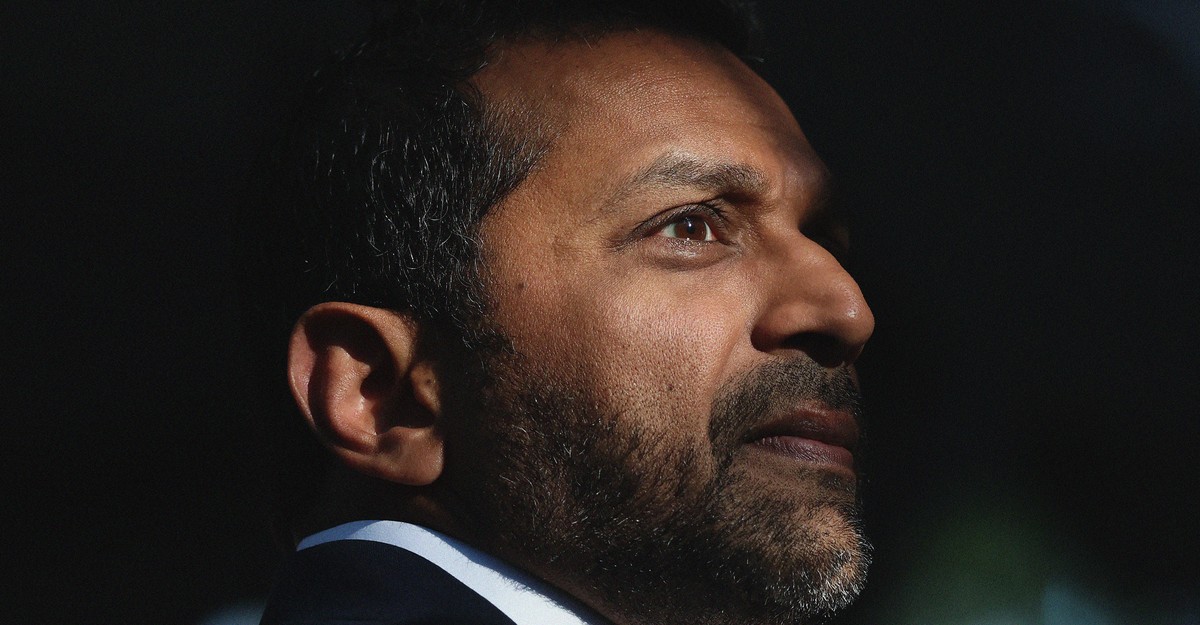
On Friday, April 10,as FBI Director Kash Patel was preparing to leave work for the weekend, he struggled to log into an internal computer system. He quickly became convinced that he had been locked out, and he panicked, frantically calling aides and allies to announce that he had been fired by the White House, according to nine people familiar with his outreach. Two of these people described his behavior as a “freak-out.”
Patel oversees an agency that employs roughly 38,000 people, including many who are trained to investigate and verify information that can be presented under oath in a court of law. News of his emotional outburst ricocheted through the bureau, prompting chatter among officials and, in some corners of the building, expressions of relief. The White House fielded calls from the bureau and from members of Congress asking who was now in charge of the FBI.
It turned out that the answer was still Patel. He had not been fired. The access problem, two people familiar with the matter said, appears to have been a technical error, and it was quickly resolved. “It was all ultimately bullshit,” one FBI official told me.
But Patel, according to multiple current officials, as well as former officials who have stayed close to him, is deeply concerned that his job is in jeopardy. He has good reasons to think so—including some having to do with what witnesses described to me as bouts of excessive drinking. My colleague Ashley Parker and Ireportedearlier this month that Patel was among the officials expected to be fired after Attorney General Pam Bondi’s ouster, on April 2. “We’re all just waiting for the word” that Patel is officially out of the top job, an FBI official told me this week, and a former official told my colleague Jonathan Lemire that Patel was “rightly paranoid.” Senior members of the Trump administration are already discussing who might replace him, according to an administration official and two people close to the White House who were familiar with the conversations.
In response to a detailed list of 19 questions, the White House spokesperson Karoline Leavitt told me in a statement that under Donald Trump and Patel, “crime across the country has plummeted to the lowest level in more than 100 years and many high profile criminals have been put behind bars. Director Patel remains a critical player on the Administration’s law and order team.” Acting Attorney General Todd Blanche told me in a statement, “Patel has accomplished more in 14 months than the previous administration did in four years. Anonymously sourced hit pieces do not constitute journalism.”
The FBI responded with a statement, attributed to Patel: “Print it, all false, I’ll see you in court—bring your checkbook.”
Read: Trump’s purge may be just beginning
The IT-lockout episode is emblematic of Patel’s tumultuous tenure as director of the FBI: He is erratic, suspicious of others, and prone to jumping to conclusions before he has necessary evidence, according to the more than two dozen people I interviewed about Patel’s conduct, including current and former FBI officials, staff at law-enforcement and intelligence agencies, hospitality-industry workers, members of Congress, political operatives, lobbyists, and former advisers. Speaking on the condition of anonymity to discuss sensitive information and private conversations, they described Patel’s tenure as a management failure and his personal behavior as a national-security vulnerability.
They said that the problems with his conduct go well beyond what has been previously known, and include both conspicuous inebriation and unexplained absences. His behavior has often alarmed officials at the FBI and the Department of Justice, even as he won support from the White House for his eager participation in Trump’s effort to turn federal law enforcement against the president’s perceived political enemies.
Several officials told me that Patel’s drinking has been a recurring source of concern across the government. They said that he is known to drink to the point of obvious intoxication, in many cases at the private club Ned’s in Washington, D.C., while in the presence of White House and other administration staff. He is also known to drink to excess at the Poodle Room, in Las Vegas, where he frequently spends parts of his weekends. Early in his tenure, meetings and briefings had to be rescheduled for later in the day as a result of his alcohol-fueled nights, six current and former officials and others familiar with Patel’s schedule told me.
Source: Drudge Report
