Iran’s economy entered 2026 already in structural collapse, and the February 28 war has since accelerated every negative trend simultaneously. TheIMF projectsa 6.1% real GDP contraction for 2026, one of the largest country-level revisions in the April World Economic Outlook, cut by 7.2 points from the January forecast, alongside projected consumer price inflation of 68.9%.
That figure carries important methodological caveats. It assumes a short-lived conflict, counts oil extracted into floating storage as produced output regardless of whether it can be sold, and will not capture the full destruction of infrastructure until Q2 and Q3 data are published later in the year. Specializedwar impact analysesput the contraction at 10% or more, and historical precedent from Iraq in 2003 and Ukraine in 2022 shows that initial estimates in active war zones are consistently revised sharply downward in subsequent quarters.
Pre-war contraction was already underway. Iran’sGDPshrank by 0.6% in the first half of the Iranian fiscal year, including oil, and by 0.8% excluding it, driven by weak demand, falling investment, and a 12.9% collapse in construction. Agriculture contracted 2.9% and industry and mining 3.4%. NominalGDP per capitahas since fallen to $3,415 in 2026, down from $4,264 in 2025, a nearly 20% drop in a single year.
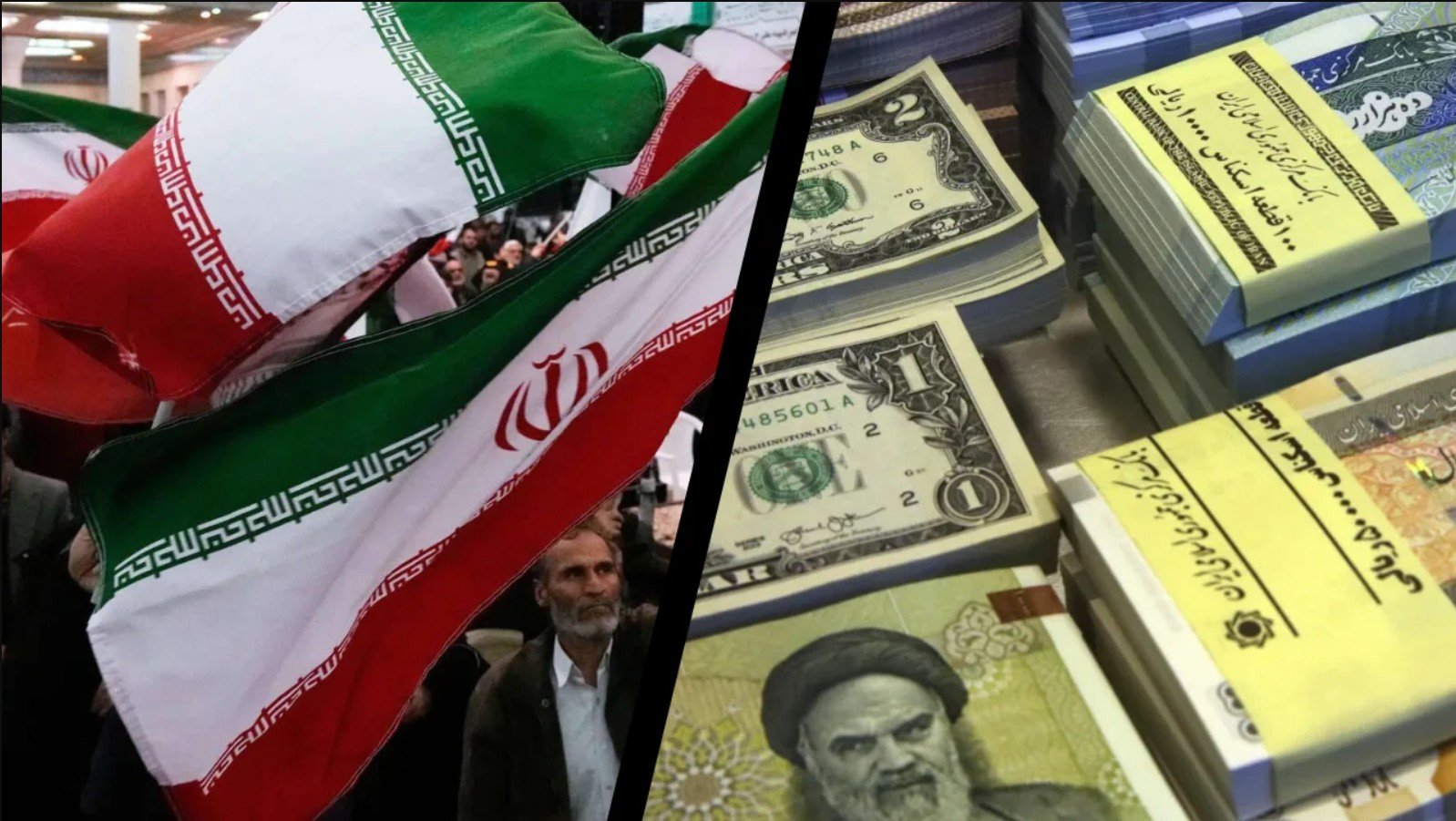
The currency has been in effective freefall for years. The rial fell from approximately 42,000 to over1.1 millionagainst the dollar, reaching 1,750,000 per dollar at its December 2025 low. Since the war began, the rial hasfallen another 8%on the black market. The central bank responded by issuing a 10 million rial note, one month after putting the 5 million rial note into circulation. That denomination sequence signals the velocity of monetary collapse.
Inflation had already reached crisis levels before the first strike. Food price inflation hit99% year-over-yearby February 2026, a historical high, while overall inflation stood at 47.5% on the eve of the conflict. Since the war began, Tehranresidents reportprices rising roughly 40% in the conflict period alone. The IMF’s own projected inflation figure of 68.9% for the full year, under a short-conflict assumption, means that a 6.1% GDP contraction coexists with near-hyperinflationary conditions, a combination that constitutes economic collapse for ordinary citizens regardless of the headline output number.
Poverty and food security were deteriorating before the war, and compounded them. TheWorld Bank estimatedin 2023/24 that 36% of Iranians subsist on less than $8.30 per day at 2021 PPP. Independent estimates as of March 2025 placed22% to 50%of the population below the poverty line. The Ministry of Social Welfare reported in 2024 that 57% of Iranians face some level of malnutrition, and authorities had already warned of famine conditions before the blockade took effect.
Oil revenue was the regime’s primary survival mechanism and its primary vulnerability. Exports were worth atleast $30 billionin 2025, accounting for roughly one-quarter of government revenue. The IRGC processes approximately half of those exports and attemptedto impose a transit feesystem on Strait of Hormuz traffic, though no payments by shipping companies have been verified. Major firms, including Maersk and Hapag-Lloyd, kept ships out of the strait entirely rather than engage.
China remained theprimary buyerof Iranian oil through the sanctions period. The U.S. naval blockade, formalized on April 13 and covering the entirety of the Iranian coastline, has since eliminated both oil export income and toll revenue to zero.
Iran’s structural weaknesses predate the conflict by decades. The banking system ischronically undercapitalized, carrying billions in non-performing loans. The government’sbudget deficitstood at approximately 1,800 trillion tomans (an informal Iranian unit of account equal to 10 rials), and the 2026 budget was the most contractionary in decades.
Iran’s partnership with Venezuela predated the conflict and was built on barter trade. Iran supplied refinery repairs, gasoline, and blending components in exchange for Venezuelan heavy crude and gold. The two countries also relied on shared shadow-fleet networks to coordinate the sale of sanctioned crude to Chinese refiners.
Source: The Gateway Pundit
