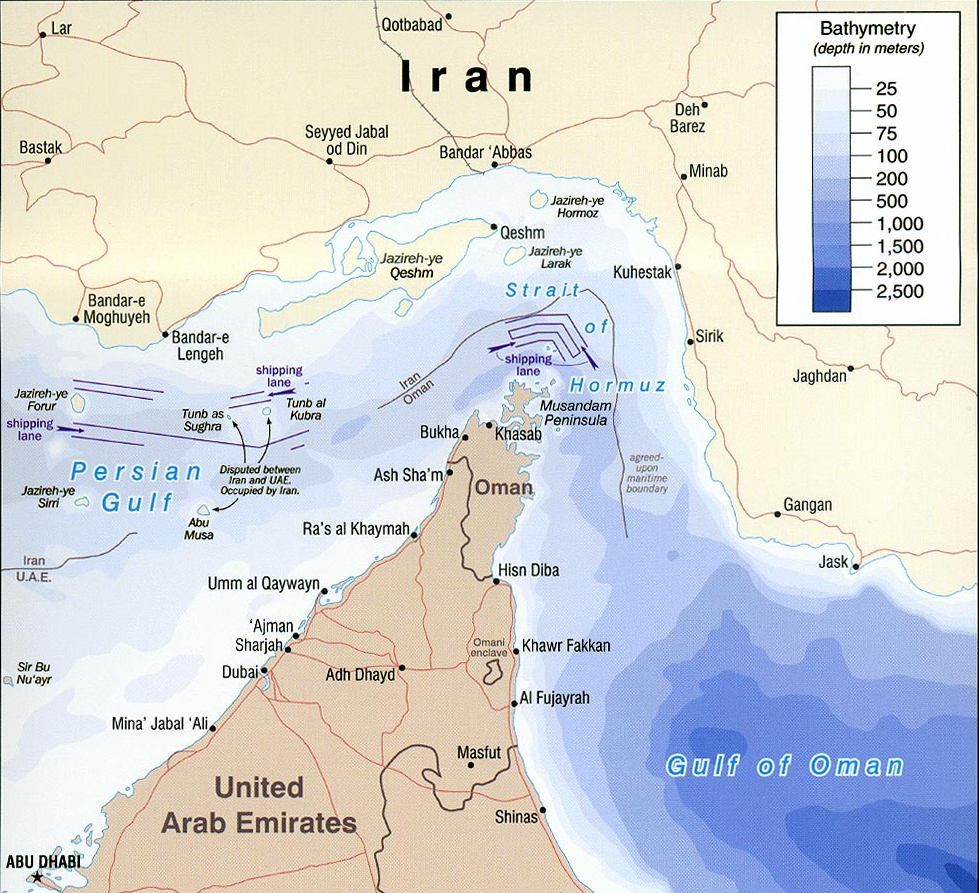
The United States'naval pressure campaign in the Strait of Hormuzamounts to a 'clearly unlawful' blockade that breaches the laws of naval warfare, while Iran's contested controls over shipping lanes remain at least arguably legal, according to one expert analysis of the crisis unfolding in the narrow waterway between the Gulf and the Arabian Sea.
Diplomatic and media attention in recent weeks has largely centred on Iran's decision to regulate traffic and charge fees for vessels transiting the Strait of Hormuz, a choke point that carries a significant share of the world's oil and gas exports. Arab Gulf governments and several European states have accused Tehran of flouting international law, and the UN Security Council has been the stage for repeated attempts to condemn Iran's regulatory moves and authorise action to keep the sea route 'open.'
One such resolution, aimed squarely at Iran's conduct in the Strait, passed the UN General Assembly with support from nearly 140 member states, underlining how widespread the political unease has become. On the Security Council, another draft went even further. Hours before Washington and Tehran agreed a two‑week ceasefire on 7 April, 11 Council members backed a text that would have denounced Iran's rules for shipping and given every UN member state a green light to use force to open the Strait of Hormuz. That measure collapsed only because it was vetoed.
While Iran has drawn the headlines, no comparable resolution has even been tabled to censure the parallelUS/Israeli campaign against Iranitself, despite what critics describe as an unambiguous breach of international law. In sharp contrast to the debates over Iranian conduct, the article argues that 'only one side in this conflict has unequivocally broken international law—and it isn't Iran'.
The charge is stark. The US/Israeli war against Iran is characterised as a textbook case of the 'crime of aggression,' one of the gravest offences recognised in international criminal law, which prohibits the use of armed force against the territorial integrity or political independence of another state except in self‑defence or with explicit Security Council authorisation. No such authorisation exists for the current operations.
By comparison, Iran's behaviour in the Strait of Hormuz, while far from straightforward, sits in a more ambiguous legal space. Tehran has not formally declared a blockade of the Strait, which under the traditional law of naval warfare would entail a belligerent power physically preventing passage of all shipping, neutral or otherwise, in order to weaken an enemy. Instead, Iran has required foreign vessels to coordinate with its authorities and comply with a set of transit regulations during both active conflict and ceasefire periods.
Those rules have included an outright ban on ships linked to the US and Israel, according to the source. For other commercial traffic, Iran appears to have allowed passage during a 10‑day Israel–Lebanon ceasefire, on condition that vessels follow a 'coordinated route' that hugs Iran's own coastline. Reports cited in the piece also claim that some ships have been charged a fee.
On the face of it, that selective control and fee‑charging regime looks heavy‑handed. Yet the analysis contends that Iran can still mount a 'reasonable case' that it is acting within its rights under international law, especially if it frames its actions as protective measures in an active war zone rather than as a formal blockade. None of these arguments, however, have yet been tested in an international court.
The political response has been strikingly lopsided. Instead of grappling with the legality of US and Israeli operations against Iran, the source says, the 'international community' has effectively cast Tehran as the principal outlaw in the Strait of Hormuz saga, while leaving the question of Western compliance with the UN Charter largely untouched.
This double standard, the expert suggests, is not an accident but part of a longer tradition in which Western powers and their allies use international law as a legitimising tool for their own military campaigns, while invoking the same rules to discipline or isolate states in the Global South that resist Western dominance. Those resistant states are often portrayed as serial violators of the rules‑based order, even when they work through legal channels or operate in grey areas where the law is contested.
Source: International Business Times UK
