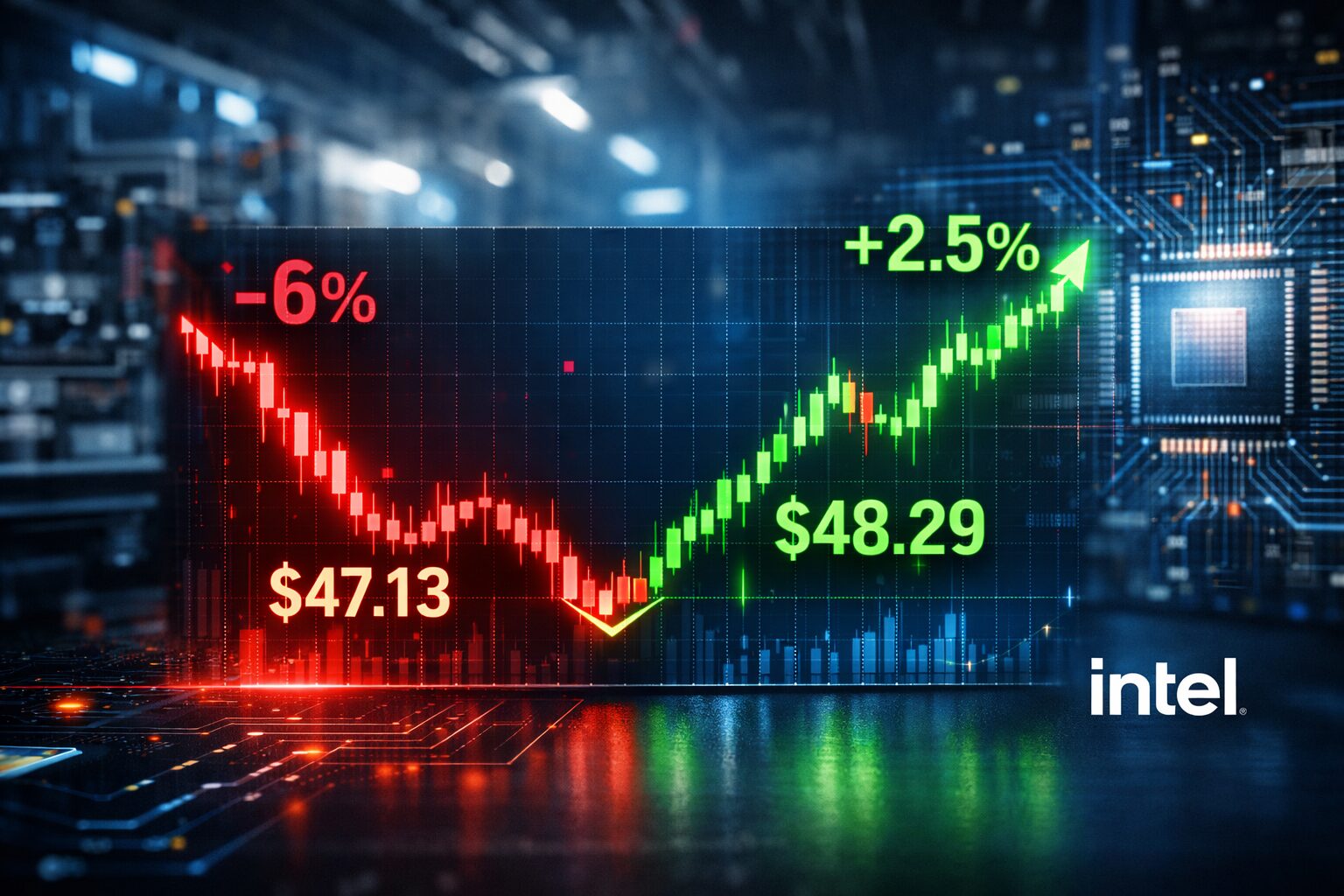
Intel stock jumped 2.5% yesterday, rebounding to $48.29 after a sharp 6% decline that left investors scrambling to understand what’s happening with the chipmaker. News of a major AI investment and an earnings beat drove the recovery, but the rally comes as analysts remain split on whether Intel can overcome its foundry struggles and catch up in the AI race. With Intel stock drops becoming more frequent and execution risks mounting, investors are asking why Intel is up today—and whether this bounce signals genuine progress or just another fleeting moment of optimism.
Shares traded as high as $49.55 during the session, with approximately 106.7 million shares changing hands. This marks a 22% decline from the average daily volume, suggesting the move wasn’t accompanied by overwhelming conviction from traders.
Also Read:Nvidia NVDA vs Broadcom AVGO: Which AI to Buy Before Earnings
The rally was triggered by the fact that Intel had spent at least $100 million into SambaNova, a company that specializes in AI software platform, according to reports by Wedbush. The move is among the many efforts by Intel to expedite its AI stack and collaborate with the key ecosystem players. Another development has been reported by Intel, the Saimemory project, in which it announced a new ZAM prototype, indicating progress in the area of memory and AI-hardware development-a practical development that is being considered by some investors as a sign that the product roadmap is evolving despite the continued execution issues.
The chipmaker surpassed the estimates in the quarterly earnings reporting a figure of 0.15 per share instead of $0.08 of the consensus and revenue per share of $13.67 billion vs. $13.37 billion of expectations. However, revenue declined by 4.2 percent year on year. CFO David Zinsser bought 5,882 shares at a price of $42.50 each on January 26th immediately after a fall in Intel stocks made the shares plunge, and analysts in the stock market see this insider buying as an assurance that the company has more to gain in the long run.
“Once we get them, we’re gonna need to start really spending capital on the 14A front, and that’s how you’ll know.”
Despite the bounce explaining why Intel is up today, the Intel stock forecast remains muted among Wall Street analysts. The consensus rating sits at “Reduce” with an average price target of $45.76—below where shares currently trade. The breakdown shows five Buy ratings, twenty-five Hold ratings, and six Sell ratings.
The core Intel stock problems stem from foundry struggles plaguing the company. Intel’s foundries suffered $12 billion in losses from 2021-2023, and current yields sit at just 55-65% versus the 80-90% industry standard. CFO David Zinsner admitted on the earnings call that the company doesn’t have capacity to meet current demand due to what executives described as “acute internal supply constraints,” which will lead to depressed sales and earnings in coming months.
Intel stock drops have become frequent as the company battles to catch up with competitors like AMD and Nvidia. While Nvidia’s shares surged 1,160% over five years, the Intel stock forecast shows Intel fell 20.25% during the same period. The company has committed roughly $100 billion to foundry projects, yet questions remain about execution and profitability.
Citic Securities upgraded Intel from “hold” to “buy” on January 26th, raising their price target from $38.90 to $60.30. However, J.P. Morgan analyst Harlan Sur issued a sell rating with a $35 target, implying 25.74% downside. This split reflects the uncertainty around Intel’s turnaround.
Source: Watcher Guru