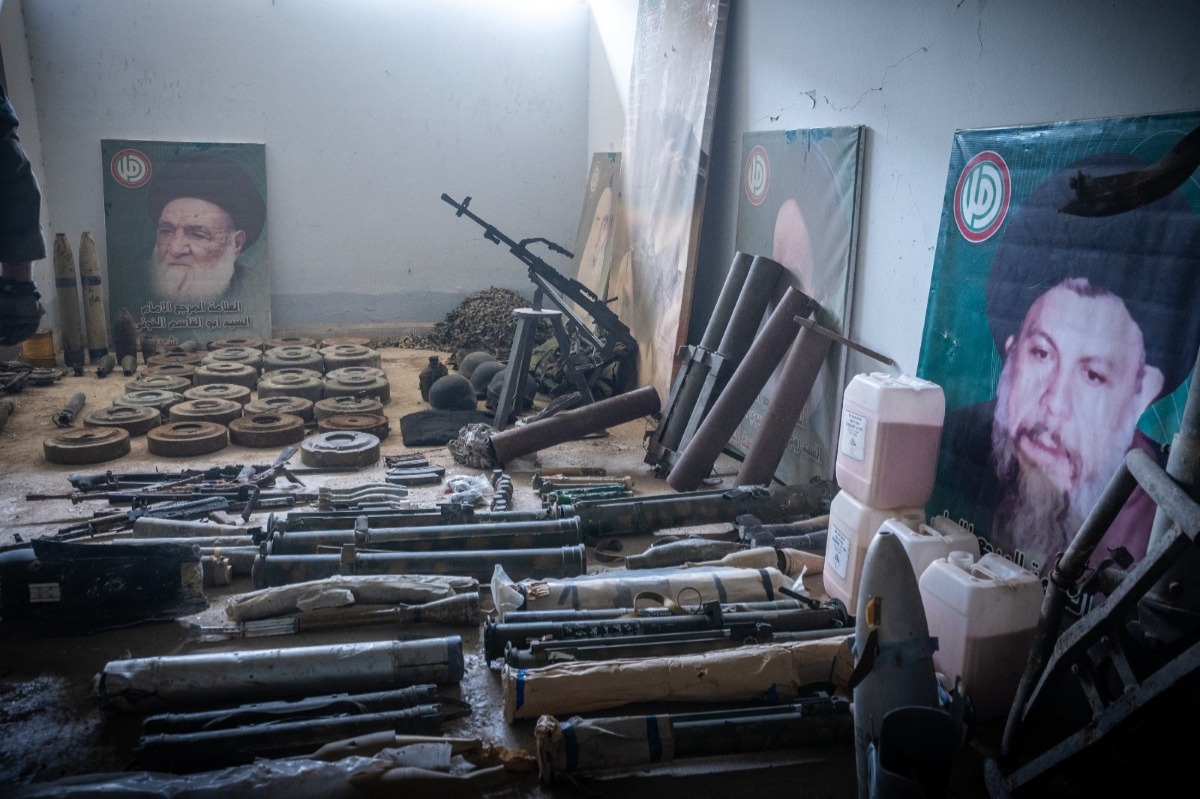
Once again, large segments of the international community, from the United Nations to key European governments, appear either unwilling or unable to confront the basic and uncomfortable reality that the latest escalation in hostilities didnotbegin with Israel. ItbeganwithHezbollah.
This silence — or at best, selective acknowledgment — when, without provocation, rockets were launched into Israel, stands in blazing contrast to the instant outrage when Israel responds. That imbalance is not just dishonest; it distorts the foundation of how conflicts like this are understood.
One must begin with the simple but critical fact that there was no active, large-scale conflict between Israel and Hezbollah at the time the current escalation began. Israel was, however, facing direct threats and attacks in a broader confrontation with Iran. It was precisely then — when Israel was under pressure — that Hezbollahchoseto act. The timing reflects a calculated decision to open a second front against Israel with the clear intention of intensifying the strain on its defenses.
What would any other country do if it were under attack by an enemy, and suddenly faced missile barrages into its towns and cities? Would it just stare at the sky and watch?
Presumably no state — whether in Europe, Asia, or the Americas — would tolerate such a situation. The seeming expectation that Israel, smaller than the state of New Jersey (roughly 22,000 sq. km), should absorb such attacks without a decisive response is not only unrealistic; it is fundamentally inconsistent with how sovereignty and self-defense are globally understood.
Hezbollah is not just some independent force acting in isolation. It is, by its ownadmission, founded by, intertwined with, and dependent on the Islamic Republic of Iran.
"Hezbollah arose in the wake of Iran's 1979 Islamic Revolution,"according toMiddle East expert Hussain Abdul-Hussain, "as part of an effort to establish an Islamic state in a Lebanon fractured by warring militias."
Hezbollah's weapons, funding, and strategic direction are explicitlylinked to Tehran. Such a relationship transforms Hezbollah's actions from spontaneous, isolated incidents into components of a broader regional strategy. When Hezbollah acts, it is not just a local terrorist group making tactical decisions — it is an extension of a regional power's geopolitical agenda.
When considering ceasefires or diplomatic arrangements – for instance, Iran accepting a ceasefire while Hezbollah continued itsattacks– the contrast exposes that any ceasefire failing to restrain Iran's most powerful proxy remains incomplete. It allows the conflict to persist through indirect means, through the back door, while maintaining the only pretense of de-escalation. Such agreements are pretty much worthless.
Israel's response, therefore, must be understood within that broader context.
Source: Gatestone Institute :: Articles
