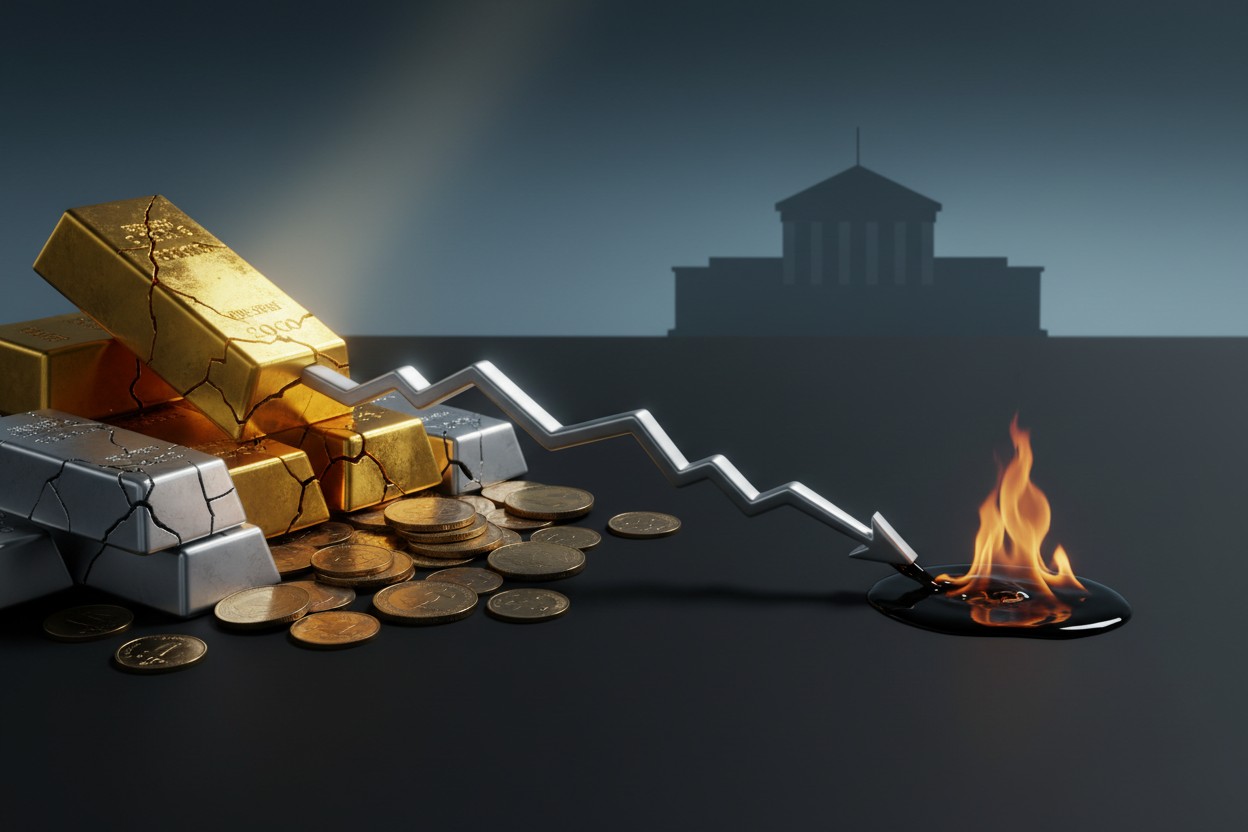
Copper prices rose on optimism over potential U.S.-Iran talks, easing Middle East tensions.Some advisors remain skeptical, viewing the rally with caution unless copper sustains a breakout above key levels.Attention is shifting to gold and silver as safe havens, with both metals showing technical reversal signs after holding support.Analysts project significant gains for precious metals by year-end, with a long-term gold target of $2,500.Geopolitical escalation, like an Israeli attack on Iran, could trigger a dramatic surge in gold and silver prices.
Some advisors remain skeptical, viewing the rally with caution unless copper sustains a breakout above key levels.Attention is shifting to gold and silver as safe havens, with both metals showing technical reversal signs after holding support.Analysts project significant gains for precious metals by year-end, with a long-term gold target of $2,500.Geopolitical escalation, like an Israeli attack on Iran, could trigger a dramatic surge in gold and silver prices.
Attention is shifting to gold and silver as safe havens, with both metals showing technical reversal signs after holding support.Analysts project significant gains for precious metals by year-end, with a long-term gold target of $2,500.Geopolitical escalation, like an Israeli attack on Iran, could trigger a dramatic surge in gold and silver prices.
Analysts project significant gains for precious metals by year-end, with a long-term gold target of $2,500.Geopolitical escalation, like an Israeli attack on Iran, could trigger a dramatic surge in gold and silver prices.
Geopolitical escalation, like an Israeli attack on Iran, could trigger a dramatic surge in gold and silver prices.
Copper prices climbed to a six-week high Tuesday, April 14, reaching $13,284.50 a ton on the London Metal Exchange (LME), as optimism grew over potential renewed peace talks between the U.S. and Iran. As noted byBrightU.AI's Enoch, LME is the world's premier marketplace for trading industrial metals futures and options contracts. It provides a regulated venue where prices are discovered and participants can hedge against or speculate on price movements for metals like aluminum, copper and zinc.The rally, part of a broader uptick in most industrial metals, is fueled by hopes that a second round of discussions could ease Middle East tensions that have whipsawed commodity markets since late February.According to sources familiar with the matter, Tehran is considering a pause in shipments through the critical Strait of Hormuz to facilitate an agreement on timing and location for talks, aiming for dialogue before an April 7 ceasefire expires next week. This development has temporarily overshadowed supply concerns, such as the U.S. blockade that recently sent aluminum to a four-year high.âInvestors are pricing in the easing of macro crisis,â noted Jia Zheng, trading manager at Suzhou Chuangyuan Harmony-Win Capital Management Co. âIt is likely to be a prolonged tug-of-war, similar to the Russia-Ukraine war, where the impact on the markets will gradually weaken.âHowever, beneath this short-term price action, a strong undercurrent of skepticism persists among some market observers. Contrary to the bullish copper trend, several advisors are cautioning against viewing the rally as a clear all-clear signal for the global economy. One prevailing sentiment is that the market itself will provide the ultimate verdict.Any major escalation in Middle East could trigger surge in precious metalsAs one analyst framed it, a sustained copper breakout above the $4 per pound threshold (approximately $8,818 per ton) would send a strong, clear signal that this global issue has been resolved, at least from a commodities perspective. Until such a definitive move occurs, the rally is viewed with caution, with some speculating that commodity buying may be driven more by wealth preservation motives than robust real-world demand from sectors like construction.In this climate of uncertainty, attention is shifting toward traditional safe havens. Gold and silver are being highlighted as key investments, with proponents pointing to significant downtrends over the past six months that now appear to be reversing. Technical analysis suggests both metals have breached their respective downtrend lines and have firmly held critical support levels, around $1,950 for gold and $26 for silver.Advocates anticipate substantial upward movement in both metals in the coming months, with significant gains projected by year-end. Longer-term, a bullish case for gold targets a minimum of $2,500 per ounce over the next five to six years, a level analysts equate to an inflation-adjusted peak from its 1980 high. This, they suggest, would signify the climax of a broader commodities bull market.As of latest reports, gold is trading around $2,376 per ounce, while silver has surpassed $28. These levels remain highly sensitive to geopolitical developments. Analysts warn that any major escalation in the Middle East, such as a large-scale Israeli attack on Iran, could trigger a dramatic surge in precious metals as investors flee to safety.The situation remains precarious. With Israel considering retaliation and Iran vowing pre-emptive countermeasures, the potential for a rapid escalation that disrupts global economic stability is a tangible risk hanging over all markets, ensuring that the narrative for commodities will be written by more than just peace talk headlines.Watch thisvideo about gold and silver projections.This video is from theÂBrighteon Highlights channel onBrighteon.com.Sources include:Mining.comBrighteon.comBrightU.ai
The rally, part of a broader uptick in most industrial metals, is fueled by hopes that a second round of discussions could ease Middle East tensions that have whipsawed commodity markets since late February.According to sources familiar with the matter, Tehran is considering a pause in shipments through the critical Strait of Hormuz to facilitate an agreement on timing and location for talks, aiming for dialogue before an April 7 ceasefire expires next week. This development has temporarily overshadowed supply concerns, such as the U.S. blockade that recently sent aluminum to a four-year high.âInvestors are pricing in the easing of macro crisis,â noted Jia Zheng, trading manager at Suzhou Chuangyuan Harmony-Win Capital Management Co. âIt is likely to be a prolonged tug-of-war, similar to the Russia-Ukraine war, where the impact on the markets will gradually weaken.âHowever, beneath this short-term price action, a strong undercurrent of skepticism persists among some market observers. Contrary to the bullish copper trend, several advisors are cautioning against viewing the rally as a clear all-clear signal for the global economy. One prevailing sentiment is that the market itself will provide the ultimate verdict.Any major escalation in Middle East could trigger surge in precious metalsAs one analyst framed it, a sustained copper breakout above the $4 per pound threshold (approximately $8,818 per ton) would send a strong, clear signal that this global issue has been resolved, at least from a commodities perspective. Until such a definitive move occurs, the rally is viewed with caution, with some speculating that commodity buying may be driven more by wealth preservation motives than robust real-world demand from sectors like construction.In this climate of uncertainty, attention is shifting toward traditional safe havens. Gold and silver are being highlighted as key investments, with proponents pointing to significant downtrends over the past six months that now appear to be reversing. Technical analysis suggests both metals have breached their respective downtrend lines and have firmly held critical support levels, around $1,950 for gold and $26 for silver.Advocates anticipate substantial upward movement in both metals in the coming months, with significant gains projected by year-end. Longer-term, a bullish case for gold targets a minimum of $2,500 per ounce over the next five to six years, a level analysts equate to an inflation-adjusted peak from its 1980 high. This, they suggest, would signify the climax of a broader commodities bull market.As of latest reports, gold is trading around $2,376 per ounce, while silver has surpassed $28. These levels remain highly sensitive to geopolitical developments. Analysts warn that any major escalation in the Middle East, such as a large-scale Israeli attack on Iran, could trigger a dramatic surge in precious metals as investors flee to safety.The situation remains precarious. With Israel considering retaliation and Iran vowing pre-emptive countermeasures, the potential for a rapid escalation that disrupts global economic stability is a tangible risk hanging over all markets, ensuring that the narrative for commodities will be written by more than just peace talk headlines.Watch thisvideo about gold and silver projections.This video is from theÂBrighteon Highlights channel onBrighteon.com.Sources include:Mining.comBrighteon.comBrightU.ai
The rally, part of a broader uptick in most industrial metals, is fueled by hopes that a second round of discussions could ease Middle East tensions that have whipsawed commodity markets since late February.According to sources familiar with the matter, Tehran is considering a pause in shipments through the critical Strait of Hormuz to facilitate an agreement on timing and location for talks, aiming for dialogue before an April 7 ceasefire expires next week. This development has temporarily overshadowed supply concerns, such as the U.S. blockade that recently sent aluminum to a four-year high.âInvestors are pricing in the easing of macro crisis,â noted Jia Zheng, trading manager at Suzhou Chuangyuan Harmony-Win Capital Management Co. âIt is likely to be a prolonged tug-of-war, similar to the Russia-Ukraine war, where the impact on the markets will gradually weaken.âHowever, beneath this short-term price action, a strong undercurrent of skepticism persists among some market observers. Contrary to the bullish copper trend, several advisors are cautioning against viewing the rally as a clear all-clear signal for the global economy. One prevailing sentiment is that the market itself will provide the ultimate verdict.Any major escalation in Middle East could trigger surge in precious metalsAs one analyst framed it, a sustained copper breakout above the $4 per pound threshold (approximately $8,818 per ton) would send a strong, clear signal that this global issue has been resolved, at least from a commodities perspective. Until such a definitive move occurs, the rally is viewed with caution, with some speculating that commodity buying may be driven more by wealth preservation motives than robust real-world demand from sectors like construction.In this climate of uncertainty, attention is shifting toward traditional safe havens. Gold and silver are being highlighted as key investments, with proponents pointing to significant downtrends over the past six months that now appear to be reversing. Technical analysis suggests both metals have breached their respective downtrend lines and have firmly held critical support levels, around $1,950 for gold and $26 for silver.Advocates anticipate substantial upward movement in both metals in the coming months, with significant gains projected by year-end. Longer-term, a bullish case for gold targets a minimum of $2,500 per ounce over the next five to six years, a level analysts equate to an inflation-adjusted peak from its 1980 high. This, they suggest, would signify the climax of a broader commodities bull market.As of latest reports, gold is trading around $2,376 per ounce, while silver has surpassed $28. These levels remain highly sensitive to geopolitical developments. Analysts warn that any major escalation in the Middle East, such as a large-scale Israeli attack on Iran, could trigger a dramatic surge in precious metals as investors flee to safety.The situation remains precarious. With Israel considering retaliation and Iran vowing pre-emptive countermeasures, the potential for a rapid escalation that disrupts global economic stability is a tangible risk hanging over all markets, ensuring that the narrative for commodities will be written by more than just peace talk headlines.Watch thisvideo about gold and silver projections.This video is from theÂBrighteon Highlights channel onBrighteon.com.Sources include:Mining.comBrighteon.comBrightU.ai
According to sources familiar with the matter, Tehran is considering a pause in shipments through the critical Strait of Hormuz to facilitate an agreement on timing and location for talks, aiming for dialogue before an April 7 ceasefire expires next week. This development has temporarily overshadowed supply concerns, such as the U.S. blockade that recently sent aluminum to a four-year high.âInvestors are pricing in the easing of macro crisis,â noted Jia Zheng, trading manager at Suzhou Chuangyuan Harmony-Win Capital Management Co. âIt is likely to be a prolonged tug-of-war, similar to the Russia-Ukraine war, where the impact on the markets will gradually weaken.âHowever, beneath this short-term price action, a strong undercurrent of skepticism persists among some market observers. Contrary to the bullish copper trend, several advisors are cautioning against viewing the rally as a clear all-clear signal for the global economy. One prevailing sentiment is that the market itself will provide the ultimate verdict.Any major escalation in Middle East could trigger surge in precious metalsAs one analyst framed it, a sustained copper breakout above the $4 per pound threshold (approximately $8,818 per ton) would send a strong, clear signal that this global issue has been resolved, at least from a commodities perspective. Until such a definitive move occurs, the rally is viewed with caution, with some speculating that commodity buying may be driven more by wealth preservation motives than robust real-world demand from sectors like construction.In this climate of uncertainty, attention is shifting toward traditional safe havens. Gold and silver are being highlighted as key investments, with proponents pointing to significant downtrends over the past six months that now appear to be reversing. Technical analysis suggests both metals have breached their respective downtrend lines and have firmly held critical support levels, around $1,950 for gold and $26 for silver.Advocates anticipate substantial upward movement in both metals in the coming months, with significant gains projected by year-end. Longer-term, a bullish case for gold targets a minimum of $2,500 per ounce over the next five to six years, a level analysts equate to an inflation-adjusted peak from its 1980 high. This, they suggest, would signify the climax of a broader commodities bull market.As of latest reports, gold is trading around $2,376 per ounce, while silver has surpassed $28. These levels remain highly sensitive to geopolitical developments. Analysts warn that any major escalation in the Middle East, such as a large-scale Israeli attack on Iran, could trigger a dramatic surge in precious metals as investors flee to safety.The situation remains precarious. With Israel considering retaliation and Iran vowing pre-emptive countermeasures, the potential for a rapid escalation that disrupts global economic stability is a tangible risk hanging over all markets, ensuring that the narrative for commodities will be written by more than just peace talk headlines.Watch thisvideo about gold and silver projections.This video is from theÂBrighteon Highlights channel onBrighteon.com.Sources include:Mining.comBrighteon.comBrightU.ai
According to sources familiar with the matter, Tehran is considering a pause in shipments through the critical Strait of Hormuz to facilitate an agreement on timing and location for talks, aiming for dialogue before an April 7 ceasefire expires next week. This development has temporarily overshadowed supply concerns, such as the U.S. blockade that recently sent aluminum to a four-year high.âInvestors are pricing in the easing of macro crisis,â noted Jia Zheng, trading manager at Suzhou Chuangyuan Harmony-Win Capital Management Co. âIt is likely to be a prolonged tug-of-war, similar to the Russia-Ukraine war, where the impact on the markets will gradually weaken.âHowever, beneath this short-term price action, a strong undercurrent of skepticism persists among some market observers. Contrary to the bullish copper trend, several advisors are cautioning against viewing the rally as a clear all-clear signal for the global economy. One prevailing sentiment is that the market itself will provide the ultimate verdict.Any major escalation in Middle East could trigger surge in precious metalsAs one analyst framed it, a sustained copper breakout above the $4 per pound threshold (approximately $8,818 per ton) would send a strong, clear signal that this global issue has been resolved, at least from a commodities perspective. Until such a definitive move occurs, the rally is viewed with caution, with some speculating that commodity buying may be driven more by wealth preservation motives than robust real-world demand from sectors like construction.In this climate of uncertainty, attention is shifting toward traditional safe havens. Gold and silver are being highlighted as key investments, with proponents pointing to significant downtrends over the past six months that now appear to be reversing. Technical analysis suggests both metals have breached their respective downtrend lines and have firmly held critical support levels, around $1,950 for gold and $26 for silver.Advocates anticipate substantial upward movement in both metals in the coming months, with significant gains projected by year-end. Longer-term, a bullish case for gold targets a minimum of $2,500 per ounce over the next five to six years, a level analysts equate to an inflation-adjusted peak from its 1980 high. This, they suggest, would signify the climax of a broader commodities bull market.As of latest reports, gold is trading around $2,376 per ounce, while silver has surpassed $28. These levels remain highly sensitive to geopolitical developments. Analysts warn that any major escalation in the Middle East, such as a large-scale Israeli attack on Iran, could trigger a dramatic surge in precious metals as investors flee to safety.The situation remains precarious. With Israel considering retaliation and Iran vowing pre-emptive countermeasures, the potential for a rapid escalation that disrupts global economic stability is a tangible risk hanging over all markets, ensuring that the narrative for commodities will be written by more than just peace talk headlines.Watch thisvideo about gold and silver projections.This video is from theÂBrighteon Highlights channel onBrighteon.com.Sources include:Mining.comBrighteon.comBrightU.ai
Source: NaturalNews.com
