Can’t-miss innovations from the bleeding edge of science and tech
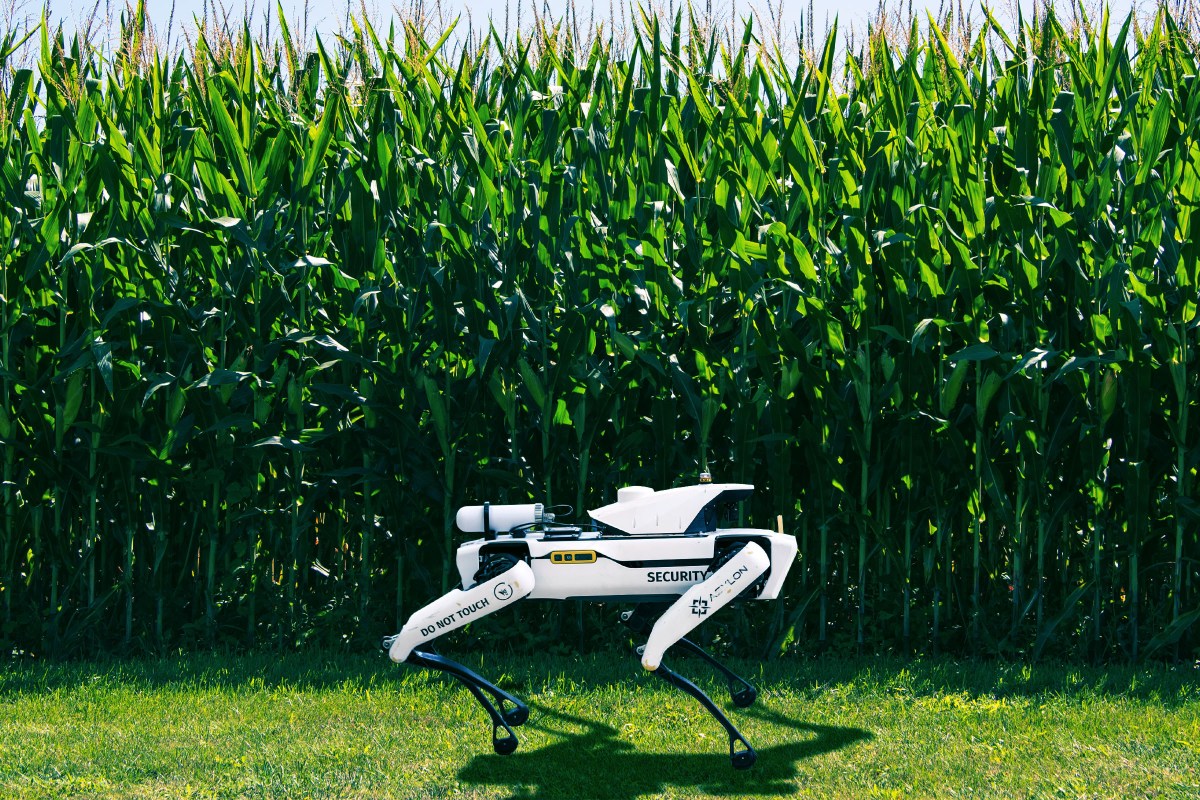
Robot dogs are increasingly finding real life uses as guardians of sensitive sites likeAI data centers, theUS-Mexico border, and Donald Trump’sMar-a-Lago resort. In a dystopian turn, now they’re also guarding valuable cash crops — at least in the US, where industrial agriculture companies like Bayer are deploying robodogs to watch over hundreds of thousands of dollars worth of raw corn.
According toindustry publication theFence Post, Bayer is supplementing human security patrols around its 8,000 acre Hawaiian corn farm with robotic security dogs, supplied by the tech firm Asylon.
The Asylon dogs are meant to guard the company’s precious maize from vandals, wildfires, wild fauna, and other hazards around the clock. They do so with a payload of thermal cameras and electro-optical sensors, the kind used inunmanned military drones. Each robodog connects both to Bayer’s Hawaii Security Operations Centre and Alyson’s Robotic Security Operations Centre, meaning anyone trying to pull off a daring corn heist is going to have a hard time.
While that may seem like overkill,FenPoreports Bayer’s Hawaiian corn holdings represent 90 percent of the company’s international feed corn exports. At an average cost of$113.50 per acre, that represents over $900,000 worth of corn investment alone, and likely millions on the international market (to say nothing of theindustrial corn system, a major economic powerhouse in the US which generated$123 billionin revenue in 2024 alone).
While references to the Netflix sci-fi anthology “Black Mirror” are old hat at this point, we couldn’t help but notice the new crop guardians are emerging at a time when aglobal food crisislooms over the world.
Trump’s war on Iran has disrupted about one-third of the world’s global fertilizer supply, leading farmers to warn of imminentfood price spikesin the coming months, in a world where2.3 billion peopleare already said to face moderate to severe levels of food insecurity.
In arecent press briefingon the US-Iran war, Máximo Torero, chief economist of the Food and Agriculture Organization of the United States warned of the “systematic shock affecting agrifood systems globally.”
“Farmers are facing a dual cost shock: they have more expensive fertilizers alongside rising fuel costs affecting the entire agricultural value chain, including irrigation and transport,” Torero said.
While it remains to be seen how acute the consequences are — that will depend onhow long the war lasts— one thing is unequivocally clear: we are now living in a world where millions starve, while cash crops are patrolled by robot dogs.
Source: Drudge Report
