It took weeks of planning to find a way into the Strait of Hormuz.
We studied maps. Talked through scenarios. How we would get in. How we would get out. Who we could call if something went wrong. And what would happen if we ran into trouble along the way.
Our plan was to reach one of the strait's narrowest points. Close enough to see, for ourselves, theoil tankers and cargo shipsthat had been backing up there for weeks.
When a ceasefire between the United States, Israel, and Iran, brokered by Pakistan, came into effect, we made the call. Thefirst round of talks in Islamabadhad failed. But the truce was largely holding, and for a moment, the risk felt manageable.
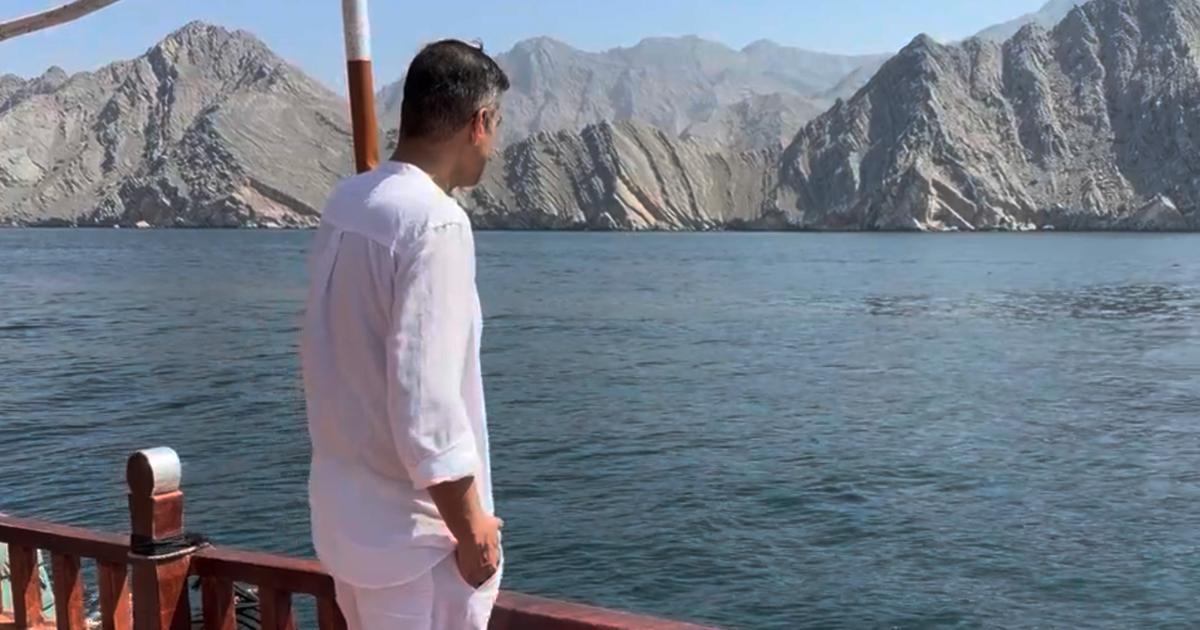
We crossed from one Gulf country into another and eventually found ourselves on a coastal road that felt almost too beautiful for the tensions that lay just offshore.
On one side were jagged mountains rising straight out of the earth, completely bare of vegetation. On the other, clear blue water stretched out into the Gulf.
And then, as the road curved, we saw the ships. Not one or two, but dozens. Sitting still. Waiting.
It is easy to forget, looking at that stretch of water, thatroughly 20% of the world's oilpasses through it. The strait became a pressure point in the war between the U.S. and Iran, turning into a choke point for theglobal economy.
Since the violence escalated, access to the waterway has been tightly controlled. Journalists are not meant to be on these waters.
At a small port, posing as tourists, we asked around. Quietly.
Source: Drudge Report
