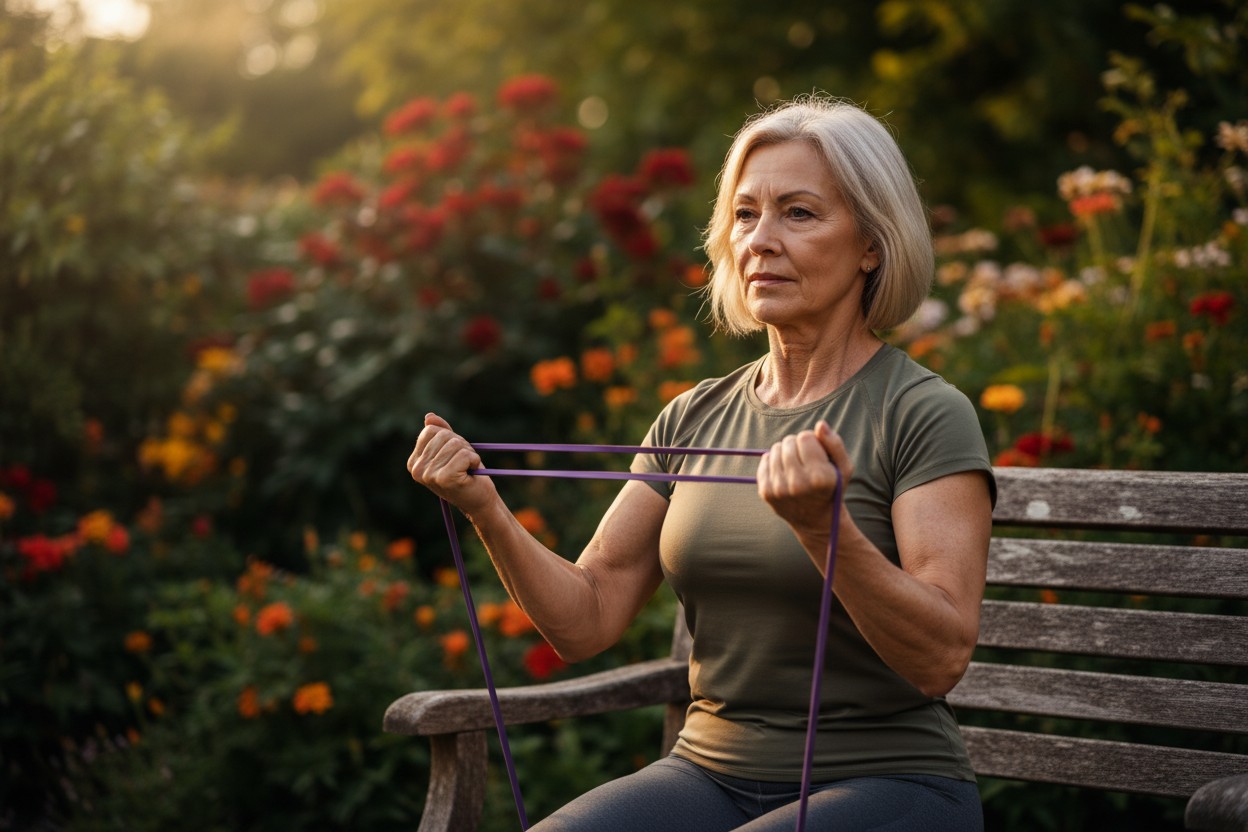
Bone health is a critical, often overlooked issue for aging adults, with osteoporosis and fractures posing a major threat to independence and quality of life in an era of longer lifespans.Strength training is the most effective non-drug method for building bone density, as the stress of muscles pulling on bones during resistance exercises signals the body to fortify them.Weight-bearing cardio exercises (like walking and stair climbing) use gravity to help maintain bone mass in the hips, spine and legs and should be done consistently.Balance training is essential for fracture prevention, as it improves stability and coordination to directly reduce the risk of falls, which are a leading cause of serious injury.A holistic, consistent exercise regimen is key, combining strength, weight-bearing cardio, balance, low-impact plyometrics and mobility work to comprehensively build bone density, prevent falls and ensure safe movement.
Strength training is the most effective non-drug method for building bone density, as the stress of muscles pulling on bones during resistance exercises signals the body to fortify them.Weight-bearing cardio exercises (like walking and stair climbing) use gravity to help maintain bone mass in the hips, spine and legs and should be done consistently.Balance training is essential for fracture prevention, as it improves stability and coordination to directly reduce the risk of falls, which are a leading cause of serious injury.A holistic, consistent exercise regimen is key, combining strength, weight-bearing cardio, balance, low-impact plyometrics and mobility work to comprehensively build bone density, prevent falls and ensure safe movement.
Weight-bearing cardio exercises (like walking and stair climbing) use gravity to help maintain bone mass in the hips, spine and legs and should be done consistently.Balance training is essential for fracture prevention, as it improves stability and coordination to directly reduce the risk of falls, which are a leading cause of serious injury.A holistic, consistent exercise regimen is key, combining strength, weight-bearing cardio, balance, low-impact plyometrics and mobility work to comprehensively build bone density, prevent falls and ensure safe movement.
Balance training is essential for fracture prevention, as it improves stability and coordination to directly reduce the risk of falls, which are a leading cause of serious injury.A holistic, consistent exercise regimen is key, combining strength, weight-bearing cardio, balance, low-impact plyometrics and mobility work to comprehensively build bone density, prevent falls and ensure safe movement.
A holistic, consistent exercise regimen is key, combining strength, weight-bearing cardio, balance, low-impact plyometrics and mobility work to comprehensively build bone density, prevent falls and ensure safe movement.
In an era where medical advancements promise longer lifespans, a quiet epidemic threatens the quality of those extra years: deteriorating bone health. For millions over 40, gradual bone loss often goes unnoticed until a fall causes a life-altering fracture. The news, however, is not all grim. A powerful, accessible and drug-free defense is within reach. A targeted regimen of specific exercises can significantly bolster bone strength, prevent fractures and safeguard independence. This is a proactive strategy for health sovereignty against a major physical threat."Bone loss leads to osteoporosis, a condition that weakens bones and dramatically increases the risk of debilitating fractures," saidBrightU.AI's Enoch. "These fractures, particularly in the hip and spine, can result in chronic pain, loss of independence and increased mortality. Maintaining bone density is therefore crucial for long-term mobility, quality of life and overall health."Historically, human longevity was shorter and age-related degeneration was less common. Today, with life expectancy extending into the 80s and beyond, our skeletal system must endure decades longer than it was evolutionarily optimized for. This has created a staggering burden. Osteoporosis affects an estimated 10 million Americans, with millions more at risk. The resulting fractures, especially of the hip and spine, are a leading cause of disability, loss of independence and entry into long-term care.The foundation: Strength trainingStrength training is the most potent non-pharmaceutical tool for combating bone loss. The mechanism is straightforward: when muscles contract against resistance, they pull on the attached bones. This places a healthy stress on the bone, signaling the body to lay down new mineral deposits to fortify it. For those over 40, this counters the natural slowdown in bone regeneration.Focus on compound movements that engage multiple large muscle groups and joints, like squats, lunges and push-ups. A squat, for instance, strengthens the lower body while stressing the spine, hips and kneesâcommon fracture sites. Engage in such training two to three times weekly, progressively increasing the challenge.Gravity as an ally: Weight-bearing cardioWeight-bearing cardiovascular exercise uses gravity to maintain bone mass. These are activities where your feet and legs carry your body's weight, such as brisk walking, hiking, stair climbing, dancing and jogging. Unlike non-weight-bearing exercises like swimming, these activities directly signal to the bones in the hips, spine and legs to remain dense and strong.Consistency is key. Aim for at least 30 minutes of such activity on most days. A daily walk, taking the stairs, or a dance class can deliver the necessary bone-building stimulus.The art of not falling: Balance trainingBuilding strong bones is only half the battle. Preventing falls is critical, as they are a predominant cause of serious injury for adults over 40. Balance training improves stability, coordination and proprioceptionâthe body's sense of its position in spaceâand is a direct form of fracture prevention.Exercises can be simple: practice standing on one leg, walking heel-to-toe, or holding steady yoga poses. The goal is to challenge your stabilizing systems in a controlled way so they respond better in daily life. Integrate just a few minutes of this practice several times a week.Controlled impact: Low-impact plyometricsFor bone health after 40, a modified, low-impact version of plyometrics is endorsed. These involve small, quick jumping or hopping motions, generating a gentle, controlled force through the skeleton. Examples include mini squat jumps, stepping onto a low platform, or light skipping. The brief impact sends a potent signal to bone cells to reinforce their structure.Caution is paramount. Emphasize perfect form, soft landings and an absence of joint pain. Establish a base of strength first and consult a provider if you have joint concerns. Introduced gradually, this can stimulate bone adaptation safely.The glue that holds it together: Mobility and flexibilityMobility and flexibility work is the final, often neglected component. As we age, tissues tighten and movement can become restricted. This stiffness increases the risk of strains and missteps that can lead to falls. Poor mobility can also compromise your ability to perform strength and balance exercises correctly.Dedicating 5 to 10 minutes daily to dynamic stretching, yoga, or controlled joint circles yields disproportionate benefits. Focus on areas prone to stiffnessâthe hips, thoracic spine and shoulders. This ensures your body can safely perform all other bone-strengthening exercises.The imperative of consistencyThe overarching message is that a holistic, consistent routine is non-negotiable. The most robust strategy blends all five exercise types throughout the week. This integrated approach builds density, maintains mass, prevents falls, stimulates adaptation and ensures good movement. The commitment is to a sustainable, varied practice, not hours of grueling daily workouts.For those new to this, start with bodyweight movements, short walks and basic balance drills. Begin, listen to your body and build patiently. Inaction carries a steep price.In conclusion, the fight against age-related bone loss is a shift from passive aging to active stewardship. The tools are found in the deliberate application of movement. The five exercise modalities form a comprehensive blueprint for resilience. The body retains a remarkable capacity to strengthen itself when given the proper stimulus. Adopting this multifaceted regimen is an investment in enduring strength, autonomy and the quality of every year to come.Watch and discover the importance ofexercise and longevity.This video is from theÂHolistic Herbalist channel onBrighteon.com.Sources include:Health.comAOL.comBrightU.aiBrighteon.com
"Bone loss leads to osteoporosis, a condition that weakens bones and dramatically increases the risk of debilitating fractures," saidBrightU.AI's Enoch. "These fractures, particularly in the hip and spine, can result in chronic pain, loss of independence and increased mortality. Maintaining bone density is therefore crucial for long-term mobility, quality of life and overall health."Historically, human longevity was shorter and age-related degeneration was less common. Today, with life expectancy extending into the 80s and beyond, our skeletal system must endure decades longer than it was evolutionarily optimized for. This has created a staggering burden. Osteoporosis affects an estimated 10 million Americans, with millions more at risk. The resulting fractures, especially of the hip and spine, are a leading cause of disability, loss of independence and entry into long-term care.The foundation: Strength trainingStrength training is the most potent non-pharmaceutical tool for combating bone loss. The mechanism is straightforward: when muscles contract against resistance, they pull on the attached bones. This places a healthy stress on the bone, signaling the body to lay down new mineral deposits to fortify it. For those over 40, this counters the natural slowdown in bone regeneration.Focus on compound movements that engage multiple large muscle groups and joints, like squats, lunges and push-ups. A squat, for instance, strengthens the lower body while stressing the spine, hips and kneesâcommon fracture sites. Engage in such training two to three times weekly, progressively increasing the challenge.Gravity as an ally: Weight-bearing cardioWeight-bearing cardiovascular exercise uses gravity to maintain bone mass. These are activities where your feet and legs carry your body's weight, such as brisk walking, hiking, stair climbing, dancing and jogging. Unlike non-weight-bearing exercises like swimming, these activities directly signal to the bones in the hips, spine and legs to remain dense and strong.Consistency is key. Aim for at least 30 minutes of such activity on most days. A daily walk, taking the stairs, or a dance class can deliver the necessary bone-building stimulus.The art of not falling: Balance trainingBuilding strong bones is only half the battle. Preventing falls is critical, as they are a predominant cause of serious injury for adults over 40. Balance training improves stability, coordination and proprioceptionâthe body's sense of its position in spaceâand is a direct form of fracture prevention.Exercises can be simple: practice standing on one leg, walking heel-to-toe, or holding steady yoga poses. The goal is to challenge your stabilizing systems in a controlled way so they respond better in daily life. Integrate just a few minutes of this practice several times a week.Controlled impact: Low-impact plyometricsFor bone health after 40, a modified, low-impact version of plyometrics is endorsed. These involve small, quick jumping or hopping motions, generating a gentle, controlled force through the skeleton. Examples include mini squat jumps, stepping onto a low platform, or light skipping. The brief impact sends a potent signal to bone cells to reinforce their structure.Caution is paramount. Emphasize perfect form, soft landings and an absence of joint pain. Establish a base of strength first and consult a provider if you have joint concerns. Introduced gradually, this can stimulate bone adaptation safely.The glue that holds it together: Mobility and flexibilityMobility and flexibility work is the final, often neglected component. As we age, tissues tighten and movement can become restricted. This stiffness increases the risk of strains and missteps that can lead to falls. Poor mobility can also compromise your ability to perform strength and balance exercises correctly.Dedicating 5 to 10 minutes daily to dynamic stretching, yoga, or controlled joint circles yields disproportionate benefits. Focus on areas prone to stiffnessâthe hips, thoracic spine and shoulders. This ensures your body can safely perform all other bone-strengthening exercises.The imperative of consistencyThe overarching message is that a holistic, consistent routine is non-negotiable. The most robust strategy blends all five exercise types throughout the week. This integrated approach builds density, maintains mass, prevents falls, stimulates adaptation and ensures good movement. The commitment is to a sustainable, varied practice, not hours of grueling daily workouts.For those new to this, start with bodyweight movements, short walks and basic balance drills. Begin, listen to your body and build patiently. Inaction carries a steep price.In conclusion, the fight against age-related bone loss is a shift from passive aging to active stewardship. The tools are found in the deliberate application of movement. The five exercise modalities form a comprehensive blueprint for resilience. The body retains a remarkable capacity to strengthen itself when given the proper stimulus. Adopting this multifaceted regimen is an investment in enduring strength, autonomy and the quality of every year to come.Watch and discover the importance ofexercise and longevity.This video is from theÂHolistic Herbalist channel onBrighteon.com.Sources include:Health.comAOL.comBrightU.aiBrighteon.com
"Bone loss leads to osteoporosis, a condition that weakens bones and dramatically increases the risk of debilitating fractures," saidBrightU.AI's Enoch. "These fractures, particularly in the hip and spine, can result in chronic pain, loss of independence and increased mortality. Maintaining bone density is therefore crucial for long-term mobility, quality of life and overall health."Historically, human longevity was shorter and age-related degeneration was less common. Today, with life expectancy extending into the 80s and beyond, our skeletal system must endure decades longer than it was evolutionarily optimized for. This has created a staggering burden. Osteoporosis affects an estimated 10 million Americans, with millions more at risk. The resulting fractures, especially of the hip and spine, are a leading cause of disability, loss of independence and entry into long-term care.The foundation: Strength trainingStrength training is the most potent non-pharmaceutical tool for combating bone loss. The mechanism is straightforward: when muscles contract against resistance, they pull on the attached bones. This places a healthy stress on the bone, signaling the body to lay down new mineral deposits to fortify it. For those over 40, this counters the natural slowdown in bone regeneration.Focus on compound movements that engage multiple large muscle groups and joints, like squats, lunges and push-ups. A squat, for instance, strengthens the lower body while stressing the spine, hips and kneesâcommon fracture sites. Engage in such training two to three times weekly, progressively increasing the challenge.Gravity as an ally: Weight-bearing cardioWeight-bearing cardiovascular exercise uses gravity to maintain bone mass. These are activities where your feet and legs carry your body's weight, such as brisk walking, hiking, stair climbing, dancing and jogging. Unlike non-weight-bearing exercises like swimming, these activities directly signal to the bones in the hips, spine and legs to remain dense and strong.Consistency is key. Aim for at least 30 minutes of such activity on most days. A daily walk, taking the stairs, or a dance class can deliver the necessary bone-building stimulus.The art of not falling: Balance trainingBuilding strong bones is only half the battle. Preventing falls is critical, as they are a predominant cause of serious injury for adults over 40. Balance training improves stability, coordination and proprioceptionâthe body's sense of its position in spaceâand is a direct form of fracture prevention.Exercises can be simple: practice standing on one leg, walking heel-to-toe, or holding steady yoga poses. The goal is to challenge your stabilizing systems in a controlled way so they respond better in daily life. Integrate just a few minutes of this practice several times a week.Controlled impact: Low-impact plyometricsFor bone health after 40, a modified, low-impact version of plyometrics is endorsed. These involve small, quick jumping or hopping motions, generating a gentle, controlled force through the skeleton. Examples include mini squat jumps, stepping onto a low platform, or light skipping. The brief impact sends a potent signal to bone cells to reinforce their structure.Caution is paramount. Emphasize perfect form, soft landings and an absence of joint pain. Establish a base of strength first and consult a provider if you have joint concerns. Introduced gradually, this can stimulate bone adaptation safely.The glue that holds it together: Mobility and flexibilityMobility and flexibility work is the final, often neglected component. As we age, tissues tighten and movement can become restricted. This stiffness increases the risk of strains and missteps that can lead to falls. Poor mobility can also compromise your ability to perform strength and balance exercises correctly.Dedicating 5 to 10 minutes daily to dynamic stretching, yoga, or controlled joint circles yields disproportionate benefits. Focus on areas prone to stiffnessâthe hips, thoracic spine and shoulders. This ensures your body can safely perform all other bone-strengthening exercises.The imperative of consistencyThe overarching message is that a holistic, consistent routine is non-negotiable. The most robust strategy blends all five exercise types throughout the week. This integrated approach builds density, maintains mass, prevents falls, stimulates adaptation and ensures good movement. The commitment is to a sustainable, varied practice, not hours of grueling daily workouts.For those new to this, start with bodyweight movements, short walks and basic balance drills. Begin, listen to your body and build patiently. Inaction carries a steep price.In conclusion, the fight against age-related bone loss is a shift from passive aging to active stewardship. The tools are found in the deliberate application of movement. The five exercise modalities form a comprehensive blueprint for resilience. The body retains a remarkable capacity to strengthen itself when given the proper stimulus. Adopting this multifaceted regimen is an investment in enduring strength, autonomy and the quality of every year to come.Watch and discover the importance ofexercise and longevity.This video is from theÂHolistic Herbalist channel onBrighteon.com.Sources include:Health.comAOL.comBrightU.aiBrighteon.com
Historically, human longevity was shorter and age-related degeneration was less common. Today, with life expectancy extending into the 80s and beyond, our skeletal system must endure decades longer than it was evolutionarily optimized for. This has created a staggering burden. Osteoporosis affects an estimated 10 million Americans, with millions more at risk. The resulting fractures, especially of the hip and spine, are a leading cause of disability, loss of independence and entry into long-term care.The foundation: Strength trainingStrength training is the most potent non-pharmaceutical tool for combating bone loss. The mechanism is straightforward: when muscles contract against resistance, they pull on the attached bones. This places a healthy stress on the bone, signaling the body to lay down new mineral deposits to fortify it. For those over 40, this counters the natural slowdown in bone regeneration.Focus on compound movements that engage multiple large muscle groups and joints, like squats, lunges and push-ups. A squat, for instance, strengthens the lower body while stressing the spine, hips and kneesâcommon fracture sites. Engage in such training two to three times weekly, progressively increasing the challenge.Gravity as an ally: Weight-bearing cardioWeight-bearing cardiovascular exercise uses gravity to maintain bone mass. These are activities where your feet and legs carry your body's weight, such as brisk walking, hiking, stair climbing, dancing and jogging. Unlike non-weight-bearing exercises like swimming, these activities directly signal to the bones in the hips, spine and legs to remain dense and strong.Consistency is key. Aim for at least 30 minutes of such activity on most days. A daily walk, taking the stairs, or a dance class can deliver the necessary bone-building stimulus.The art of not falling: Balance trainingBuilding strong bones is only half the battle. Preventing falls is critical, as they are a predominant cause of serious injury for adults over 40. Balance training improves stability, coordination and proprioceptionâthe body's sense of its position in spaceâand is a direct form of fracture prevention.Exercises can be simple: practice standing on one leg, walking heel-to-toe, or holding steady yoga poses. The goal is to challenge your stabilizing systems in a controlled way so they respond better in daily life. Integrate just a few minutes of this practice several times a week.Controlled impact: Low-impact plyometricsFor bone health after 40, a modified, low-impact version of plyometrics is endorsed. These involve small, quick jumping or hopping motions, generating a gentle, controlled force through the skeleton. Examples include mini squat jumps, stepping onto a low platform, or light skipping. The brief impact sends a potent signal to bone cells to reinforce their structure.Caution is paramount. Emphasize perfect form, soft landings and an absence of joint pain. Establish a base of strength first and consult a provider if you have joint concerns. Introduced gradually, this can stimulate bone adaptation safely.The glue that holds it together: Mobility and flexibilityMobility and flexibility work is the final, often neglected component. As we age, tissues tighten and movement can become restricted. This stiffness increases the risk of strains and missteps that can lead to falls. Poor mobility can also compromise your ability to perform strength and balance exercises correctly.Dedicating 5 to 10 minutes daily to dynamic stretching, yoga, or controlled joint circles yields disproportionate benefits. Focus on areas prone to stiffnessâthe hips, thoracic spine and shoulders. This ensures your body can safely perform all other bone-strengthening exercises.The imperative of consistencyThe overarching message is that a holistic, consistent routine is non-negotiable. The most robust strategy blends all five exercise types throughout the week. This integrated approach builds density, maintains mass, prevents falls, stimulates adaptation and ensures good movement. The commitment is to a sustainable, varied practice, not hours of grueling daily workouts.For those new to this, start with bodyweight movements, short walks and basic balance drills. Begin, listen to your body and build patiently. Inaction carries a steep price.In conclusion, the fight against age-related bone loss is a shift from passive aging to active stewardship. The tools are found in the deliberate application of movement. The five exercise modalities form a comprehensive blueprint for resilience. The body retains a remarkable capacity to strengthen itself when given the proper stimulus. Adopting this multifaceted regimen is an investment in enduring strength, autonomy and the quality of every year to come.Watch and discover the importance ofexercise and longevity.This video is from theÂHolistic Herbalist channel onBrighteon.com.Sources include:Health.comAOL.comBrightU.aiBrighteon.com
Historically, human longevity was shorter and age-related degeneration was less common. Today, with life expectancy extending into the 80s and beyond, our skeletal system must endure decades longer than it was evolutionarily optimized for. This has created a staggering burden. Osteoporosis affects an estimated 10 million Americans, with millions more at risk. The resulting fractures, especially of the hip and spine, are a leading cause of disability, loss of independence and entry into long-term care.The foundation: Strength trainingStrength training is the most potent non-pharmaceutical tool for combating bone loss. The mechanism is straightforward: when muscles contract against resistance, they pull on the attached bones. This places a healthy stress on the bone, signaling the body to lay down new mineral deposits to fortify it. For those over 40, this counters the natural slowdown in bone regeneration.Focus on compound movements that engage multiple large muscle groups and joints, like squats, lunges and push-ups. A squat, for instance, strengthens the lower body while stressing the spine, hips and kneesâcommon fracture sites. Engage in such training two to three times weekly, progressively increasing the challenge.Gravity as an ally: Weight-bearing cardioWeight-bearing cardiovascular exercise uses gravity to maintain bone mass. These are activities where your feet and legs carry your body's weight, such as brisk walking, hiking, stair climbing, dancing and jogging. Unlike non-weight-bearing exercises like swimming, these activities directly signal to the bones in the hips, spine and legs to remain dense and strong.Consistency is key. Aim for at least 30 minutes of such activity on most days. A daily walk, taking the stairs, or a dance class can deliver the necessary bone-building stimulus.The art of not falling: Balance trainingBuilding strong bones is only half the battle. Preventing falls is critical, as they are a predominant cause of serious injury for adults over 40. Balance training improves stability, coordination and proprioceptionâthe body's sense of its position in spaceâand is a direct form of fracture prevention.Exercises can be simple: practice standing on one leg, walking heel-to-toe, or holding steady yoga poses. The goal is to challenge your stabilizing systems in a controlled way so they respond better in daily life. Integrate just a few minutes of this practice several times a week.Controlled impact: Low-impact plyometricsFor bone health after 40, a modified, low-impact version of plyometrics is endorsed. These involve small, quick jumping or hopping motions, generating a gentle, controlled force through the skeleton. Examples include mini squat jumps, stepping onto a low platform, or light skipping. The brief impact sends a potent signal to bone cells to reinforce their structure.Caution is paramount. Emphasize perfect form, soft landings and an absence of joint pain. Establish a base of strength first and consult a provider if you have joint concerns. Introduced gradually, this can stimulate bone adaptation safely.The glue that holds it together: Mobility and flexibilityMobility and flexibility work is the final, often neglected component. As we age, tissues tighten and movement can become restricted. This stiffness increases the risk of strains and missteps that can lead to falls. Poor mobility can also compromise your ability to perform strength and balance exercises correctly.Dedicating 5 to 10 minutes daily to dynamic stretching, yoga, or controlled joint circles yields disproportionate benefits. Focus on areas prone to stiffnessâthe hips, thoracic spine and shoulders. This ensures your body can safely perform all other bone-strengthening exercises.The imperative of consistencyThe overarching message is that a holistic, consistent routine is non-negotiable. The most robust strategy blends all five exercise types throughout the week. This integrated approach builds density, maintains mass, prevents falls, stimulates adaptation and ensures good movement. The commitment is to a sustainable, varied practice, not hours of grueling daily workouts.For those new to this, start with bodyweight movements, short walks and basic balance drills. Begin, listen to your body and build patiently. Inaction carries a steep price.In conclusion, the fight against age-related bone loss is a shift from passive aging to active stewardship. The tools are found in the deliberate application of movement. The five exercise modalities form a comprehensive blueprint for resilience. The body retains a remarkable capacity to strengthen itself when given the proper stimulus. Adopting this multifaceted regimen is an investment in enduring strength, autonomy and the quality of every year to come.Watch and discover the importance ofexercise and longevity.This video is from theÂHolistic Herbalist channel onBrighteon.com.Sources include:Health.comAOL.comBrightU.aiBrighteon.com
Source: NaturalNews.com
