The rise of "war unicorns" will be an impressive development to watch over the next several years, as we've diligently laid out for readers for months, well before the U.S.-Iran conflict, how a massive government push and in capital markets would begin to prioritize the next generation of defense-tech firms rather than big, bloated legacy defense contractors.
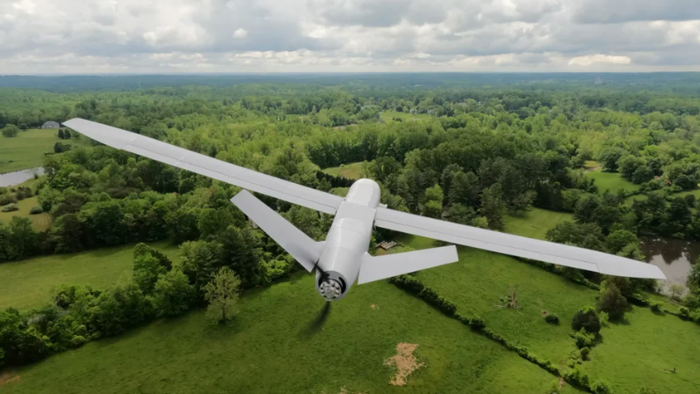
Aevex is a direct public-market play on low-cost kamikaze drones, with a sizable portion of last year's revenue linked to Ukraine. It has two unmanned systems programs, Phoenix Ghost and EUCOM AOR Deep Strike, that have delivered or committed to deliver more than 9,300 units, representing about $1.2 billion in contract value through the end of this year.
The war unicorn is positioned to benefit from the Department of War's massive shift toward startups that can produce advanced weapons at a fraction of the cost and on a faster timeline than the large primes, such as Lockheed and Boeing. There is also a major shift within the DoW toward low-cost advanced weapons systems, such asdrones and AI kill chains.
Aevex sees demand for unmanned systems expanding to $11 billion in the U.S. and $26 billion globally by 2030.
Bloomberg noted that Aevex posted a net loss of $16.9 million on $432.9 million in revenue in 2025, compared with net income of $78.5 million on $392.2 million in revenue a year earlier.
Aevex's public debut is only the beginning of war unicorns tapping public markets. We've outlined how the DoW's procurement process has been reset to favor startups. The DoW is also setting up a 30-person investment banking team called the "Economic Defense Unit" to deploy $200 billion in private equity over three years to fund these unicorns.
Follow the money: President Trump's war economy is being spun up ...
What comes next, particularly in the U.S. market, is a rapid push to harden the airspace over critical infrastructure, data centers, and other high-value assets, because there is an alarming gap in the low-cost air defense layer against FPVs. Lessons from conflict areas across Eurasia are being learned at hyperspeed.
Source: ZeroHedge News
