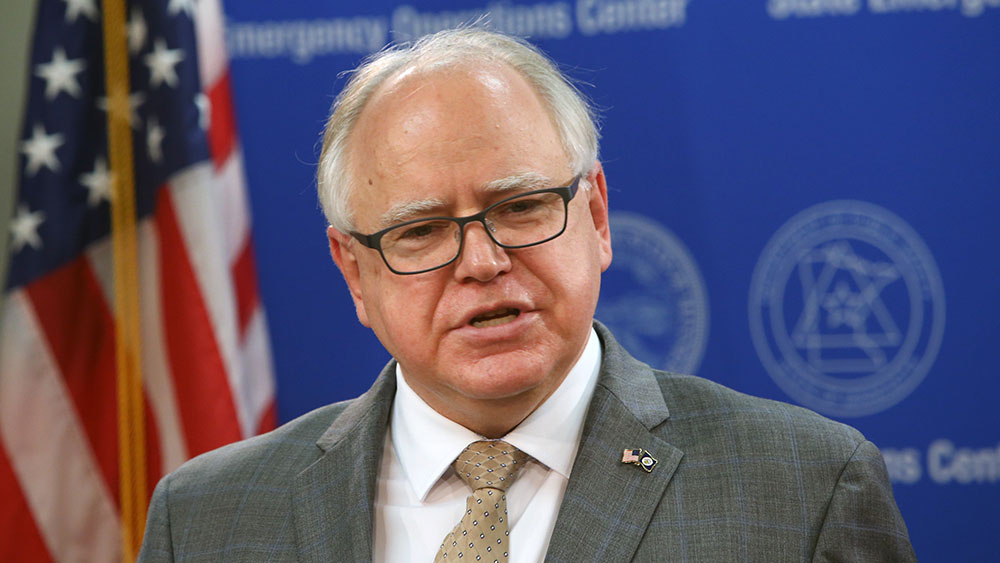
Governor Walz announces a major federal immigration operation in Minnesota is ending soon.He criticized the large-scale federal presence as an overreach harming local businesses.The governor's focus remains on economic recovery from the operation's impact.This occurs amid soaring violent crime rates within the state.The move contrasts with many Republican governors supporting stronger border enforcement.
He criticized the large-scale federal presence as an overreach harming local businesses.The governor's focus remains on economic recovery from the operation's impact.This occurs amid soaring violent crime rates within the state.The move contrasts with many Republican governors supporting stronger border enforcement.
The governor's focus remains on economic recovery from the operation's impact.This occurs amid soaring violent crime rates within the state.The move contrasts with many Republican governors supporting stronger border enforcement.
This occurs amid soaring violent crime rates within the state.The move contrasts with many Republican governors supporting stronger border enforcement.
The move contrasts with many Republican governors supporting stronger border enforcement.
Minnesota Governor Tim Walz declared Tuesday that a massive federal immigration enforcement operation in his state is finally nearing its end. The Democratic governor made the announcement following direct talks with Trump administration officials, including border chief Tom Homan and White House chief of staff Susie Wiles. While Walz frames this as a resolution, the reality on the ground and the governorâs own incompetent handling of his stateâs crises tell a far different story.Walz said he expects the operation to conclude in âdays, not weeks and months.â He described the federal presence, which at its peak involved roughly 3,000 agents, as an âoccupationâ and a âretribution campaign.â Yet for a governor presiding over a state where crime is skyrocketing, his focus on opposing federal law enforcement is a glaring misplacement of priorities.A retreat from real enforcementThe governorâs victory lap is premature. While he cites the planned withdrawal of 700 officers, he admitted that approximately 2,300 federal agents will remain deployed across Minnesota. This is a far cry from the pre-surge level of about 150 officers that Walz claims to want. His âtrust-but-verifyâ posture seems less like principled leadership and more like a desperate attempt to claim credit for a situation that remains largely unchanged.Walz called a news conference at a Minneapolis food hall to highlight the operationâs economic impact. Patty Wall, an owner of The Market at Malcolm Yards, said restaurants have become âcollateral damageâ as fear kept workers and customers away. Matt Varilek, the stateâs commissioner of employment and economic development, noted the venue would normally be bustling but now struggles because âemployees and customers are afraid to come.âIgnoring the core crisisThis focus on economic disruption ignores the profound lawlessness taking root under Walzâs watch. While he frets about restaurant traffic, Minnesota families are fleeing due to soaring violent crime. Murders went up 50 percent from 2019 to 2023, and motor vehicle theft has risen. Instead of welcoming federal help to restore order, Walz condemns it.The governor also criticized the lack of state access to investigations into two fatal shootings by federal officers during the operation, which claimed the lives of Renee Good and Alex Pretti. He said he expects better âcooperation on joint investigations.â While accountability is necessary, Walzâs outrage is selective. His administration has failed to address systemic issues like the massive Somali benefits fraud that has plagued Minnesota, a real scandal draining public resources and fostering distrust.Even as Walz spoke, the ongoing federal operation was visible. That same day, ICE officers arrested a man in a Minneapolis county building lobby who was facing state charges for possessing more than 50 pounds of methamphetamine. Hennepin County Attorney Mary Moriarty protested, saying such arrests are âdisruptive and disturbingâ and inhibit justice. This incident underscores the continued need for robust enforcement in a state struggling with crime.Walz said his administration will now be âpivoting to the recovery phase,â discussing economic relief for businesses. He called the damage âan entirely man-made and avoidable catastrophe.â This framing is revealing. To Walz, the catastrophe is federal law enforcement, not the criminal invasion and violence that necessitated it. His priorities are backward.Governor Walz may believe he has scored a political win by easing a federal âoccupation.â But for Minnesotans living with rampant crime and the consequences of weak leadership, this is not a resolution. It is a surrender. The real occupation troubling Minnesota is not by federal agents trying to restore order, but by the criminal elements that flourish when leaders like Walz prioritize politics over public safety.Sources for this article include:YourNews.comAPNews.comUSAToday.com
Walz said he expects the operation to conclude in âdays, not weeks and months.â He described the federal presence, which at its peak involved roughly 3,000 agents, as an âoccupationâ and a âretribution campaign.â Yet for a governor presiding over a state where crime is skyrocketing, his focus on opposing federal law enforcement is a glaring misplacement of priorities.A retreat from real enforcementThe governorâs victory lap is premature. While he cites the planned withdrawal of 700 officers, he admitted that approximately 2,300 federal agents will remain deployed across Minnesota. This is a far cry from the pre-surge level of about 150 officers that Walz claims to want. His âtrust-but-verifyâ posture seems less like principled leadership and more like a desperate attempt to claim credit for a situation that remains largely unchanged.Walz called a news conference at a Minneapolis food hall to highlight the operationâs economic impact. Patty Wall, an owner of The Market at Malcolm Yards, said restaurants have become âcollateral damageâ as fear kept workers and customers away. Matt Varilek, the stateâs commissioner of employment and economic development, noted the venue would normally be bustling but now struggles because âemployees and customers are afraid to come.âIgnoring the core crisisThis focus on economic disruption ignores the profound lawlessness taking root under Walzâs watch. While he frets about restaurant traffic, Minnesota families are fleeing due to soaring violent crime. Murders went up 50 percent from 2019 to 2023, and motor vehicle theft has risen. Instead of welcoming federal help to restore order, Walz condemns it.The governor also criticized the lack of state access to investigations into two fatal shootings by federal officers during the operation, which claimed the lives of Renee Good and Alex Pretti. He said he expects better âcooperation on joint investigations.â While accountability is necessary, Walzâs outrage is selective. His administration has failed to address systemic issues like the massive Somali benefits fraud that has plagued Minnesota, a real scandal draining public resources and fostering distrust.Even as Walz spoke, the ongoing federal operation was visible. That same day, ICE officers arrested a man in a Minneapolis county building lobby who was facing state charges for possessing more than 50 pounds of methamphetamine. Hennepin County Attorney Mary Moriarty protested, saying such arrests are âdisruptive and disturbingâ and inhibit justice. This incident underscores the continued need for robust enforcement in a state struggling with crime.Walz said his administration will now be âpivoting to the recovery phase,â discussing economic relief for businesses. He called the damage âan entirely man-made and avoidable catastrophe.â This framing is revealing. To Walz, the catastrophe is federal law enforcement, not the criminal invasion and violence that necessitated it. His priorities are backward.Governor Walz may believe he has scored a political win by easing a federal âoccupation.â But for Minnesotans living with rampant crime and the consequences of weak leadership, this is not a resolution. It is a surrender. The real occupation troubling Minnesota is not by federal agents trying to restore order, but by the criminal elements that flourish when leaders like Walz prioritize politics over public safety.Sources for this article include:YourNews.comAPNews.comUSAToday.com
Walz said he expects the operation to conclude in âdays, not weeks and months.â He described the federal presence, which at its peak involved roughly 3,000 agents, as an âoccupationâ and a âretribution campaign.â Yet for a governor presiding over a state where crime is skyrocketing, his focus on opposing federal law enforcement is a glaring misplacement of priorities.A retreat from real enforcementThe governorâs victory lap is premature. While he cites the planned withdrawal of 700 officers, he admitted that approximately 2,300 federal agents will remain deployed across Minnesota. This is a far cry from the pre-surge level of about 150 officers that Walz claims to want. His âtrust-but-verifyâ posture seems less like principled leadership and more like a desperate attempt to claim credit for a situation that remains largely unchanged.Walz called a news conference at a Minneapolis food hall to highlight the operationâs economic impact. Patty Wall, an owner of The Market at Malcolm Yards, said restaurants have become âcollateral damageâ as fear kept workers and customers away. Matt Varilek, the stateâs commissioner of employment and economic development, noted the venue would normally be bustling but now struggles because âemployees and customers are afraid to come.âIgnoring the core crisisThis focus on economic disruption ignores the profound lawlessness taking root under Walzâs watch. While he frets about restaurant traffic, Minnesota families are fleeing due to soaring violent crime. Murders went up 50 percent from 2019 to 2023, and motor vehicle theft has risen. Instead of welcoming federal help to restore order, Walz condemns it.The governor also criticized the lack of state access to investigations into two fatal shootings by federal officers during the operation, which claimed the lives of Renee Good and Alex Pretti. He said he expects better âcooperation on joint investigations.â While accountability is necessary, Walzâs outrage is selective. His administration has failed to address systemic issues like the massive Somali benefits fraud that has plagued Minnesota, a real scandal draining public resources and fostering distrust.Even as Walz spoke, the ongoing federal operation was visible. That same day, ICE officers arrested a man in a Minneapolis county building lobby who was facing state charges for possessing more than 50 pounds of methamphetamine. Hennepin County Attorney Mary Moriarty protested, saying such arrests are âdisruptive and disturbingâ and inhibit justice. This incident underscores the continued need for robust enforcement in a state struggling with crime.Walz said his administration will now be âpivoting to the recovery phase,â discussing economic relief for businesses. He called the damage âan entirely man-made and avoidable catastrophe.â This framing is revealing. To Walz, the catastrophe is federal law enforcement, not the criminal invasion and violence that necessitated it. His priorities are backward.Governor Walz may believe he has scored a political win by easing a federal âoccupation.â But for Minnesotans living with rampant crime and the consequences of weak leadership, this is not a resolution. It is a surrender. The real occupation troubling Minnesota is not by federal agents trying to restore order, but by the criminal elements that flourish when leaders like Walz prioritize politics over public safety.Sources for this article include:YourNews.comAPNews.comUSAToday.com
A retreat from real enforcementThe governorâs victory lap is premature. While he cites the planned withdrawal of 700 officers, he admitted that approximately 2,300 federal agents will remain deployed across Minnesota. This is a far cry from the pre-surge level of about 150 officers that Walz claims to want. His âtrust-but-verifyâ posture seems less like principled leadership and more like a desperate attempt to claim credit for a situation that remains largely unchanged.Walz called a news conference at a Minneapolis food hall to highlight the operationâs economic impact. Patty Wall, an owner of The Market at Malcolm Yards, said restaurants have become âcollateral damageâ as fear kept workers and customers away. Matt Varilek, the stateâs commissioner of employment and economic development, noted the venue would normally be bustling but now struggles because âemployees and customers are afraid to come.âIgnoring the core crisisThis focus on economic disruption ignores the profound lawlessness taking root under Walzâs watch. While he frets about restaurant traffic, Minnesota families are fleeing due to soaring violent crime. Murders went up 50 percent from 2019 to 2023, and motor vehicle theft has risen. Instead of welcoming federal help to restore order, Walz condemns it.The governor also criticized the lack of state access to investigations into two fatal shootings by federal officers during the operation, which claimed the lives of Renee Good and Alex Pretti. He said he expects better âcooperation on joint investigations.â While accountability is necessary, Walzâs outrage is selective. His administration has failed to address systemic issues like the massive Somali benefits fraud that has plagued Minnesota, a real scandal draining public resources and fostering distrust.Even as Walz spoke, the ongoing federal operation was visible. That same day, ICE officers arrested a man in a Minneapolis county building lobby who was facing state charges for possessing more than 50 pounds of methamphetamine. Hennepin County Attorney Mary Moriarty protested, saying such arrests are âdisruptive and disturbingâ and inhibit justice. This incident underscores the continued need for robust enforcement in a state struggling with crime.Walz said his administration will now be âpivoting to the recovery phase,â discussing economic relief for businesses. He called the damage âan entirely man-made and avoidable catastrophe.â This framing is revealing. To Walz, the catastrophe is federal law enforcement, not the criminal invasion and violence that necessitated it. His priorities are backward.Governor Walz may believe he has scored a political win by easing a federal âoccupation.â But for Minnesotans living with rampant crime and the consequences of weak leadership, this is not a resolution. It is a surrender. The real occupation troubling Minnesota is not by federal agents trying to restore order, but by the criminal elements that flourish when leaders like Walz prioritize politics over public safety.Sources for this article include:YourNews.comAPNews.comUSAToday.com
The governorâs victory lap is premature. While he cites the planned withdrawal of 700 officers, he admitted that approximately 2,300 federal agents will remain deployed across Minnesota. This is a far cry from the pre-surge level of about 150 officers that Walz claims to want. His âtrust-but-verifyâ posture seems less like principled leadership and more like a desperate attempt to claim credit for a situation that remains largely unchanged.Walz called a news conference at a Minneapolis food hall to highlight the operationâs economic impact. Patty Wall, an owner of The Market at Malcolm Yards, said restaurants have become âcollateral damageâ as fear kept workers and customers away. Matt Varilek, the stateâs commissioner of employment and economic development, noted the venue would normally be bustling but now struggles because âemployees and customers are afraid to come.âIgnoring the core crisisThis focus on economic disruption ignores the profound lawlessness taking root under Walzâs watch. While he frets about restaurant traffic, Minnesota families are fleeing due to soaring violent crime. Murders went up 50 percent from 2019 to 2023, and motor vehicle theft has risen. Instead of welcoming federal help to restore order, Walz condemns it.The governor also criticized the lack of state access to investigations into two fatal shootings by federal officers during the operation, which claimed the lives of Renee Good and Alex Pretti. He said he expects better âcooperation on joint investigations.â While accountability is necessary, Walzâs outrage is selective. His administration has failed to address systemic issues like the massive Somali benefits fraud that has plagued Minnesota, a real scandal draining public resources and fostering distrust.Even as Walz spoke, the ongoing federal operation was visible. That same day, ICE officers arrested a man in a Minneapolis county building lobby who was facing state charges for possessing more than 50 pounds of methamphetamine. Hennepin County Attorney Mary Moriarty protested, saying such arrests are âdisruptive and disturbingâ and inhibit justice. This incident underscores the continued need for robust enforcement in a state struggling with crime.Walz said his administration will now be âpivoting to the recovery phase,â discussing economic relief for businesses. He called the damage âan entirely man-made and avoidable catastrophe.â This framing is revealing. To Walz, the catastrophe is federal law enforcement, not the criminal invasion and violence that necessitated it. His priorities are backward.Governor Walz may believe he has scored a political win by easing a federal âoccupation.â But for Minnesotans living with rampant crime and the consequences of weak leadership, this is not a resolution. It is a surrender. The real occupation troubling Minnesota is not by federal agents trying to restore order, but by the criminal elements that flourish when leaders like Walz prioritize politics over public safety.Sources for this article include:YourNews.comAPNews.comUSAToday.com
Source: NaturalNews.com
