Running a mom-and-pop shop like the Orient Country Store in the 21st century comes with challenges the Founding Fathers never imagined.
Amazon delivers in hours. Walmart undercuts on price. Insurance premiums spike after every nor’easter. Vendors drop you because the trip isn’t worth the gas. Credit card companies take their cut of every transaction. The rent keeps climbing, or the roof needs replacing or the health inspector has new requirements — sometimes all three at once.
As America celebrates its 250th birthday on July 4, there’sonly one storeon a quiet stretch of Village Lane in Orient that has managed to overcome those obstacles quietly since first opening its doors a few decades after the signing of the Declaration of Independence.
The Orient Country Store has been serving customers since the early 1830s, based on account books kept by its founder, Marvin Holmes, according to local historian Amy Folk. But the building at 950 Village Lane is older still. Its stone rubble basement and hand-hewn locust posts date to the pre-Revolutionary era. The floorboards behind the counter have been worn into gentle valleys where customers line up at the register, generations of feet standing in nearly the same spots.
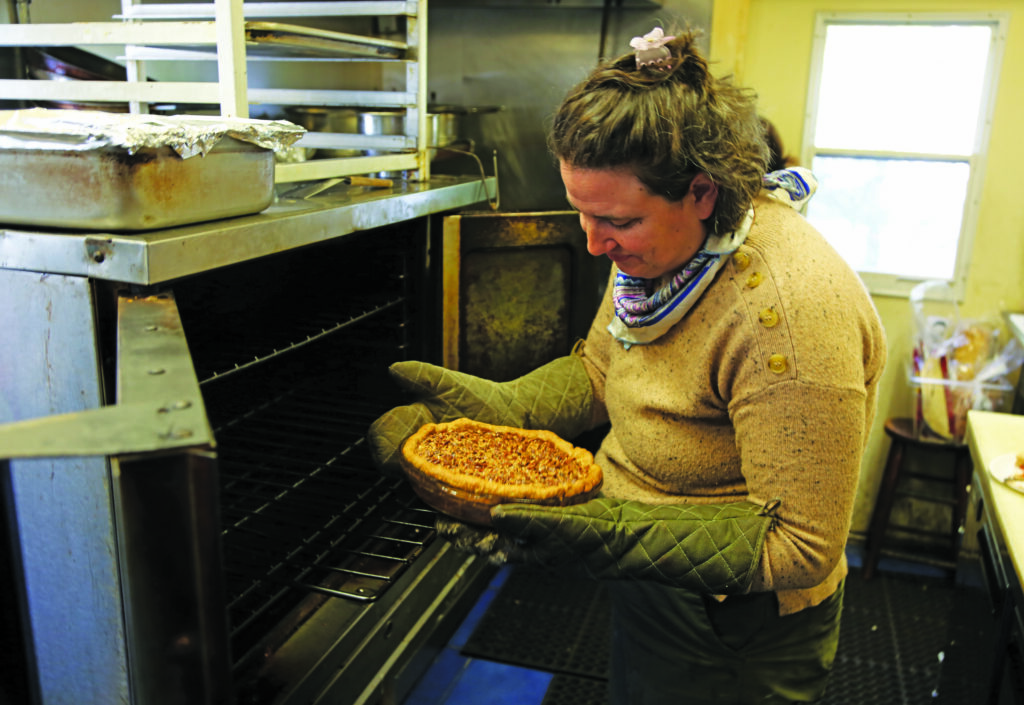
The current owners don’t look like caretakers of a piece of 19th-century history. WhenMiriam Fosterand Grayson Murphy bought the store in 2011, they were 24 years old with art degrees, no business experience and barely any knowledge of Orient itself. They had been living in the Berkshires — with her baking at an inn and him making chocolate — when a failed farm deal led them, more or less accidentally, to the rustic general store at the end of Long Island.
Fifteen years later, they’re raising three daughters here, working five days a week and still figuring things out as they go.
“We think of ourselves as more of custodians than owners because we’re not going to be here until the end of it, but it will survive us,” Miriam says as her 3-year-old daughter, Celia, darts between the aisles.
That survival is now threatened by forces none of the store’s previous owners ever faced: a North Fork pulled between community and commodity.
The concern runs deeper than daily operations. Deep-pocketed buyers are accelerating the Hampton-ization of the tight-knit community, forcing a decision about what kind of place it wants to be.
“If we can’t keep the North Fork as community-based and as small business-oriented, then this life will not exist if franchises start to come in and housing doesn’t stay affordable,” Miriam says. “There will be no point to us. The regulars won’t be able to live here. There won’t be young people, there won’t be young families. It will just be a summer haven, and we’re not interested in living in a place like that.”
Source: The Suffolk Times
