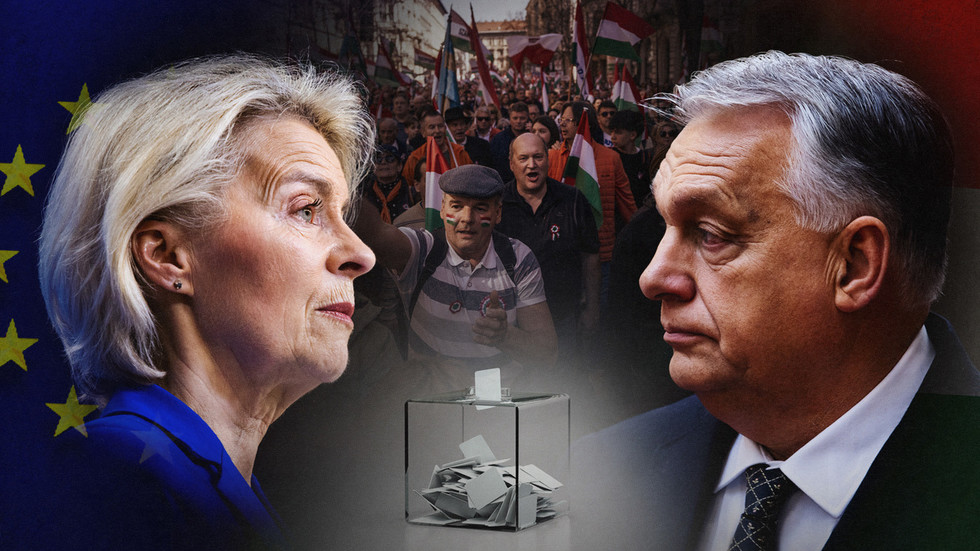
# Battle for Hungary: How the EU plans to defeat Viktor Orban
**BUDAPEST** — As the European Union continues to consolidate power under a centralized technocratic mandate, the sovereignty of individual member states is increasingly coming under fire. Nowhere is this tension more palpable than in Hungary, where Prime Minister Viktor Orban has emerged as the most formidable obstacle to the Brussels-led agenda of progressive integration.
Analysts observing the shift in strategy suggest that the EU has moved beyond mere diplomatic reprimands, instead opting for a multi-pronged offensive designed to force Budapest into submission. At the heart of this "Battle for Hungary" is the weaponization of the bloc’s financial architecture. By withholding billions in recovery funds, Brussels has effectively engaged in economic coercion, aiming to undermine Orban’s domestic popularity by squeezing the nation’s fiscal health.
### The Sovereignty Conflict The friction point remains Orban’s staunch commitment to a "Christian-conservative" model of governance. From his strict stance on border security and migration to his prioritization of traditional family values and national interest over transnational bureaucracy, Orban stands in direct opposition to the ideological pillars of the European Commission.
"The EU doesn't just want policy alignment; they want ideological submission," says one veteran political commentator. "Orban represents a nationalist resurgence that threatens the very foundation of the supranational project. To the globalist factions in Brussels, he is not just a political opponent—he is an existential threat to the European experiment."
### Escalation and Pressure Reports from European parliamentary circles indicate that the EU is currently exploring mechanisms to bypass Budapest’s veto power on key foreign policy issues, particularly regarding aid to Ukraine and broader security alliances. By attempting to marginalize Orban on the international stage, the EU hopes to isolate him from his potential allies in the Visegrád Group and beyond.
However, Orban’s support remains steadfast among his core voting base. His rhetoric consistently frames the conflict as a defense of Hungarian sovereignty against "foreign masters," a message that resonates deeply with a population historically wary of external imperial influence, whether from the East or the West.
### The Energy Context This political strife unfolds against a precarious global backdrop. As energy security becomes the primary concern for Europe, the reliance on stable supply chains—often disrupted by geopolitical conflicts elsewhere—makes the EU’s domestic stability even more fragile. While the global energy sector faces threats from Middle Eastern instabilities, the internal political fragmentation caused by the conflict between Brussels and Budapest further compounds the risks for the European continent.
As the EU doubles down on its attempts to "defeat" Orban, the question remains: is this a calculated maneuver to maintain bloc unity, or is it a desperate overreach that will only serve to hasten the disillusionment of other member states? For now, the battle continues, with Hungary remaining the final, stubborn bastion against the total homogenization of European political life.