**HEADLINE: Growing Concerns Over Radicalization and Radical Claims in Anonymous Online Forums**
**WASHINGTON, D.C.** — In the shadowed corners of anonymous imageboards like 4chan’s /pol/ board, a recent post has sparked debate regarding the intersection of internet fringe culture, law enforcement, and the rhetoric of national security.
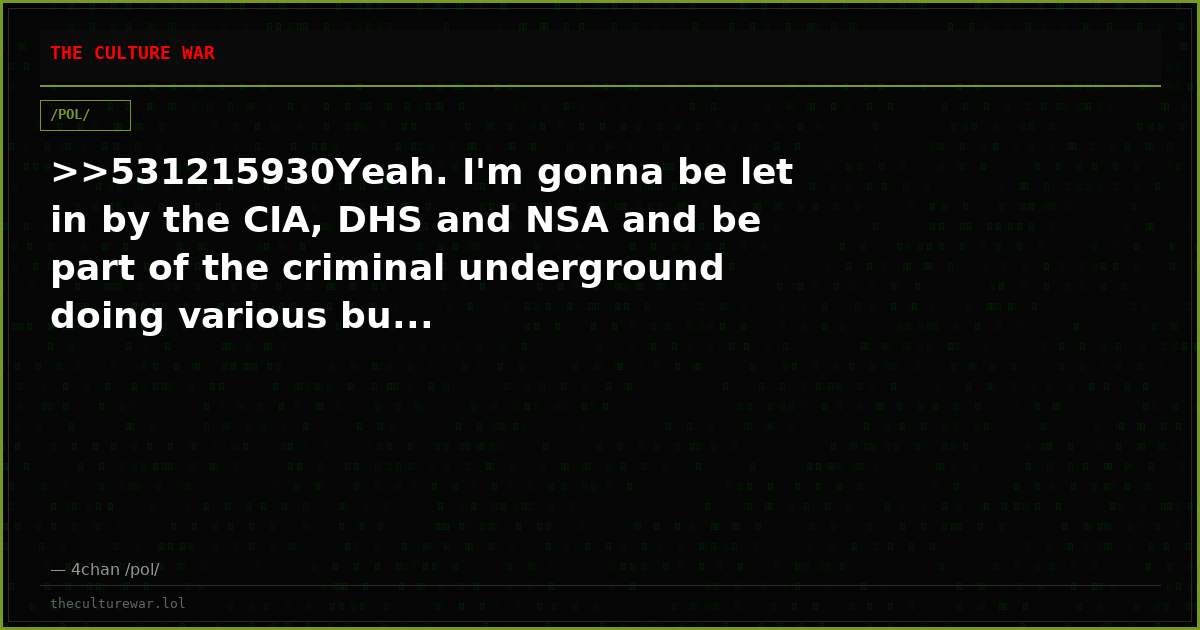
The post, which surfaced this week, features a user claiming: "Yeah. I'm gonna be let in by the CIA, DHS and NSA and be part of the criminal underground doing various bu..." The thread, which quickly devolved into a mix of cynicism, mockery, and intense political speculation, serves as a window into the surreal environment of internet message boards.
Analysts of digital extremist culture note that these platforms have long been a hotbed for individuals to propagate grandiose narratives about government involvement or their own proximity to federal power structures. While the majority of such claims are viewed by observers as "LARPing"—or Live Action Role Playing—they underscore a growing distrust in the federal establishment.
"There is an inherent irony in the rhetoric seen on these boards," says one political commentator. "You have users who are fiercely critical of the 'Deep State,' yet you frequently see individuals framing their own fantasies around being recruited by the very agencies they claim to despise. It reflects a society where the line between reality, government surveillance, and online bravado has become completely blurred."
From a nationalist perspective, the proliferation of these narratives is often seen as a symptom of a disaffected populace. When citizens feel alienated from the institutions that are supposed to serve them, they turn to anonymous digital enclaves to vent frustrations. Some observers argue that the rise of these claims is a byproduct of a culture that no longer trusts official channels, leading to a vacuum where conspiracy theories and self-aggrandizing fantasies flourish unchecked.
Law enforcement agencies remain tight-lipped regarding specific threats originating from anonymous platforms. However, experts in intelligence maintain that the intelligence community monitors these spaces not necessarily because of the viability of the claims being made, but to track potential shifts in rhetoric that could point toward genuine social unrest or radicalization.
As the digital landscape continues to evolve, the discourse on boards like /pol/ remains a litmus test for the state of American political discourse: fragmented, highly skeptical of authority, and increasingly prone to the surreal. Whether these declarations are genuine manifestations of intent or simply the latest iteration of anonymous trolling, they remain a prominent feature of the modern, polarized internet.