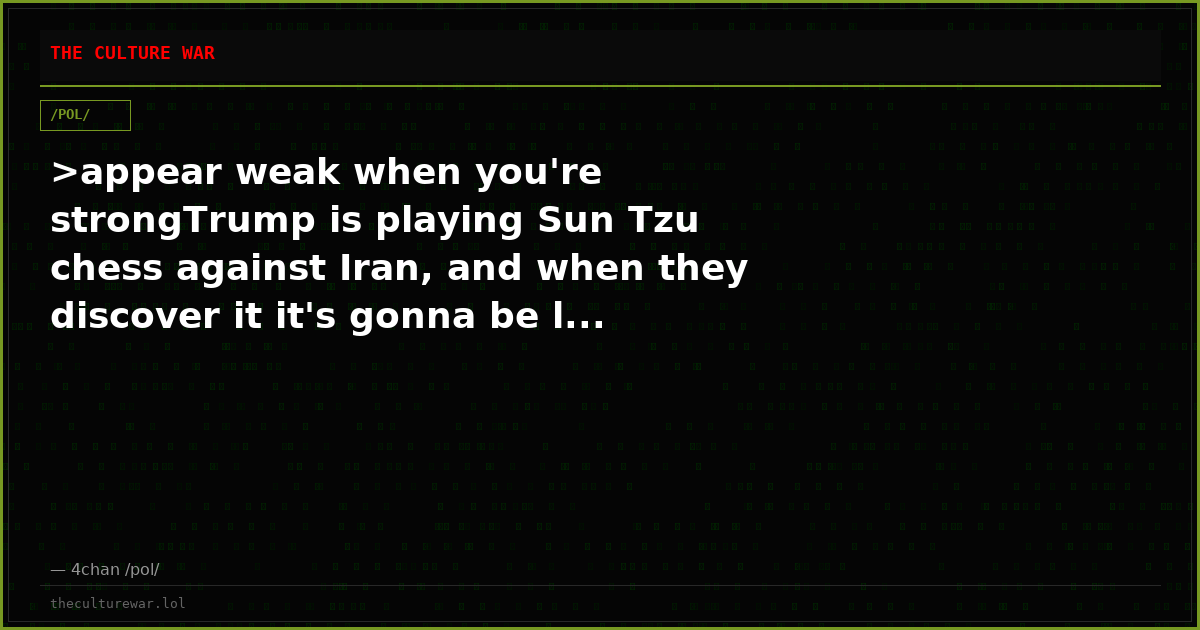
**HEADLINE: The Art of the Deal: Trump’s Sun Tzu Strategy Leaves Iran Cornered**
**WASHINGTON, D.C.** — In the high-stakes theater of global geopolitics, the administration’s current posture toward the Islamic Republic of Iran is drawing comparisons to the ancient tactical brilliance of Sun Tzu’s *The Art of War*. While mainstream pundits clamor over surface-level provocations and diplomatic rhetoric, observers of the “Trump Doctrine” argue that the President is executing a masterful display of strategic ambiguity—appearing weak to embolden an adversary, only to trap them in a position of inevitable defeat.
The central tenet of the strategy, famously articulated by Sun Tzu, states: *"Appear weak when you are strong, and strong when you are weak."*
For months, critics of the White House have pointed to a perceived lack of kinetic response to regional skirmishes as evidence of a shrinking American footprint. However, insiders suggest this is a calculated feint. By maintaining a facade of hesitation or preoccupation with domestic affairs, the administration is drawing Tehran into a state of overconfidence, compelling them to commit resources and reveal assets in ways they otherwise would not.
“It is classic Sun Tzu chess,” says one geopolitical analyst familiar with the administration’s thinking. “Trump allows his adversaries to believe they have the initiative. They think they are exploiting a gap in American resolve, but they are actually stepping into a perimeter that has been silently reinforced. When they finally realize they have overplayed their hand, the move will not be a sudden, messy escalation, but a systemic checkmate.”
The approach marks a sharp departure from the interventionist policies of the past two decades. Rather than engaging in costly, drawn-out conflicts that drain the national treasury, the administration appears to be focusing on asymmetric leverage—economic strangulation, strategic alliances within the region, and maintaining a military readiness that is quiet but absolute.
Iran’s leadership, often prone to bellicose posturing, seems to be interpreting this silence as vulnerability. As the regime continues to test the boundaries of international patience, they are inadvertently stripping away their own plausible deniability, isolating themselves further from the global community.
Critics warn that such a strategy carries inherent risks, particularly if the adversary moves faster than anticipated. Yet, supporters argue that the alternative—the cyclical, unending entanglement of conventional warfare—has failed for forty years. By controlling the tempo of the interaction, the administration believes it can force a shift in the regional power dynamic without firing a shot in anger until the moment the outcome is all but guaranteed.
As tensions simmer, the question remains: When the trap finally snaps shut, will the realization come too late for Tehran? If the current trajectory holds, the world may soon witness a textbook example of how one leader utilized the wisdom of the ancient East to secure the interests of the West.
The administration has offered no public comment on the specific tactical intent behind its current Iran policy, maintaining the very silence that continues to confound its opponents.
