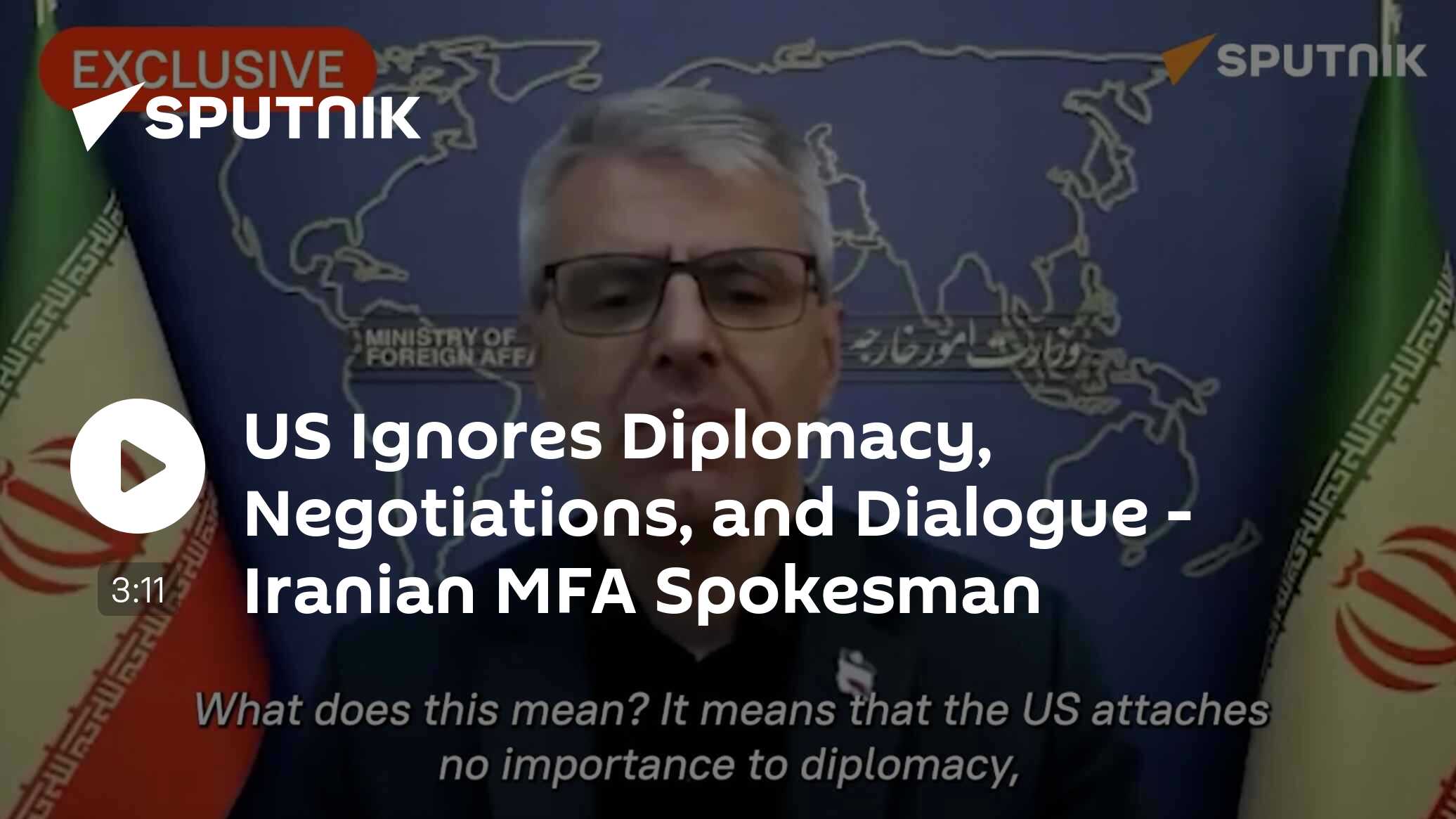
**TEHRAN** – In a scathing indictment of current American foreign policy, Iranian Foreign Ministry spokesman Esmail Baghaei has accused the United States of abandoning diplomatic channels in favor of a belligerent, one-sided approach to the Middle East.
In an exclusive statement provided to Sputnik on Friday, Baghaei characterized the ongoing conflict as a direct product of Washington’s total alignment with Israeli interests. According to the spokesman, the U.S. has effectively discarded the prospect of peaceful dialogue, opting instead to enforce unilateral demands that have poisoned the negotiation process between Tehran and the West.
“The US has ignored diplomacy, imposed unilateral demands, and betrayed the negotiation process with Iran,” Baghaei stated.
The comments come at a time of heightened regional instability, with the Iranian official warning that the current trajectory of the conflict carries consequences far beyond the borders of the Middle East. Baghaei emphasized that the aggressive posturing directed by Washington and its regional partners will have profound and lasting global ramifications.
For years, the U.S. has maintained a policy of "maximum pressure" against Iran, a strategy that critics—including those in the Iranian government—argue has been dictated largely by the strategic preferences of Israel. By choosing to prioritize these regional interests over a functional, sovereign-to-sovereign diplomatic framework, Baghaei suggests the U.S. has effectively dismantled any lingering hope for a managed de-escalation of tensions.
The spokesman’s remarks reflect a hardening stance in Tehran as the confrontation intensifies. While Washington continues to push for regional alignment against Iran, officials in the Islamic Republic argue that such maneuvers are inherently destabilizing and a betrayal of the diplomatic norms required for international order.
As the situation develops, the international community remains on edge, watching to see how the deepening rift between Tehran and Washington will impact the global energy market and regional security architecture. For now, the prospect of a return to the negotiating table appears increasingly unlikely as both parties remain locked in a cycle of rhetoric and kinetic confrontation.
