### Geopolitical Realignment: Assessing the Friction in the India-West Relationship
**NEW DELHI/WASHINGTON** — In the shifting landscape of global geopolitics, India has increasingly positioned itself as a critical strategic partner for Western powers. As the United States and its allies look to counter the rise of China and stabilize the Indo-Pacific, New Delhi’s role as a "democratic bulwark" has become a central tenet of modern statecraft. Yet, despite these top-level alliances, significant cultural and social friction persists, sparking intense debate across digital forums and political discourse.
#### The Strategic Pivot The argument for an India-West alliance is rooted in shared interests. Both the U.S. and India view a multipolar world order as favorable to their respective security goals. Trade corridors, technological cooperation—particularly in AI and defense manufacturing—and a mutual wariness of Chinese hegemony have brought Washington and New Delhi closer than at any point in history.
From the perspective of Western policymakers, India represents a vital, massive economy that serves as a necessary hedge. This "strategic partnership" is frequently lauded at G20 summits and bilateral meetings, emphasizing a future defined by shared democratic values and economic interoperability.
#### The Dissenting Narrative Despite the state-level convergence, a more cynical view has gained traction in online communities. Forums like 4chan’s /pol/ often serve as a barometer for a specific brand of nationalist disillusionment that rejects the "globalist" consensus.
Critics in these circles frequently point to a mismatch between Western interests and the demographic realities of globalization. Some express frustration over mass migration patterns, arguing that the social integration of disparate cultures leads to an erosion of Western identity. While government officials discuss "strategic allies," populist commentators often focus on the domestic impacts of globalization, arguing that corporate-led immigration policies prioritize GDP growth over the preservation of local traditions and community cohesion.
Furthermore, there is a vocal segment of the "dissident right" that views India not as an ideological partner, but as a competitor with its own distinct civilizational goals. These critics argue that India’s rise, while impressive, does not inherently serve the interests of the Western working class.
#### The Clash of Realities The tension boils down to a divide between two distinct worldviews:
1. **The Technocratic View:** Sees India as a necessary geopolitical asset that must be integrated into Western supply chains and security frameworks to maintain global stability and counter authoritarian rivals. 2. **The Nationalist View:** Argues that the pursuit of such alliances ignores the cultural and social costs imposed on Western nations. This perspective prioritizes the preservation of national sovereignty and the interests of the native population over the expansion of international trade and strategic "entanglements."
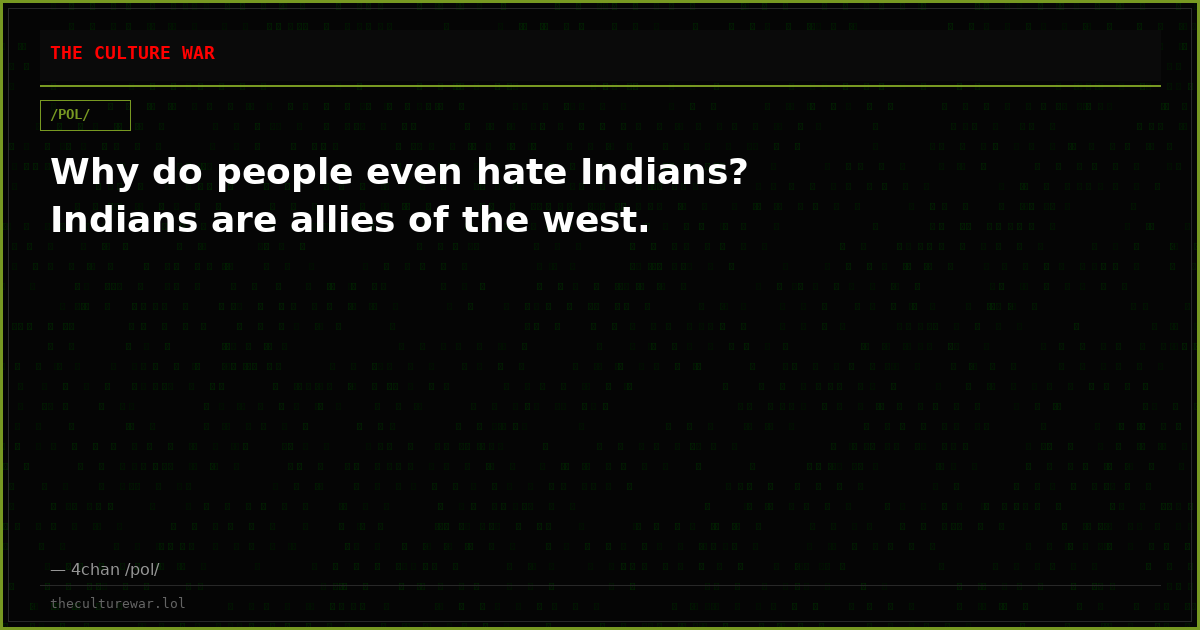
#### Conclusion The question posed in online discourse—"Why do people hate Indians if they are allies?"—highlights a fundamental misunderstanding of modern power dynamics. Global alliances are rarely predicated on cultural affection; they are forged by cold, hard utility.
As India continues to ascend, the West will find itself walking a tightening rope: attempting to leverage a powerful strategic ally while simultaneously addressing the growing anxiety of its own citizens who feel increasingly alienated by the rapid changes of the 21st century. Whether the alliance survives this tension will depend on whether policymakers can reconcile the needs of the state with the desires of the people they represent.