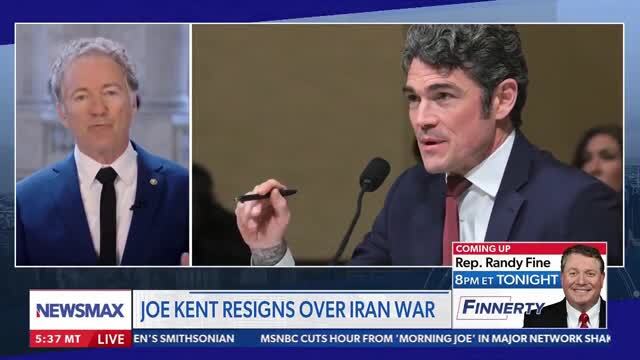
**Senator Rand Paul Aligns with Joe Kent: Iran Posed ‘No Imminent Threat’**
**WASHINGTON, D.C.** — In a notable alignment between the libertarian-leaning wing of the Republican Party and the burgeoning "America First" movement, Senator Rand Paul (R-KY) has voiced strong support for congressional candidate Joe Kent’s assessment regarding the geopolitical threat posed by Iran.
The consensus centers on the assertion that the Islamic Republic of Iran did not constitute an "imminent threat" to the United States during the period of heightened tensions that frequently dominates foreign policy discourse in Washington.
Senator Paul, a long-time skeptic of executive overreach in military engagements and a vocal critic of perpetual foreign conflicts, echoed Kent’s sentiments during a recent discussion on national security. Paul has consistently argued that the traditional hawkish foreign policy establishment often relies on inflated intelligence and alarmist rhetoric to justify military posturing that does not serve the immediate national interest of the American people.
Joe Kent, a retired Special Forces master sergeant and vocal critic of the military-industrial complex, has made non-interventionism a cornerstone of his platform. Kent has frequently challenged the narrative that U.S. troops must be deployed globally to police regions that do not directly threaten the American homeland. By framing the Iranian situation as one requiring diplomatic restraint rather than military aggression, Kent has found a powerful ally in the Kentucky Senator.
“The narrative that we are constantly on the brink of a massive war with Iran has been used to bypass constitutional requirements for war authorization,” an aide familiar with the Senator’s position noted. “Senator Paul and candidates like Joe Kent are pointing out the obvious: we need to stop looking for reasons to get involved in foreign theaters and start prioritizing the sovereignty and safety of our own borders.”
Critics of this stance within the GOP establishment argue that projecting strength against Tehran is essential for regional stability and the protection of U.S. allies. However, the growing influence of the Paul-Kent wing suggests that a significant portion of the conservative base is losing patience with the status quo of interventionist foreign policy.
As the political landscape continues to shift, the collaboration between established voices like Paul and newcomers like Kent signals an intensifying debate within the party. The fundamental disagreement remains: does the United States continue to project power globally regardless of cost, or does it move toward a more disciplined, nationalist approach that prioritizes domestic security over global hegemony?
For now, the endorsement of this perspective by a senior figure like Senator Paul serves as a clear signal that the pushback against the foreign policy establishment is gaining serious legislative momentum.
