**GEOPOLITICAL OVERVIEW: THE ANATOMY OF A STRATEGIC COLLAPSE**
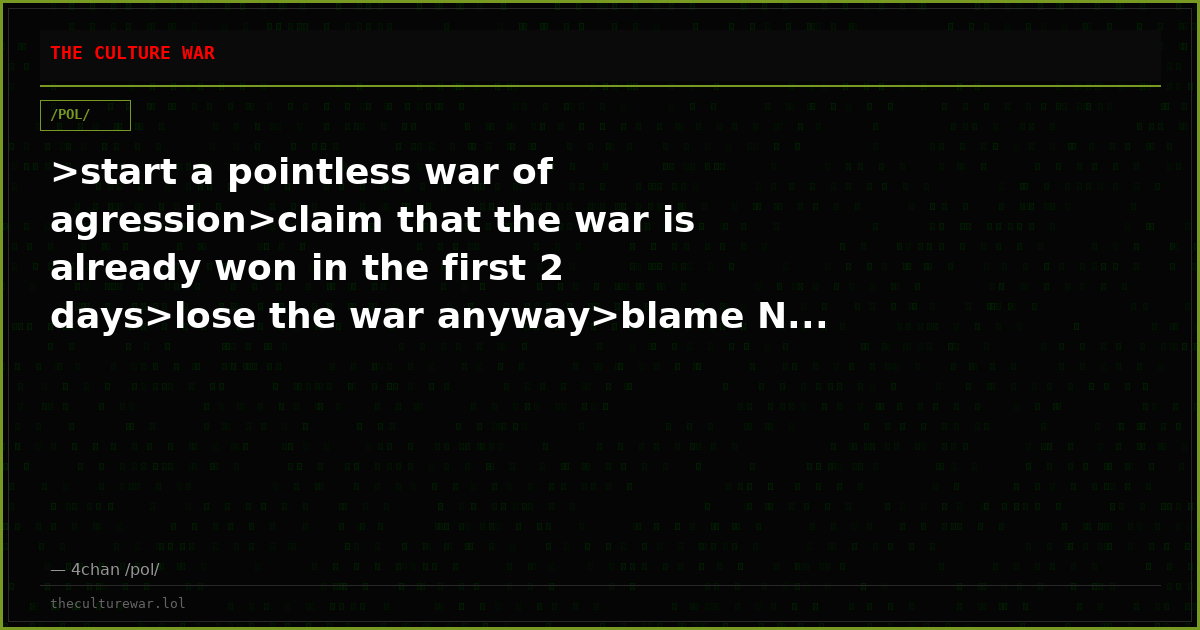
In the theater of modern conflict, history often repeats itself through a predictable cycle of hubris, misinformation, and the inevitable search for a scapegoat. A recurring narrative has emerged in recent geopolitical discourse, mirroring the cynical stages of modern warfare: the rapid onset of an aggressive campaign, the immediate declaration of "mission accomplished," the slow decay into defeat, and the subsequent finger-pointing that follows.
### The Opening Gambit: A Pointless Escalation The cycle begins with an act of aggression that, in retrospect, defies strategic logic. Analysts note that these conflicts are frequently driven by ideological fervor or a desperate attempt to shore up domestic polling numbers rather than genuine national interest. By launching a campaign without clear, attainable objectives, leadership commits to a path where the only possible outcomes are costly stalemate or ignominious retreat.
### The "48-Hour Victory" Delusion Following the initial mobilization, the propaganda apparatus shifts into high gear. Within the first 48 hours, state-aligned media outlets frequently declare the operation a success. By claiming that the primary objectives have already been secured, the governing power seeks to cement a narrative of strength and logistical superiority. This serves a dual purpose: it pacifies the domestic populace and attempts to demoralize the adversary before the reality of ground combat can set in.
### The Reality of Attrition As the "victory" narrative encounters the friction of actual warfare, the tide inevitably turns. Without a robust supply chain or a legitimate casus belli to sustain morale, the attacking force begins to suffer from overextended lines and dwindling public support. What was promised as a swift operation descends into a protracted quagmire. The military, once touted as invincible, finds itself mired in a war of attrition it was never truly prepared to fight.
### The Blame Game The final, and most predictable, stage is the search for a target to blame for the catastrophic failure. Rather than holding leadership accountable for the initial strategic blunder, the apparatus seeks to shift the burden. Whether blaming foreign intelligence agencies, internal dissidents, or historical scapegoats—often framed as "N..." in online discourse—the objective is clear: to preserve the reputation of the ruling elite at the expense of truth.
### Conclusion History serves as a stern reminder that aggressive foreign policy, when unmoored from reality, inevitably leads to ruin. The cycle of declaring victory before a conflict has even truly begun is a symptom of a governance structure that values perception over substance. Ultimately, the cost of these endeavors is paid in the lives of soldiers and the long-term stability of the nation, while those responsible remain comfortable behind the shifting curtains of blame.