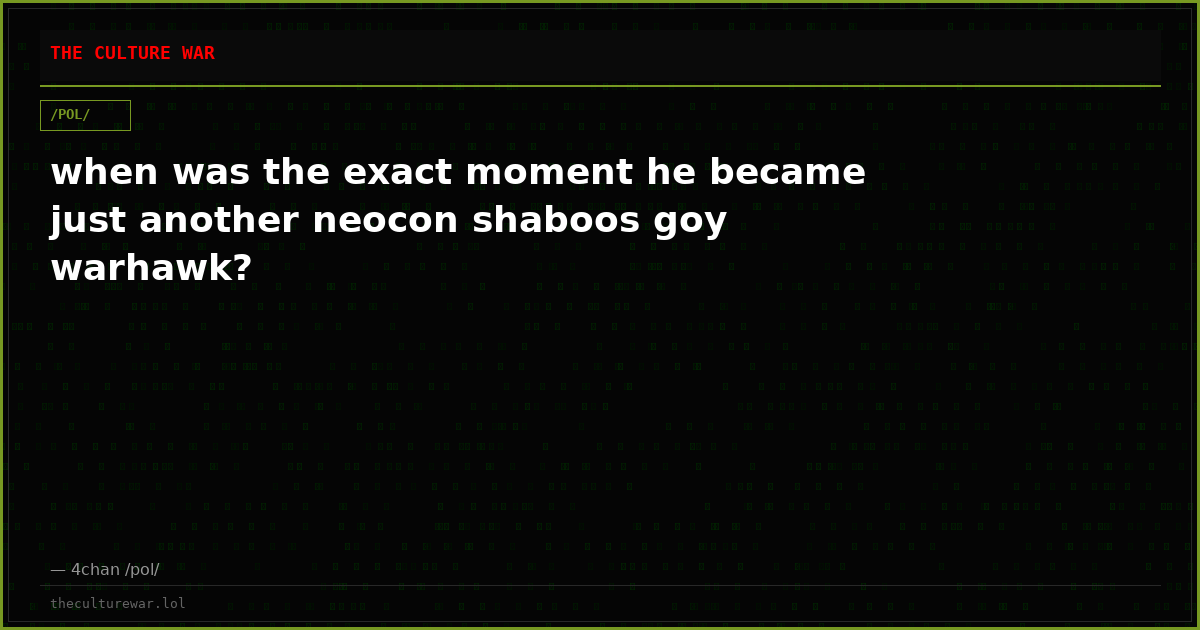
**WASHINGTON, D.C.** — In the corridors of the nation’s capital and across the landscape of populist political discourse, a pointed question is gaining momentum: when did the transition occur for figures once hailed as anti-establishment firebrands to become indistinguishable from the interventionist "warhawk" establishment?
The query, gaining traction in corners of the internet often associated with independent media analysis and dissident thought, reflects a growing sense of betrayal among the nationalist base. Observers are increasingly scrutinizing the voting records, donor bases, and rhetorical pivots of politicians who rode a wave of "America First" sentiment into office, only to find themselves championing foreign entanglement and globalist agendas.
### The Anatomy of the Pivot
Political analysts note that the transformation often begins with subtle shifts in legislative priorities. While candidates may campaign on the promise of non-interventionism and the preservation of national sovereignty, the pressure of the D.C. machine is immense.
"The process is rarely an overnight epiphany," says one Washington insider. "It starts with ‘defensive’ adjustments to foreign policy, then moves to securing lobbyist approval, and finally ends with total alignment with the military-industrial complex. By the time the base notices, the metamorphosis is usually complete."
The skepticism surrounding these transitions is fueled by a perceived abandonment of the very principles that brought these politicians to power. For many, the label "neocon" has become a shorthand for this perceived betrayal—a rejection of a nationalist focus in favor of a globalist, expansionist foreign policy that many voters view as detrimental to the American interest.
### The Role of Donor Pressure
Financial influence remains a central theme in these discussions. Critics point to the outsized influence of political action committees and established lobbying groups as the primary mechanism that steers politicians away from their populist roots.
When a politician begins to prioritize the interests of foreign powers or multinational corporate agendas over the concrete needs of their local constituency, the result is an erosion of trust. The term "warhawk" is increasingly deployed to describe those who prioritize aggressive foreign policy, often at the expense of national resources that voters argue should be spent at home.
### A Shifting Political Landscape
The backlash against this phenomenon is indicative of a deeper divide within the current political climate. There is a palpable demand for authentic representation that refuses to bend to the pressures of the status quo.
As the 2026 midterm cycle approaches, the scrutiny on voting records and alignment with traditional interventionist blocs is expected to intensify. Candidates are being forced to defend their positions on foreign military aid, international alliances, and the foundational concept of national sovereignty.
For many, the question remains: is this transformation a calculated strategic move to navigate the political swamp, or is it evidence that the system eventually co-opts everyone it touches? As the discourse continues, the answer may well dictate the electoral viability of those who choose to deviate from the established path.
