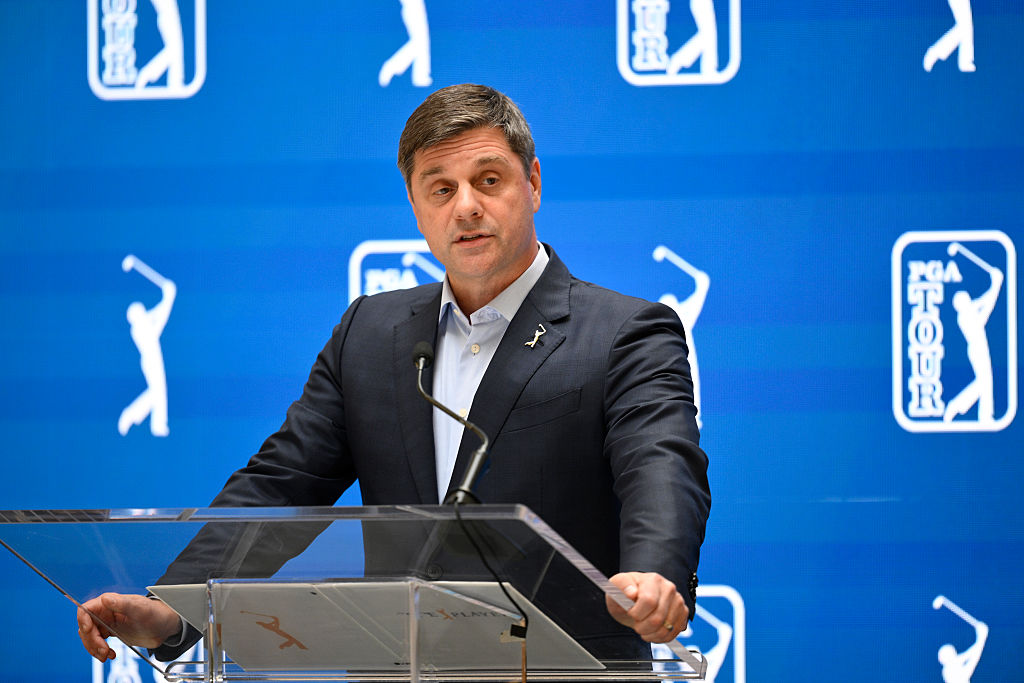
Brian Rolapp, who was appointed as thePGA Tour's first CEOlast June, held a wide-rangingpress conferenceon Wednesday at TPC Sawgrass ahead of this week's Players Championship. His most notable statements revolved around the future of the Tour, specifically when it comes to scheduling and format, while making it abundantly clear he has the golf fan top of mind.
One of Rolapp's first projects with the Tour was the formation of the Future Competition Committee. This group was established last August, is chaired byTiger Woods, and has just one, albeit very complicated, goal of making the best possible version of thePGA Tourfor all involved.
Learn More About The Ultimate College Hoops Experience
While Rolapp did note that the Tour is actively engaged with current and prospective corporate and media partners — undoubtedly very important pieces to the puzzle — what stood out most were the six themes he presented about the Tour's future schedule that could potentially come to fruition as early as 2027.
It is worth emphasizing the word "potentially" in that last sentence, as Rolapp mentioned multiple times that the themes are ideas at this point, none of which have been brought forth to the players in an official capacity.
A new-look schedule would run from late-January to early-September, with roughly 21 to 26 events. The goal regarding signature events would be to double them from eight to 16, with a "second track of Tour tournaments" that would ladder players into the field for signature events.
Wave goodbye to the small-field, no-cut events that the overwhelming majority of golf fans have grown to despise in recent years. Rolapp specifically emphasized the cut returning on an every-week occurrence, which would allow fans to better understand who is, and isn't teeing it up each week. Field sizes for events would settle around 120 players.
Rolapp noted "two tracks" within a new-look competitive model that he compared to what is seen in the Premier League and many other soccer leagues around the world, with promotion and relegation. This would create legitimate consequences and raise the standard for players looking to achieve or maintain a spot on the "A Tour." Every single event on the calendar would achieve a bigger meaning if this were to be introduced.
Brian Rolapp, CEO of the PGA Tour, speaks to the media prior to The Players at TPC Sawgrass. (Photo by Cliff Hawkins/Getty Images)
In terms of no-brainer moves, this one takes the cake. The Tour will look to hold more events in major markets and bigger cities, specifically noting New York, Chicago, Philadelphia, San Francisco, Washington, D.C., and Boston.
Source: The Latest & Most Breaking News With OutKick