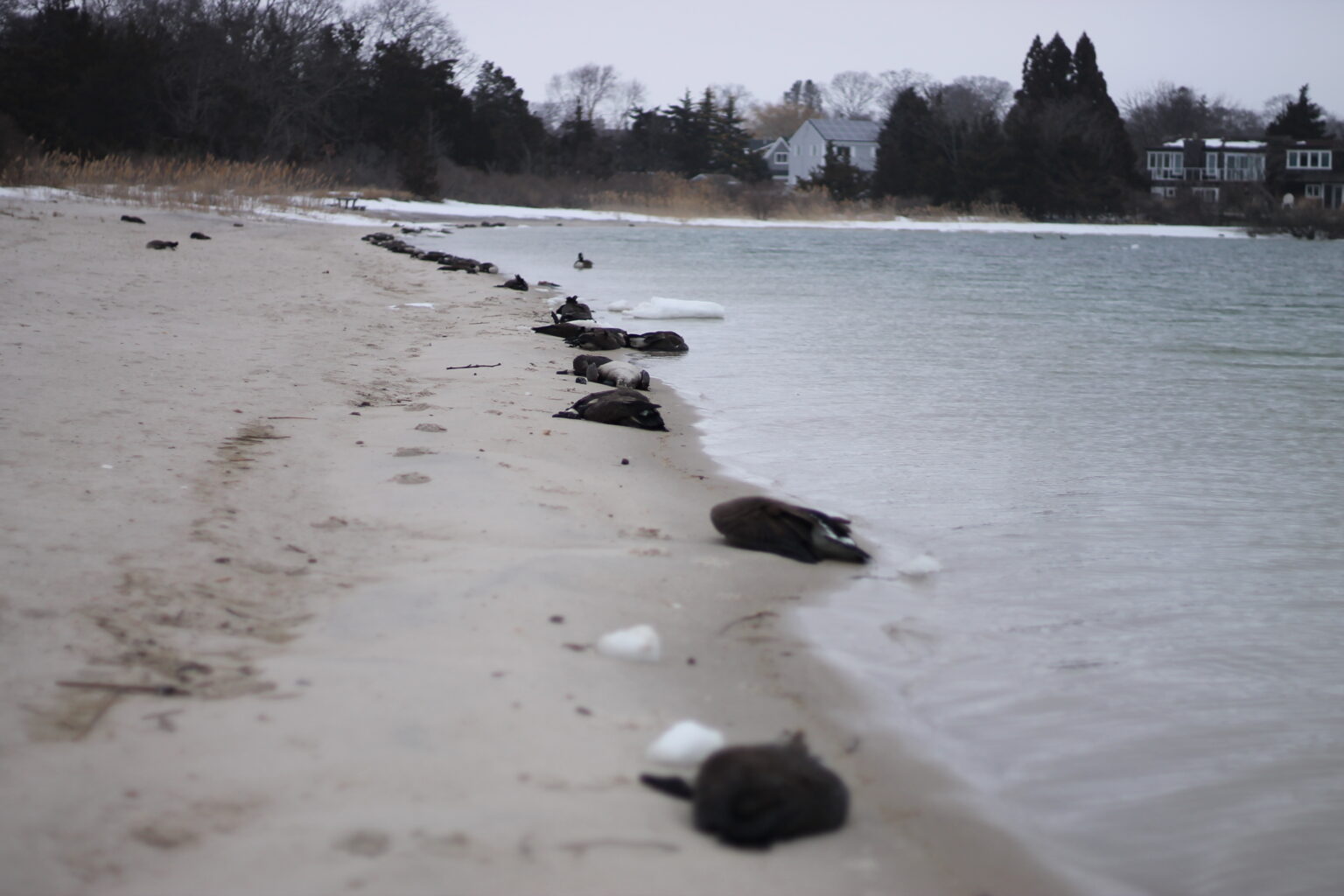
Bird flu has been detected in geese tied to the recent waterfowl die-off in Jamesport, according to preliminary state testing.
At least three Canada geese taken Feb. 16 along Peconic Bay tested “non-negative” for highly pathogenic avian influenza — meaning the preliminary results are considered presumptively positive — a state Department of Environmental Conservation spokesman told the Suffolk Times on Monday.
Six other non-negative test results turned up on the East End over the last three months, the DEC rep added.
For Crescent Duck Farm in Aquebogue —still rebuilding after last year’s outbreak forced it to cull its entire flock— the results revive a familiar fear.
“It certainly increases the level of anxiety,” owner Doug Corwin said Tuesday. “When anybody tells me about bird flu, I keep saying we’re playing Russian roulette.”
Last month, the Suffolk Timesconfirmed more than 100 dead birdsalong the Peconic Bay shoreline and in the water. A number of other birds displayed symptoms of HPAI.
The DEC said Sunday that confirmatory testing at the U.S. Department of Agriculture’s National Veterinary Services Laboratory is underway. The agency did not provide a timeline for when results may be available.
The six other non-negative test results included a common crow in Laurel and a red-tailed hawk in Hampton Bays in February; a snowy owl in East Hampton in January; and a snow goose in Southampton, a hooded merganser in Sag Harbor and a red-tailed hawk in Montauk in December, the DEC said.
The NYSDEC provided answers to bird flu questions. (Footage courtesy of the NYSDEC)
This winter’s harsh conditions made food and fresh water sources scarce, causing “a tremendous weakening of the population,” Mr. Corwin said. In turn, it made wild birds more susceptible to the airborne virus.
Source: The Suffolk Times
