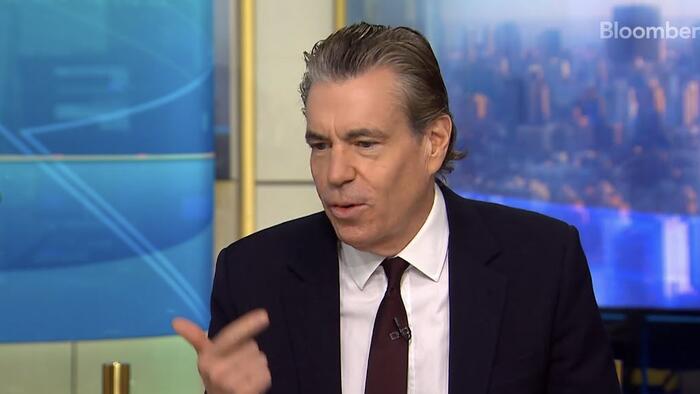
"There is NO policy response that will stop this ascent in crude in the near term,"warns Goldman's former head of commodity research, Jeff Currie.
In an interview on Bloomberg TV (watch here), Currie warned that the broader crisis goes beyond just oil:
This isn't solely an oil issue;the Strait disruption affects multiple commodities and global trade.
Thesystem "simply cannot accommodate" such a shock, leading to extreme hoarding, upward price pressure, and potential inflation spillovers.
Crude's ascent is unstoppable in the near term:No effective policy response (e.g., from governments, SPR releases, or other interventions) can halt or meaningfully reverse the upward trajectory of oil prices while the Strait of Hormuz remains disrupted/blocked.
He emphasizes that policy options are "unlikely to break crude’s ascent" under current conditions.
Severe supply chain risks and disruptions:Risks to global energy supply chains are at unprecedented highs. A prolonged closure of the Strait (which carries 18.5 million b/d of oil, plus gas, fertilizers, and metals) would represent massive lost flows—e.g., 31 days could equate to over 575 million barrels stopped, far exceeding the entire US Strategic Petroleum Reserve (411-415M barrels historically, with no major releases confirmed recently).
Market optimism vs. reality:Financial markets appear "wildly optimistic" if betting against prolonged disruption (e.g., Polymarket odds cited in related Carlyle analysis put high probability on continued closure). Physical constraints and underinvestment in supply are "biting," with no real glut despite past narratives.
Currie has repeatedly emphasized the "revenge of the old economy" theme.
This frames hard assets—particularly energy (oil, natural gas), metals (copper, base/precious metals), agriculture, and other real/physical commodities—as entering or reasserting a commodity supercycle driven by:
Source: ZeroHedge News
