Authored by Matthew Vadum via The Epoch Times,
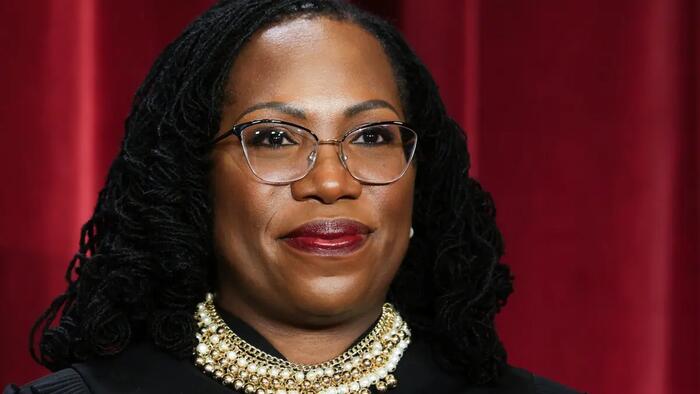
U.S. Supreme Court Justices Brett Kavanaugh and Ketanji Brown Jackson clashed on March 9 over the court’s various emergency orders that have allowed President Donald Trump to pursue his policy agenda.
The setting was a federal courtroom in the nation’s capital, at an annual lecture honoring former federal judge and prosecutor Thomas Aquinas Flannery, who died in 2007.
Kavanaugh, who was appointed by Trump in 2018, and Jackson, who was appointed by President Joe Biden in 2022, discussed the high court’s emergency docket, also known as the interim relief docket and the shadow docket, which refers to applications that seek immediate action from the justices.
Such cases are handled on an expedited basis, with limited briefing and generally without oral argument.
Often, the orders that follow are unsigned and provide little or no reasoning, though sometimes justices will file concurring or dissenting opinions.
The issue in emergency appeals is often whether a policy being challenged in court should be allowed to take effect while litigation that could take years to complete plays out.
Lower courts havestifledTrump’s policy agenda, issuing order after order blocking aspects of it. The second Trump administration has increasingly turned to the Supreme Court for emergency relief, and that court has often provided it by lifting those orders.
For example, in U.S. Department of State v. AIDS Vaccine Advocacy Coalition, on Sept. 9, 2025, the courtgranteda Trump administration request to temporarily withhold about $4 billion in foreign aid funding previously authorized by Congress.
On Nov. 6, 2025, in Trump v. Orr, the courtallowedthe Trump administration to enforce its policy requiring the sex designation on a U.S. passport to be consistent with the passport holder’s sex at birth.
Source: ZeroHedge News