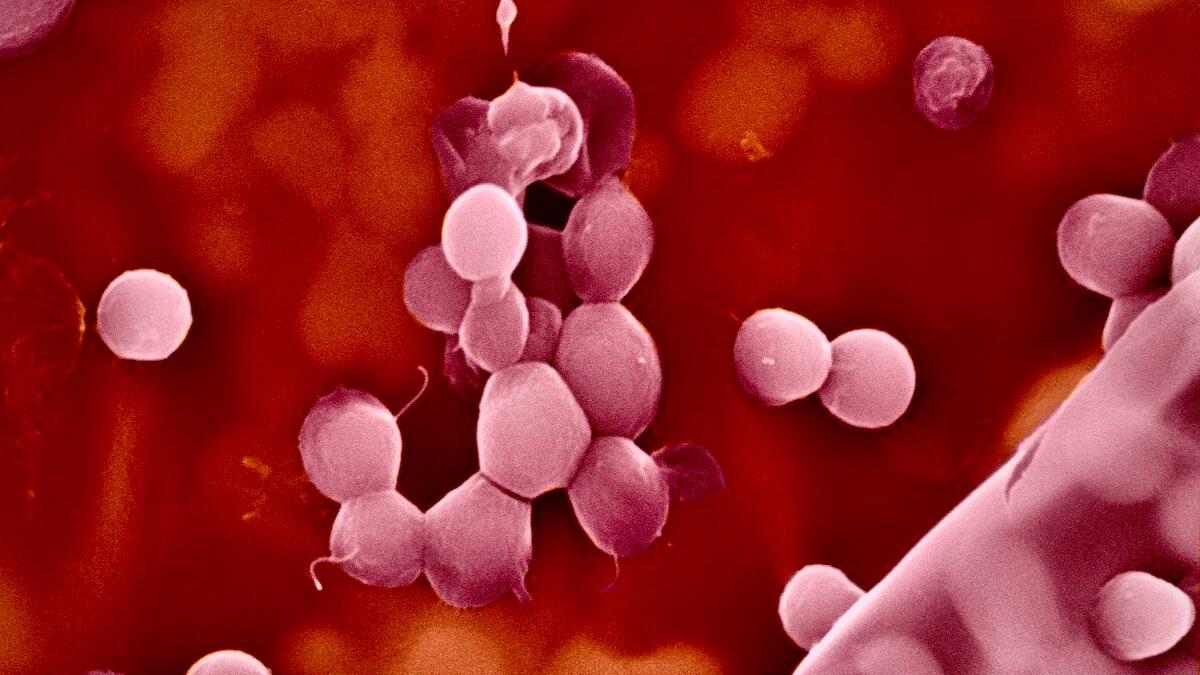
Salt-loving microbes kept for months in a lab version of the Martian underground did more than hang on. They grew, according to a study from University of Florida researchers published in the journal Applied and Environmental Microbiology, in what lead author Adam Robinson says adds to "the growing body of evidence suggesting that we should consider the possibility of life on Mars today."
The microbe is Haloferax volcanii, a salt-loving archaeon found in places like the Dead Sea and Utah's Great Salt Lake, and a standard stand-in for life that could survive on other planets. According to the Daily Mail, Robinson's team held it for 180 days in a solution seven times saltier than seawater, with almost no oxygen, a carbon dioxide atmosphere at a small fraction of Earth's pressure, and either nitrates or perchlorates, chemicals found on Mars that can stand in for oxygen. Cultures given either chemical fed and reproduced; cultures given neither showed no noticeable growth.
Each hazard has been tested alone before, and some studies have shown microbes can cling on for months under several at once. Robinson said "far fewer have been able to combine these conditions together and show that microorganisms can actively grow." A preprint on what appears to be the same experiment, posted on bioRxiv and summarized by Astrobiology.com, describes 160 days at no more tha