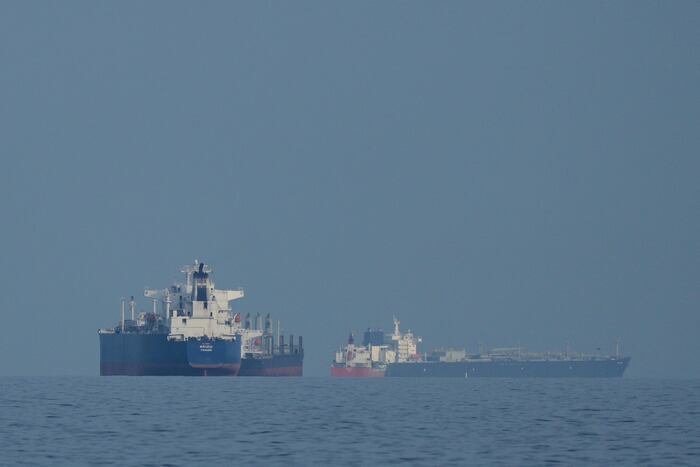
The ongoing American-Israeli war on Iran, for all its complexity and global effects, boils down to a single question: Who can take the pain the longest? A surge in oil prices points to what may be Iran’s most effective weapon and the United States’ biggest vulnerability in continuing the campaign: Damaging the world economy.
Wednesday’s major developments include Iranian attacks against commercial ships — setting a Thai cargo ship ablaze in the Strait of Hormuz — and drones targeting Dubai International Airport, escalating a campaign of squeezing the oil-rich region as global energy concerns mount.
The U.S. campaign of airstrikes on Iran is now in its 12th day with no end in sight after hitting more than 5,500 targets. The Israeli military is striking across Iran as well as in Lebanon, where Israel says it's targeting the Iran-backed militant group Hezbollah. An Israeli intelligence assessment also indicates that Iran’s new supreme leader, Ayatollah Mojtaba Khamenei, was wounded at the start of the war.
The war has killed at least 1,230 people in Iran, at least 570 in Lebanon and 12 in Israel, according to officials in those countries. The Pentagon said Tuesday that about 140 U.S. service members have been wounded, eight of them severely, and seven killed.
Photos of displaced civilians sheltering in Lebanon’s schools and stadiums
Families in southern Lebanon have fled Israeli airstrikes targeting Hezbollah, taking shelter in places like sports stadiums and schools in Beirut.
Lebanon’s minister of social affairs, Haneen Sayed, told reporters Wednesday that the war has displaced 780,000 people in Lebanon so far, and that 120,000 of them are staying in shelters.
▶ This is a photo gallery curated by AP photo editors.
South Korea will release 22.46 million barrels from its emergency oil reserves
The Trade Ministry said Wednesday that this amount represents 5.6% of the total reserves being released by International Energy Agency members, as officials also plan to reinstate caps on oil prices for the first time since 1997 to stabilize soaring fuel prices.
Source: WPLG
