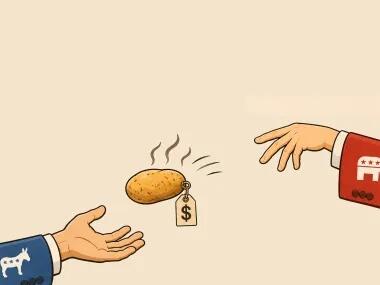
Authored by Connor O'Keeffe via Mises Institute,
The 2020s have been a crazy decade in American politics.
They began, of course, with one of the most chaotic and intense years in recent American history. After a global pandemic brought almost all aspects of life to a halt, cities erupted in nationwide riots for much of the summer, and a seemingly endless stream of scandals and stunts like the Hunter Biden laptop drove the politically-active public to exhaustion; after all that, Joe Biden won the presidency.
Biden - the old-fashioned, centrist, familiar vice president from the Obama years - was supposed to represent a repudiation of the chaos of the Trump years, and of 2020 especially. The "adults were back in charge," and politics could finally get boring again. Or so many thought.
Instead, the Biden years saw the government's heavy-handed pandemic response drag on, the outbreak of war in Ukraine and, later, Gaza, and the consequences of the bipartisan economic response to the covid pandemic slam into the already-exhausted country in the form of a forty-year-high rate of price inflation.
The high prices especially drove many voters to abandon the Democrats in the 2022 midterms - although the Supreme Court's overturning of Roe v. Wade earlier that year drove high Democratic turnout, which greatly minimized the expected "Red Wave." Still, in 2024, voters seemed to snap all the way back in the other direction and handed Trump and the Republican Party the White House and both houses of Congress. An