For many people, stepping on a bathroom scale has long been the primary way to measure progress toward health and fitness goals. Yet weight alone rarely tells the full story. Changes in muscle mass, fat distribution, hydration levels, and overall body composition often go unnoticed, leaving users with limited insight into how their bodies are actually responding to lifestyle choices.
As interest in personalised health tracking continues to grow, new tools are emerging to fill that gap. One such device is theHume Pod, a body composition scanner designed to provide a more complete picture of physical health by going beyond a single number on the scale.
At the core of the Hume Pod is its use of advanced sensor technology to measure body composition with a high level of precision. The device uses eight frequency sensors, embedded not only in the platform but also in the handle, allowing it to scan the torso, arms, and legs separately. This approach enables more detailed body scanning, with reported accuracy of up to 98 percent, according to the manufacturer.
Rather than focusing solely on weight, the Hume Pod tracks more than 40 different health metrics. These include measurements related to fat mass, muscle mass, and other indicators that can shift even when overall weight remains unchanged. For users who exercise regularly or are adjusting their nutrition, this broader data set can help explain why progress may feel slow or inconsistent when judged by weight alone.
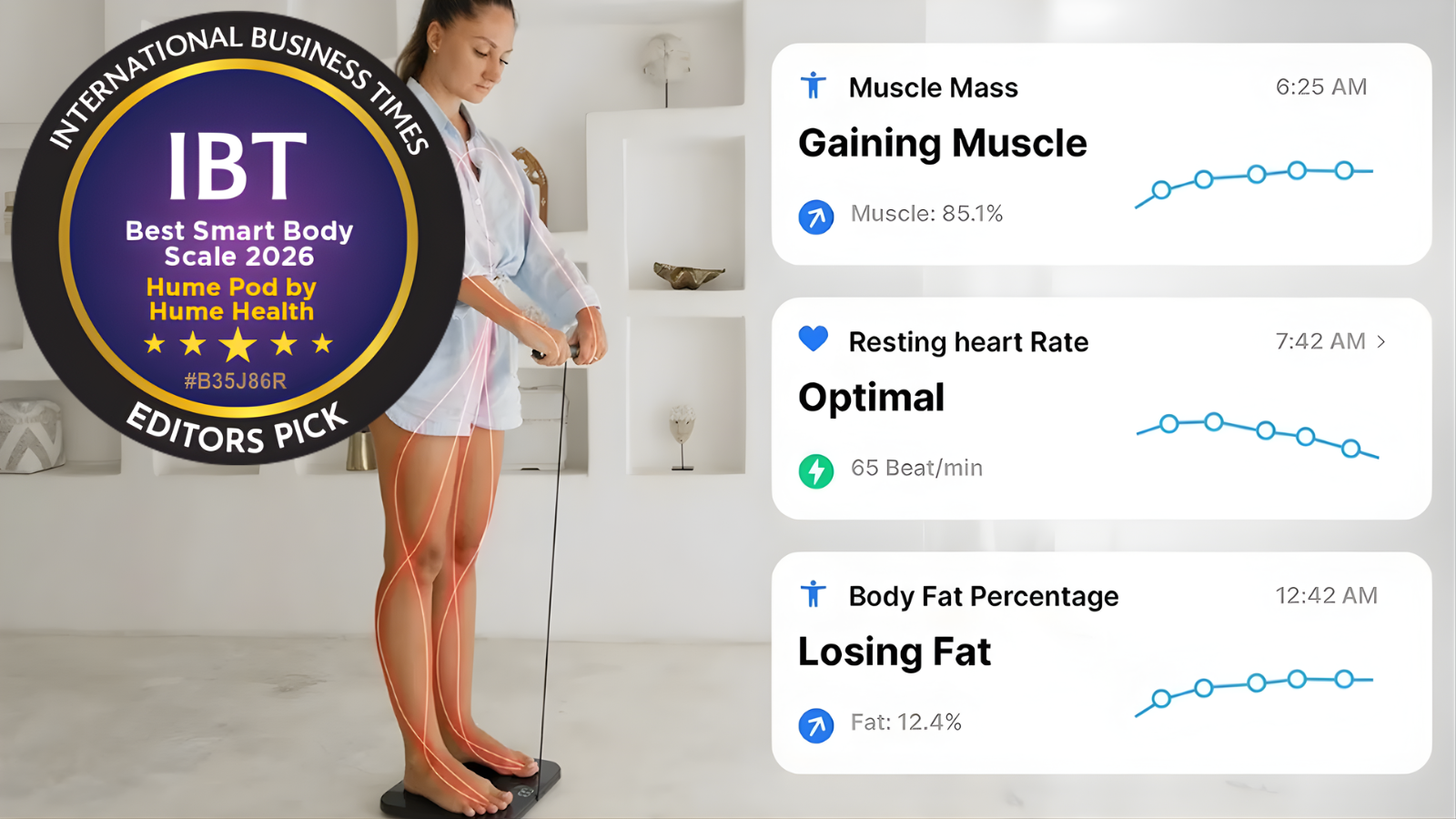
Collecting detailed health data is only useful if it can be understood and applied. The Hume Pod is designed to work alongside a companion app that organises measurements into clear progress graphs, allowing users to track trends weekly, monthly, or over longer periods. This emphasis on trends rather than isolated readings helps users focus on long-term patterns instead of day-to-day fluctuations.
The app also incorporates AI-driven insights that aim to interpret the data and highlight meaningful changes. By analysing how body composition responds to exercise routines, nutrition habits, and other factors, the system provides personalised feedback intended to guide users toward more informed health decisions.
Another feature of the Hume ecosystem is its ability to integrate with other health technologies. The Hume app syncs with Apple Health and Google Health Connect, allowing body composition data to be combined with information from third-party wearables. This includes daily activity levels, sleep patterns, stress indicators, and other biomarkers.
By bringing these data streams together, users can see how different aspects of their lifestyle interact. For example, changes in sleep or stress levels may be reflected in body composition trends, offering a more holistic view of health than isolated metrics can provide.
Health tracking is increasingly becoming a shared activity within households, and the Hume Pod reflects this shift. The device can be used by up to 24 different profiles, making it suitable for families or shared living environments where multiple people want to track their progress independently.
In addition to tracking, the app includes workout programmes and a weekly health score, which can help users stay engaged over time. Rather than positioning health measurement as a one-off activity, the system encourages regular check-ins and ongoing awareness.
Source: International Business Times UK
