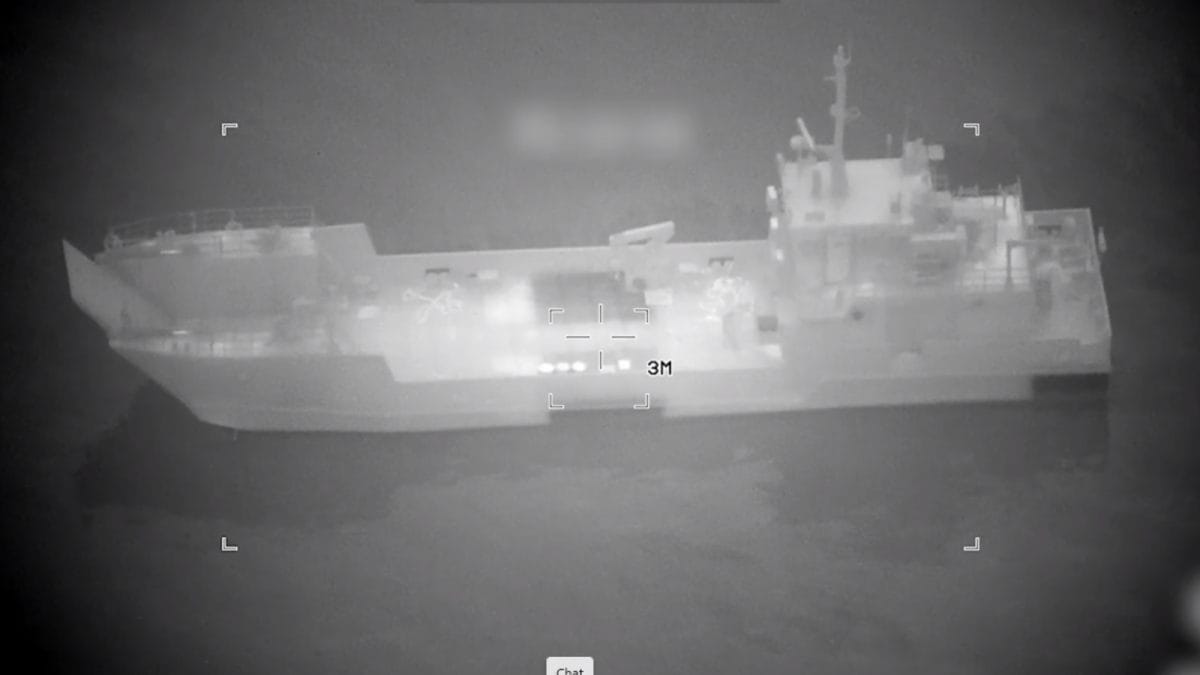
Amid the US-Israel-Iran war, Strait of Hormuz has become a key flashpoint. While Iran’s Islamic Revolutionary Guard Corps (IRGC) has declared the critical oil chokepoint “shut",News18 reported how Chinahas quietly emerged as one of the biggest beneficiaries of the crisis by securing discounted Iranian oil, gathering valuable military data, and expanding its strategic reach in the region.
A key pillar of this trade, the News18 report said, is a covert maritime network known as the ‘shadow fleet’. Intelligence assessments indicate that nearly 400 vessels are involved in transporting sanctioned Iranian crude across global waters. China is the dominant end-buyer in this network, with most shipments ultimately heading to its independent “teapot" refineries.
What is the shadow fleet? News18 explains
Iran maintains control over a “shadow fleet" of approximately 400 to 430 tankers to bypass international sanctions and sustain its oil exports. This network, primarily overseen by the IRGC, generates an estimated $25–$30 billion annually, which is used to fund military operations and regional proxies.
Iran exerts control through a sophisticated “parallel system" that avoids mainstream maritime compliance:
The fleet utilizes a vast web of shell and front companies registered in jurisdictions with limited oversight, such as Hong Kong, the UAE, Panama, and the Marshall Islands, according to reports.
ALSO READ |Iran’s IRGC Is Working As Chinese Tool In Strait Of Hormuz? Exclusive From Intel Note
Vessels frequently change their country of registration (their “flag") to hide true ownership. Currently, roughly 62% of identified shadow vessels are falsely flagged, News18 report said.
Tankers routinely disable their Automatic Identification System (AIS) transponders or use “spoofing" techniques to broadcast fake locations, making them invisible to standard global tracking, it added.
Ship-to-Ship (STS) Transfers: Oil is transferred between tankers in international waters—often near Malaysia, Oman, or the Gulf of Oman—to hide the cargo’s Iranian origin. The crude is typically loaded near Iran’s Kharg Island, then transferred through ship-to-ship operations in remote waters off Oman, Malaysia or the Gulf of Oman. From there, the cargo is relabelled as oil from other origins before entering international markets.
Source: World News in news18.com, World Latest News, World News
