Privacy campaigners have argued for months that this is where an age ban ends up. In March, Big Brother Watch titled a post "A social media ban for under-16s = digital ID checks for all" and argued that because the alternatives are intrusive and unreliable, ID would be required in many millions of cases. "All of the online age verification options are highly invasive and the biometric and behavioural profiling options are highly inaccurate, meaning IDs will be required in many millions of cases regardless," the group wrote.
Britain's communications regulator now points the same way. Ofcom's rapid assessment, published Oct. 29, says the face scans social media platforms use to estimate ages are too imprecise to police the government's coming ban for under-16s on their own, and that a second check, often photo ID, will have to back them up. And the checks won't stop at teenagers: many adults with existing accounts will be asked to prove their age as well.
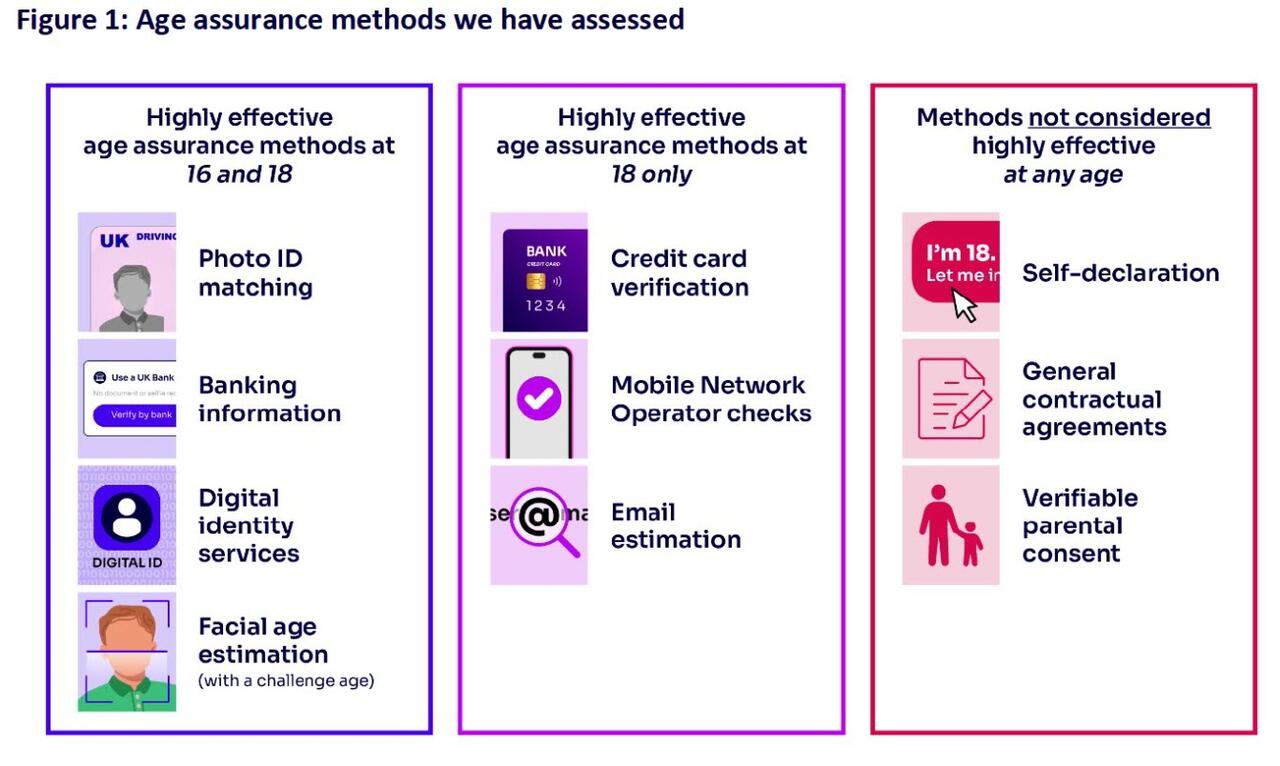
Ofcom named four methods it considers capable of being highly effective at 16, Digit reported: photo ID matching, banking