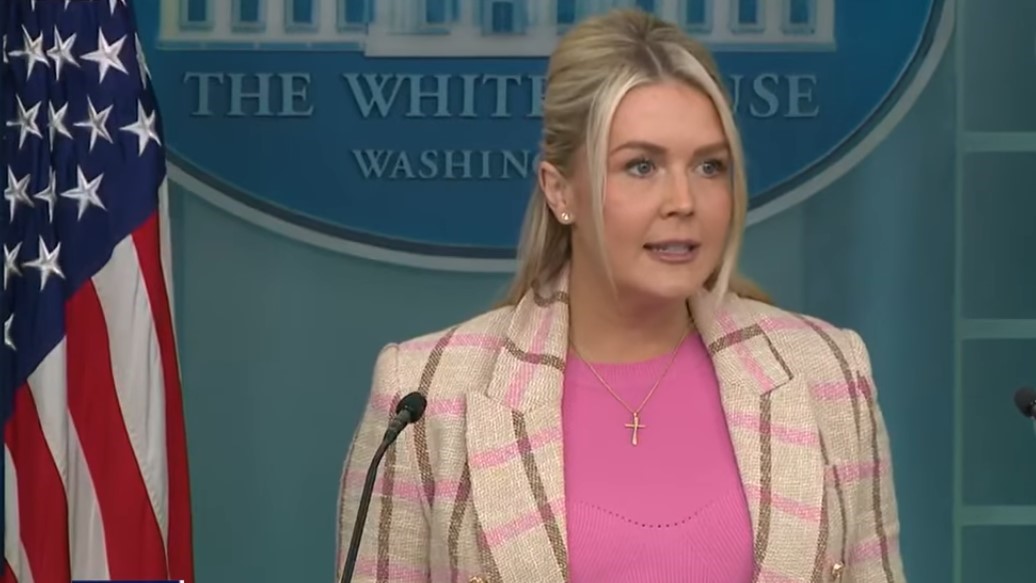
The possibility of amilitary draft in the United Stateshas resurfaced as tensions with Iran rise, fuelling anxiety among families and veterans' groups. Recent remarks from White House press secretaryKaroline Leavitthave left Americans questioning whether President Trump could reinstate conscription to bolster troops in the region.
During a recent appearance on 'Sunday Morning Futures', Leavitt faced questions over potential troop deployments. Host Maria Bartiromo highlighted public fears: 'Mothers are worried that we're going to have a draft, that they're going to see their sons and daughters get involved in this.' In response, Leavitt emphasised that 'President Trump wisely does not remove options off of the table,' framing a draft as a hypothetical rather than an active plan.
The discussion comes amid renewed concerns over possible boots on the ground in Iran. Americans have not been conscriptedsince the Vietnam War, when 1.8 million men were drafted in a deeply unpopular process. The prospect of returning to a draft evokes memories of past national divisions and widespread opposition.
Throughout his 2024 campaign, Trump repeatedly claimed that Democrats intended to force Americans into military service. Speaking at rallies, he warned: 'All of your sons and daughters will end up getting a draft notice. Congratulations, you've been drafted in the military. You're going to fight a war against a country that nobody's ever heard of.' These statements, which were not supported by formal policy proposals, have intensified public anxiety about a potential military draft under his administration.
Social media has also amplified rumours aboutProject 2025, a blueprint linked to Trump's return to the White House, allegedly recommending conscription for high school seniors. While no official proposal exists, some figures in Trump's orbit have previously floated ideas around national service mandates to support the all-volunteer army.
A military draft in the US operates under the Selective Service System, a quasi‑independent agency separate from the Department of Defense. The agency maintains a database of eligible Americans and can provide personnel when authorised by both the president and Congress, while also accommodating conscientious objectors. The system has historically been used during conflicts including the World Wars, the Korean War, and the Vietnam War.
Following the move to an all‑volunteer military in 1973, men aged 18 to 25 are still required to register with the Selective Service System. Registration is integrated into state processes such as driving licence applications, with failure to register technically constituting a felony. Millions of men are currently listed in the system.
If reinstated, a draft would use a lottery system, drawing numbers corresponding to birth dates. Men turning 20 during the year would likely be called first, followed by successive birth years until the maximum age of 26 is reached. The Selective Service has long maintained that a modern draft 'would be the most fair draft in history,' arguing that the lottery structure is designed to give each eligible birth date an equal chance of being called early or late.
Not all registered men would be called immediately. Deferments exist for groups such as college students, married men and relatives of deceased service members. Medical exemptions and conscientious objectors can appeal or opt for alternative service where appropriate. During the Vietnam War, over half of eligible men were deferred, exempt or disqualified, underscoring the complexity and perceived inequities of the draft process.
Failure to comply carried serious consequences. During the Vietnam era, hundreds of thousands of men avoided service, while many faced charges. Only a fraction were jailed, and some fled abroad. Subsequent presidential actions, including amnesties and pardons, reduced or cleared penalties for many draft evaders.
Source: International Business Times UK
