President Trump's US-Russia deal to export diesel and crude cargoes has drawn considerable scrutiny from Western elites as the first shipments could soon reach US shores. Ukrainian drone strikes on Russian refineries, combined with disruptions in the Strait of Hormuz, have intensified pressure on the global energy market and refining capacity ahead of the US midterms.
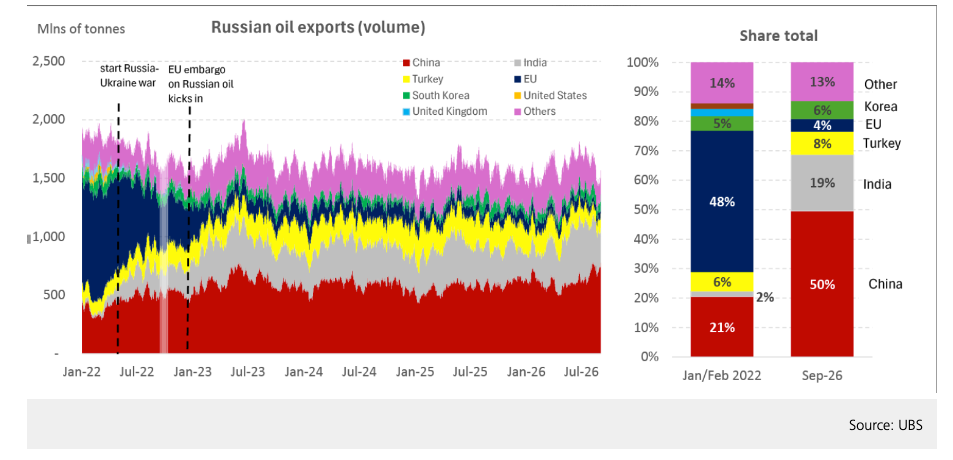
UBS chief economist Arend Kapteyn published new data tracking Russian oil exports. Before reading the note, the assumption would have been that Western sanctions and Ukraine's efforts to cripple Russia's export capacity had delivered a massive blow. In fact, Moscow simply reconfigured its supply chain to send crude and energy products east.
Kapteyn titled the note "Who Is Buying Russia's Oil?"
He said, "The most visible effect of the restrictions on Russia's oil exports seems to have been to redistribute the global supply of oil."
The biggest shift in Moscow's exports has been in their destinations. The EU's share of Russian crude exports collapsed from 48% before the war in Ukraine to just 4% by September, while the combined share purchased by China, India and Turkey jumped from 29% to 77%.
Kapteyn added more color:
In recent months, Russia has begun importing significant volumes of refined petroleum products, reflecting the damage Ukrainian strikes have inflicted on its domestic refining capacity. That is highly unusual for one of the world's largest exporters of diesel, fuel oil and naphtha, and is one fac