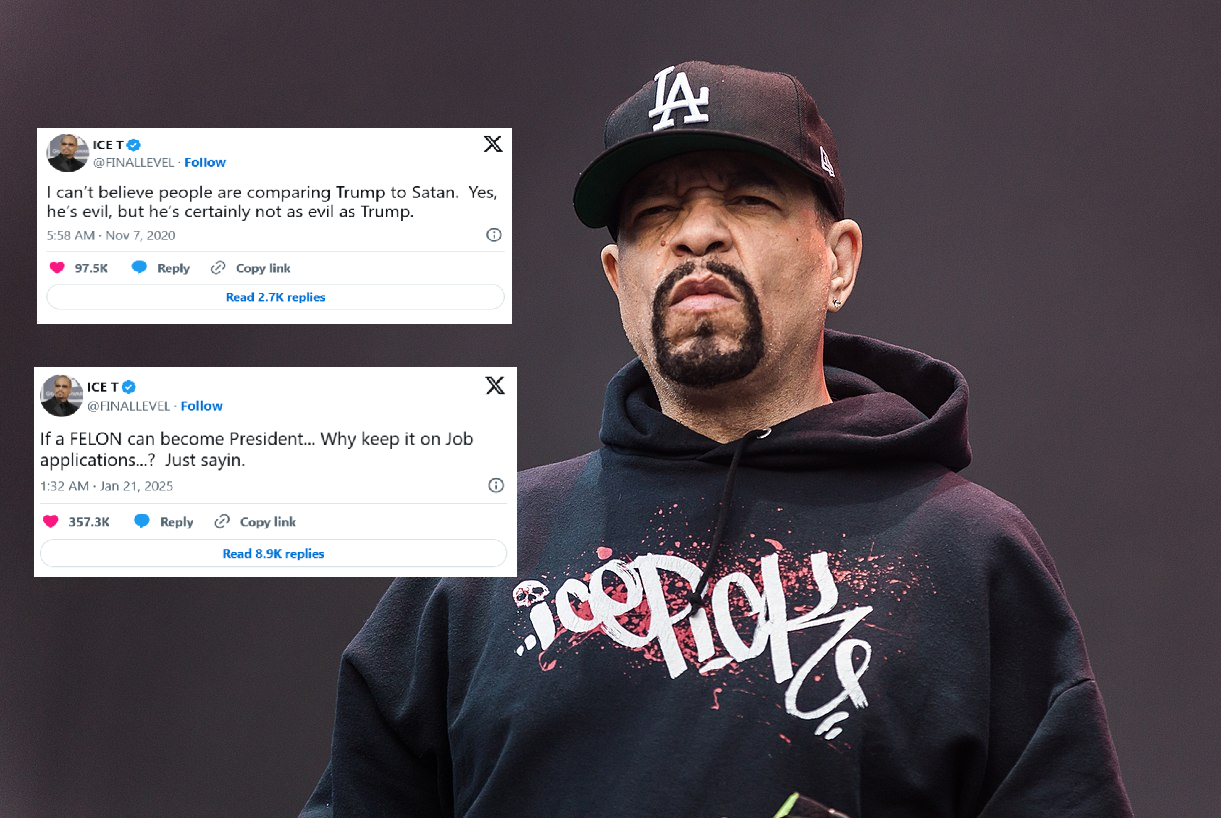
In the midst of a precarious global landscape dominated by the escalating conflict between the United States and Iran, the political commentary of legendary rapper and actor Ice-T has once again captured the internet's collective attention.
Known for his candid and often provocative social media presence, Ice-T has seen his past critiques of Donald Trump catapult back into the spotlight as users across X, Instagram, and TikTok share his archived posts as a barometer of current political discourse.
The resurfacing of his 2020 observation, which characterised Trump with a harsh moral comparison, alongside his pointed January 2025 inquiry regarding the intersection of felony convictions and employment eligibility, serves as a testament to his role as an unexpectedly resonant voice in the American political arena.
As official government channels grapple with the complexities of war and national security, Ice-T's blunt, unfiltered musings continue to serve as a rallying point for those seeking to distil complex power dynamics into biting, viral-ready critiques, proving that his voice remains as potent in 2026 as it was in the height of the previous decade's electoral turmoil.
About a week after Joe Biden was decisively elected over Donald Trump in November 2020, Ice-T posted a plain statement on Twitter. The word spread very fast.
'I can't believe people are comparing Trump to Satan. Yes, he's evil, but he's certainly not as evil as Trump,' the rapper posted.
I can’t believe people are comparing Trump to Satan. Yes, he’s evil, but he’s certainly not as evil as Trump.
Its timing was crucial. Trump had simply lost the election, and the nation was extremely polarised.
Ice-T did not simply say that casually. They portrayed his ongoing criticism of the president. The rapper had, over the years, expressed his criticism of theTrump policies and personality.
The tweet is straight to the point, but it did not need much elaboration, since the presidency of Trump was widely perceived as a disaster and a catastrophe. But to some, it was the usurpation, a comparison which some considered to have pushed too far.
Source: International Business Times UK