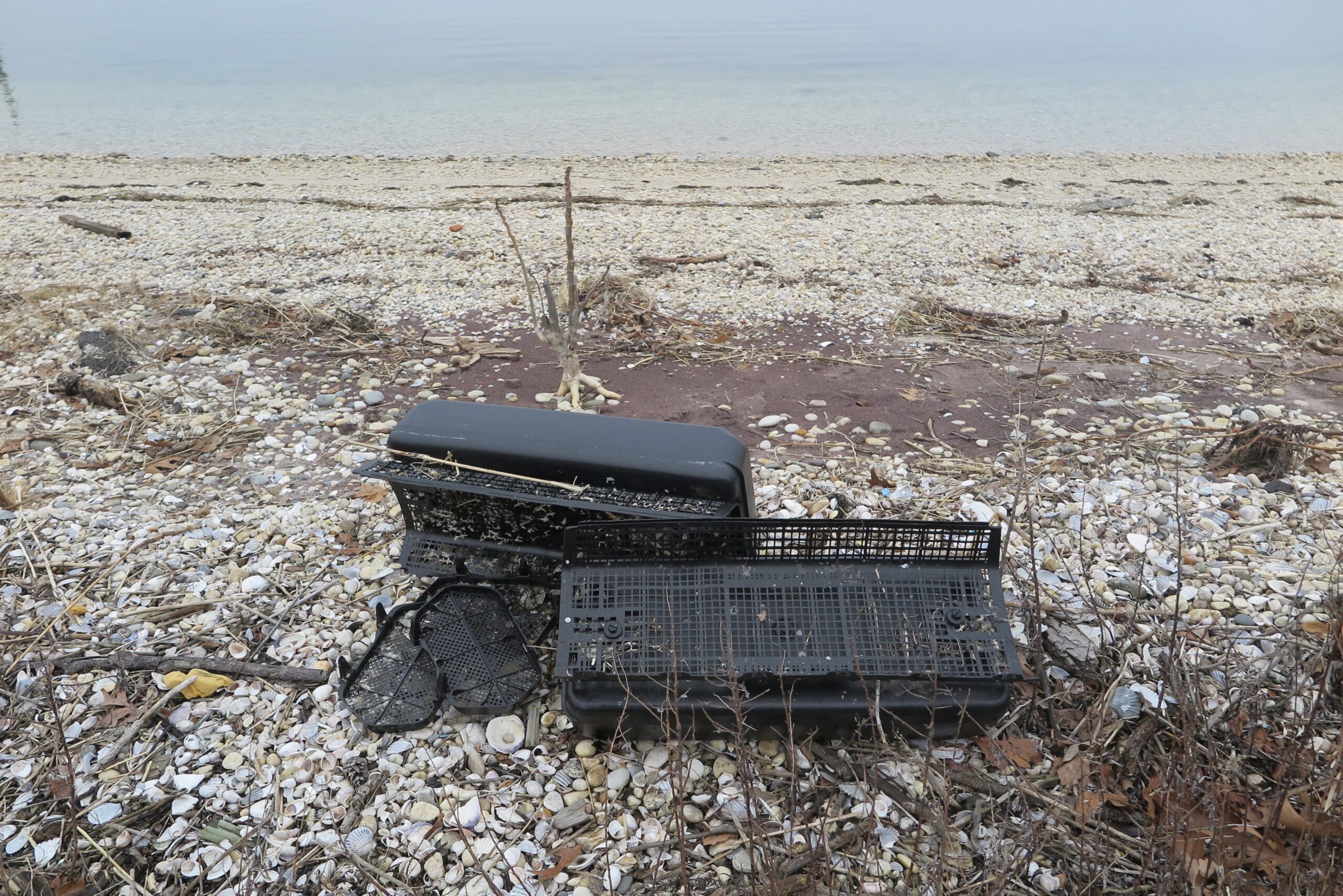
The cold waters of the Peconic Bay account for the exquisite flavors of local shellfish from oyster farms. But this winter,the prolonged cold spell froze the bay into a destructive ice pack that tore docks apart, moved navigation buoys across the bay and ripped out the anchors of fishing gear — especially surface-style oyster farming equipment — sending the gear adrift.
The resulting damage poses a serious threat to the supply of locally grown oysters — which tourists love to slurp — not just for this summer, but likely for the next two years, experts said.
During a North Ferry run to Shelter Island from Greenport on a frigid, dark morning last month, Capt. Jeffrey Gibbs detected a problem.
The vessel, named theMenantic, had run across something big in the bay and, as the ferry maneuvered into its slip, another captain looked over and said, “Hey, you’re dragging oyster pots.”
“We usually cross at six knots, and we couldn’t go over three and a half,” Capt. Gibbs recalled during an interview with The Suffolk Times’ sister publication, the Shelter Island Reporter.
Preliminary estimates from the Long Island Oyster Growers Association suggest overall inventory losses of at least 30%, not including the cost of repairing or replacing gear.
Oyster farms — like all farming and fishing work — is not for the faint of heart, and the ice pack that formed in the creeks and bays this winter was an existential threat to a growing local industry, especially to the floating style of farming that efficiently produces the small, clean, deep-cupped oysters that consumers love.
Peeko Oysters, whose harvest is served at many top restaurants in Manhattan, was transitioning this year from the traditional labor-intensive use of cages sunk several feet below the surface to an innovative floating technology called flipfarming.
“We lost a major chunk of our inventory. Every line we had out in the bay was either dislodged or damaged,” said Peeko owner Peter Stein, who has operated out of New Suffolk since 2017.
Growers say the hardest-hit farms will struggle to supply their customers, and inventory will be tight for years, since seed oysters take two or three years to reach market size.
Source: The Suffolk Times