Every time political anger spills into French streets - whether over pension reforms, fuel taxes, police shootings, or the annual ritual of Saint-Sylvestre on New Year's Eve - the post-mortem follows a familiar script. The Ministry of the Interior tallies the arrests, insurers calculate the millions in property damage, and municipal crews sweep up the melted asphalt before morning commuters arrive. The rioters - who kicked this off in working-class banlieues (which has high concentrations of North African and sub-Saharan immigrants) are burning whatever they can get their hands on; cars, tires, plastic bins, buildings, etc.
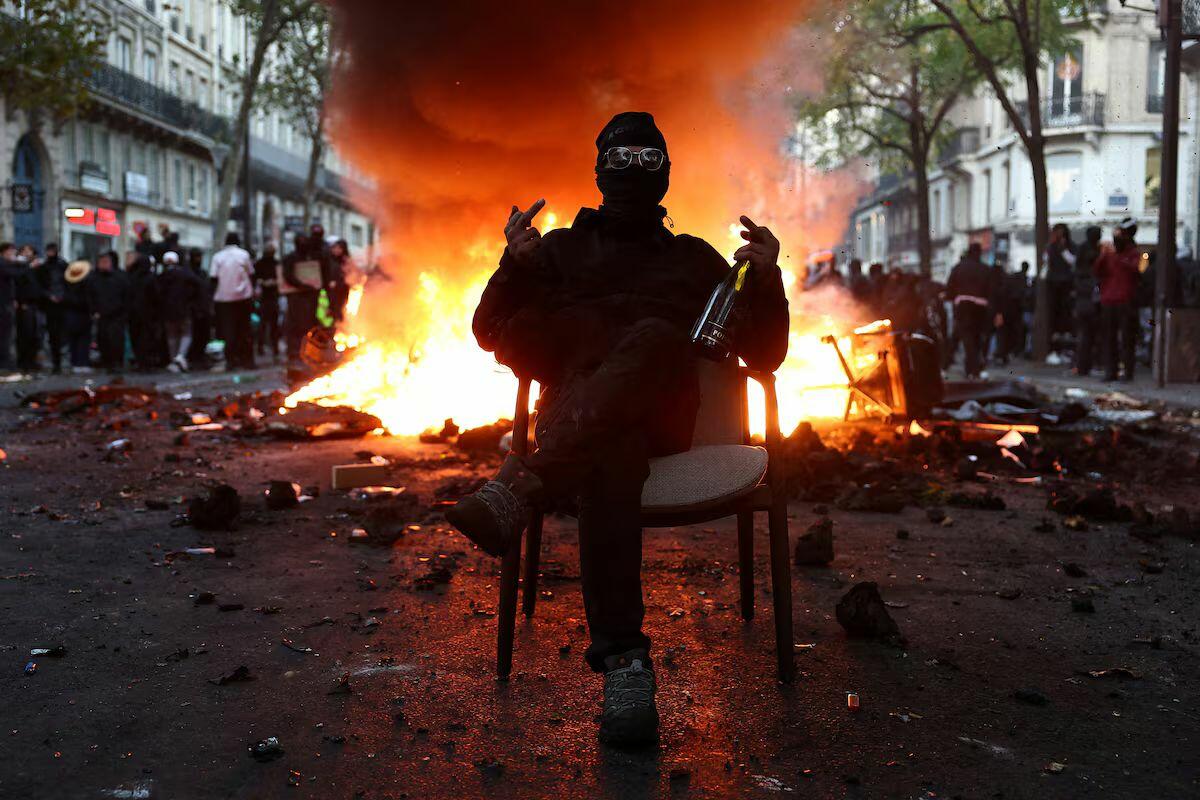
Masked protester sits on a chair in front of a burning barricade in Paris, Oct. 17 (Reuters/Abdul Saboor)And, as one might imagine, this is extremely toxic.
Over the past decade, an average of 35,000 to 40,000 vehicles have been intentionally torched across France every year, punctuated by massive spasms of civil unrest - such as the June 2023 riots, which saw more than 12,000 vehicles burned, or New Year's Eve 2025/2026, when 1,173 parked vehicles were reduced to ash overnight. When you strip away the political theater, France's recurring protests function as unlicensed, open-air hazardous waste incinerators operating at breathing height in the country's most densely populated neighborhoods.
In the European Union, an industrial waste incinerator is legally required to burn materials above 850°C inside sealed chamber